Strengthening Landscape Architecture Education in Botswana
ABout the Author/s



La formation en architecture paysagère est relativement récente au Botswana, la première promotion devant obtenir son diplôme à l’université BA ISAGO en 2024. Le programme d’architecture paysagère adopte un modèle d’apprentissage en atelier, complété par des modules techniques et théoriques, ainsi que par un stage pratique en dernière année (université BA ISAGO, 2022). Toutefois, cet article s’interroge sur la mesure dans laquelle le modèle d’apprentissage actuel permet une initiation progressive à la pratique professionnelle.
S'appuyant sur une analyse du programme d'études et sur des questionnaires, l'étude suggère que le défi pédagogique réside peut-être dans le fait que les étudiants ne sont pas progressivement exposés à la pratique professionnelle, plutôt que dans le contenu du programme lui-même. Cet article explore comment la transition entre l'apprentissage académique et la pratique professionnelle peut être renforcée par une intégration progressive de la pratique, soutenue par des collaborations entre les enseignants-praticiens et le secteur professionnel. Dans cet article, l'intégration progressive de la pratique fait référence à une exposition cohérente et structurée à la pratique professionnelle.
Une approche mixte exploratoire a été adoptée. Elle a combiné l’analyse des documents relatifs au programme d’études, l’analyse descriptive des questionnaires destinés aux diplômés et aux enseignants, ainsi qu’une analyse thématique qualitative des réponses ouvertes. Les principaux résultats de l’analyse du programme d’études ont mis en évidence un contenu professionnel adéquat. Cependant, les résultats des questionnaires destinés aux enseignants et aux diplômés ont révélé des notes plus faibles dans les domaines nécessitant une exposition à la pratique, tels que la supervision de chantiers de construction et les relations entre clients et entrepreneurs.
Landscape architecture education is relatively new in Botswana, with the first cohort graduating from BA ISAGO University in 2024. The landscape architecture programme uses a studio learning model supported by technical and theoretical modules and a final-year practice placement (BA ISAGO University, 2022). However, the paper questions the extent to which the current learning model provides progressive exposure to professional practice. Drawing on curriculum analysis and questionnaires, the study suggests that the educational challenge may lie in students’ lack of progressive exposure to professional practice, rather than in curriculum content. The paper explores how progressive practice integration, supported by teacher-practitioner and industry collaborations, can strengthen the transition from academic learning to professional practice. In this article, progressive practice integration refers to consistent, structured exposure to professional practice. An exploratory mixed-method approach was adopted. It combined curriculum document analysis, descriptive analysis of graduate and lecturer questionnaires, and qualitative thematic analysis of open-ended responses. Key findings from the curriculum analysis indicated adequate professional content. However, findings from the lecturer and graduate questionnaires showed lower ratings in areas requiring practical exposure, such as construction site supervision and client/contractor interactions.
Introduction
Landscape architecture education was first introduced to Botswana in 2020 through a Bachelor of Arts Degree in Landscape Architecture at BA ISAGO University, Gaborone. The programme's introduction marked an important step toward building local capacity in landscape architecture, as professional landscape architects were previously trained at international universities. This created an opportunity to develop graduates who understand Botswana’s specific cultural, institutional, and environmental context and can apply locally responsive approaches.
Literature
The formalisation of landscape architecture education within universities dates to the twentieth century and represents an important milestone in the discipline’s professionalisation (Collins, 2020). Contemporary landscape architecture practice extends beyond aesthetic design to address complex environmental and social challenges, including climate change, community quality of life, and sustainable resource use (IFLA, 2017). Landscape architecture education is therefore expected to equip graduates with the knowledge and skills required to respond to these challenges through planning, design, environmental management and related professional activities (IFLA, 2017).
According to the European Council of Landscape Architecture Schools (ECLAS), landscape architecture programmes must be delivered at university level and develop competence in the core areas of landscape planning, landscape design, and landscape management to support professional qualification and recognition (ECLAS, 2023). Landscape architecture education involves developing a broad range of disciplinary and generic competences, which students progressively acquire and practise through different forms of learning. Studio learning occupies a particularly important position in this process and is central to landscape architecture education, with a substantial proportion of student workload devoted to the studio (Bruns, et al., 2010).
The relationship between university learning and professional preparedness is not necessarily straightforward. The structured progression of university curricula can differ substantially from the uncertainty, complexity, and changing conditions encountered in professional practice. Rowe argues that conventional educational pathways may not fully prepare graduates for labour market demands (ROWE, 2017). This suggests that curriculum coverage alone may not be sufficient to produce professional readiness. Students also require opportunities to apply disciplinary knowledge within situations that replicate the conditions of professional practice (McMahon, et al., n.d.).
Integrating professional practice into university curricula is significant for developing graduate preparedness.
Practice-oriented approaches can include internships, real-world projects and collaboration with industry, giving students opportunities to connect theoretical knowledge with professional tasks and expectations (KART & YURDAKUL, 2025). Work-Integrated Learning (WIL) can incorporate these approaches through experiential and practice-based learning models, including work-based learning, service learning, internships, and fieldwork (ROWE, 2017). Research on WIL indicates that appropriately designed practice-based experiences can support graduate skill development, preparedness for workplace transition, and career development (ROWE, 2017).
Methodology
This article adopted an exploratory mixed-method approach to examine the relationship between landscape architecture education and professional practice preparedness. The study combined curriculum document analysis, descriptive analysis of graduate and lecturer questionnaires, and qualitative thematic analysis of open-ended responses.
The BA ISAGO University landscape architecture learning programme (NCQF Level 7) was analysed to identify the extent to which it addresses the following six competency domains: professional practice, ethics and communication; landscape planning and design; technical documentation and representation; landscape construction and project implementation; applied horticulture and landscape technology; and environmental management and planning.
The Botswana Qualifications Authority (BQA) guidelines for implementing Credit Accumulation and Transfer (CAT) were used to translate module credits into notional learning hours. Under the guidelines, one credit is equivalent to ten notional learning hours (BQA, 2025).
The six professional competency domains were then benchmarked against the South African Council for the Landscape Architectural Profession (SACLAP) Core Competencies framework (SACLAP, 2016). This was used as a regional professional reference rather than a Botswana regulatory standard, as the Botswana competency framework is still under development by the Architects’ Registration Council (ARC).
A graduate questionnaire was administered to fourteen landscape architecture graduates identified in the population at the time of the study. The questionnaire asked respondents to rate their professional practice preparedness across the six competency domains at graduation and currently.
The study also administered a lecturer questionnaire to determine whether differences existed between what teacher-practitioners delivered and graduates’ expectations. Eight core landscape architecture lecturers were identified in the population at the time of the study.
The study analysed responses to open-ended questions using thematic analysis. Recurring issues were grouped into themes. The study subsequently triangulated findings from the curriculum analysis, questionnaires, and qualitative responses to identify areas of alignment and divergence between curriculum provision, lecturers’ perspectives, and graduates’ perceived professional readiness.
Findings
Curriculum document analysis
The current duration of the BA ISAGO University learning programme is four years. It consists of 484 total programme credits, which is 4840 total notional learning hours. The BQA guidelines, as set out in the referenced documents, do not specify programme-specific practical-hour requirements (BQA, 2025). In addition, the curriculum and the SACLAP core competencies framework do not specify the time allocated to build the competency domains. Table 1 uses the programme module profiles to identify competency-related content (coverage) and the extent to which students are exposed to professional practice. The table aligns specific modules to each competency and describes the learning outcomes, as well as areas with practice exposure.
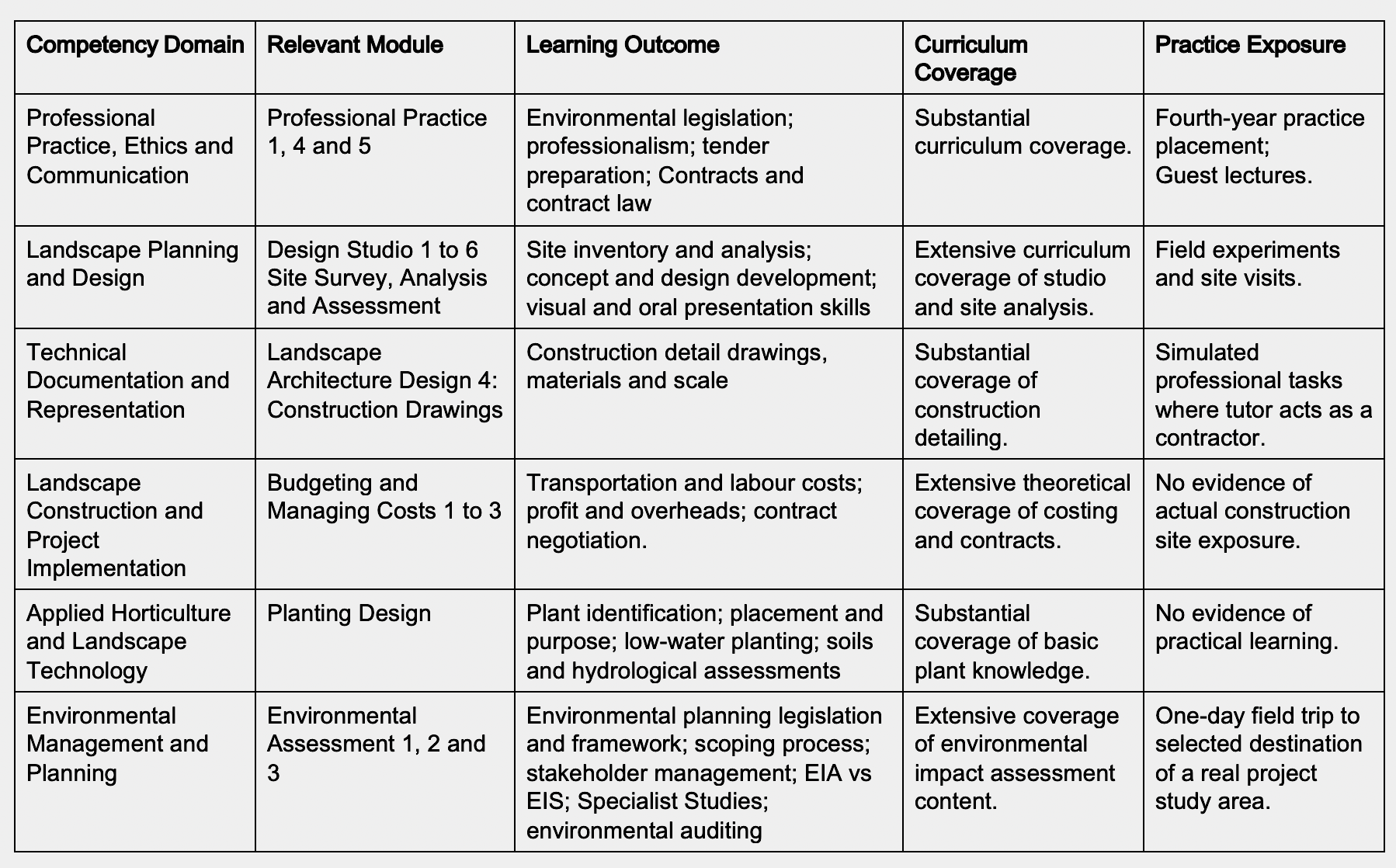
The table above shows that the curriculum document covers the competency domains through dedicated modules and associated learning outcomes. However, the presence of these competencies within the curriculum does not, in itself, establish the extent to which students are exposed to real-world environments. Table 2 calculates the workload of different modules in each competency domain. The credits for each of the modules were obtained from the individual module profiles.
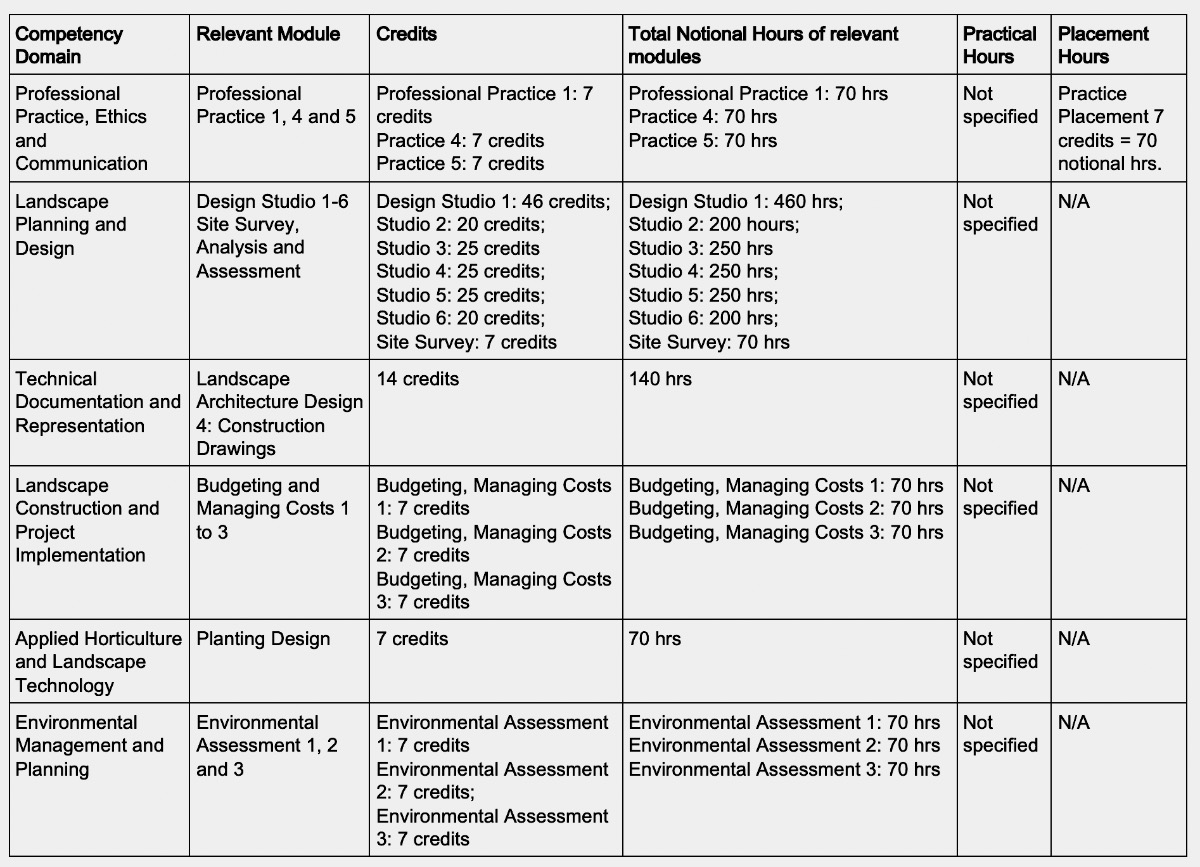
The above table shows that the allocation of notional hours across different modules and competencies varies, with substantial hours allocated to design studio modules. Separate hours for practice exposure and other notional learning activities are generally not specified. The practice placement module (professional practice 5) is allocated 70 notional hours. Overall, the available documentation does not adequately establish the extent to which students’ practice exposure opportunities are provided across the different competency domains.
Graduate Questionnaire
The graduate questionnaire targeted fourteen landscape architecture graduates who had completed their studies in Botswana at the time of study. Eight of the fourteen graduates completed the questionnaire, representing 57.1% of the identified population. Given the small population, the questionnaire provides contextual insight into graduates' experiences in an emerging professional environment. Figure 1 shows the mean ratings for graduate preparedness across the six competency domains at graduation and currently.
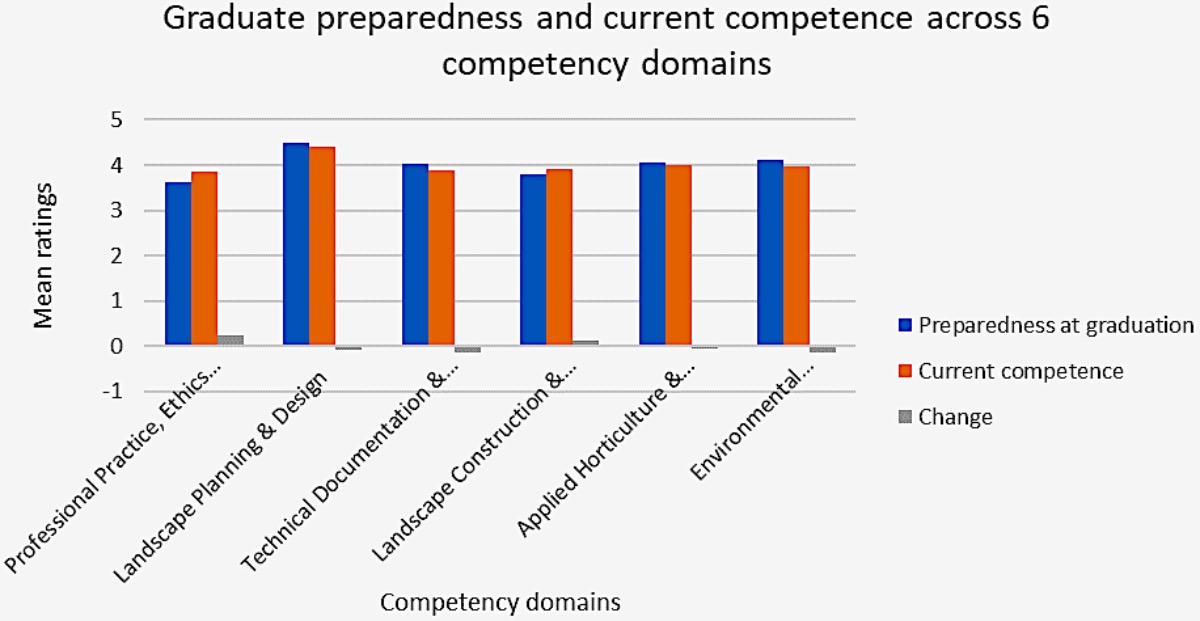
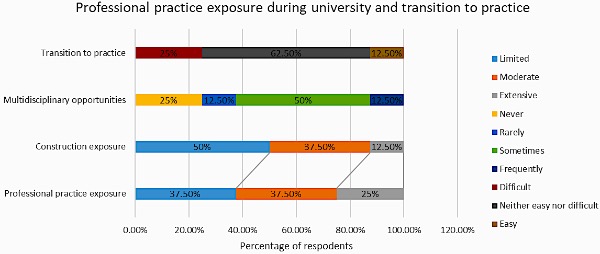
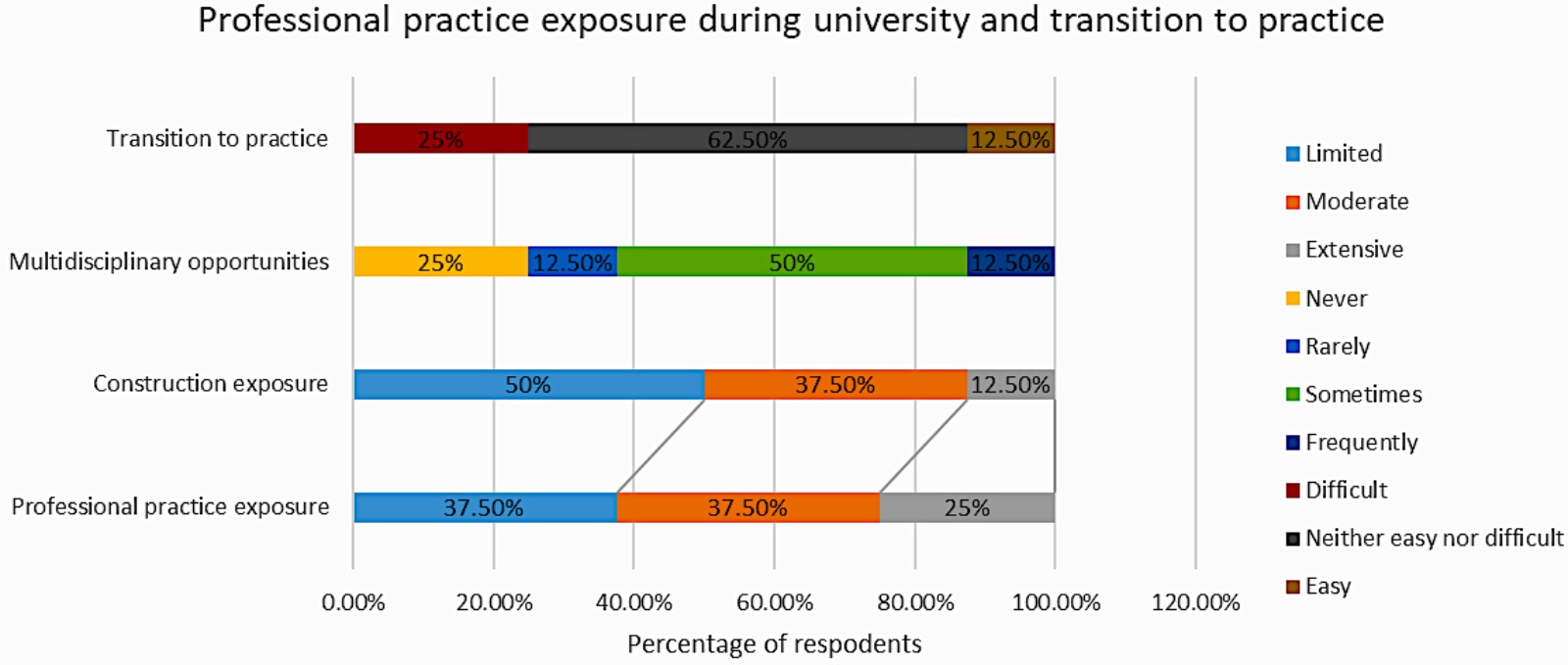
Graduates felt most prepared at graduation in Landscape Planning and Design, while they felt least prepared in Professional Practice, Ethics and Communication. This is followed by Landscape Construction and Project Implementation. Figure 2 illustrates the extent of students’ exposure to professional practice during university and their transition to practice.
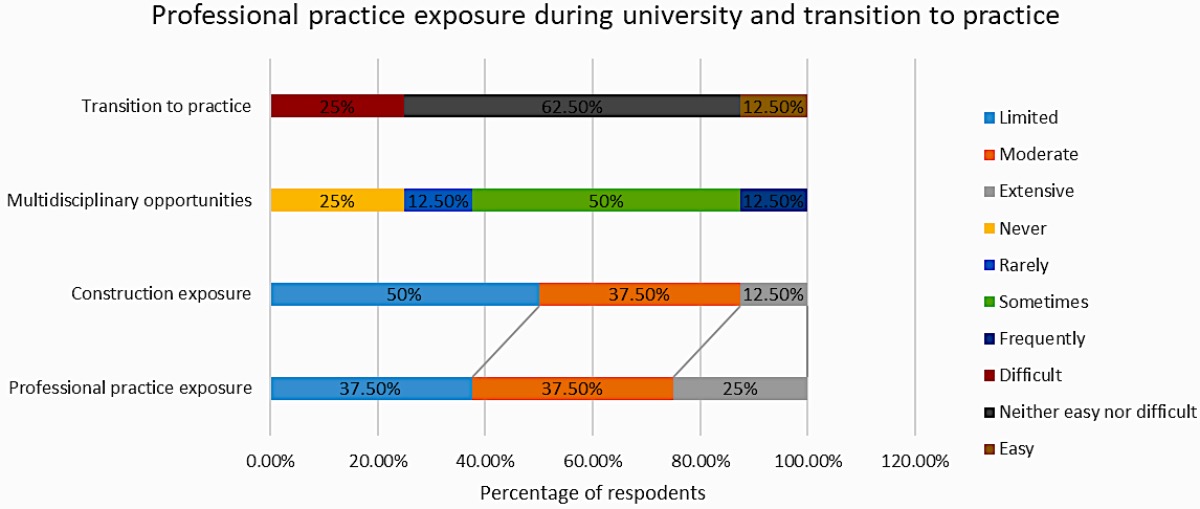
For professional practice, 6/8 graduates reported limited or moderate exposure, while 2/8 reported extensive exposure. 7/8 graduates reported limited or moderate construction exposure, while 1/8 reported extensive construction exposure. 7/8 respondents did not have frequent multidisciplinary exposure, while 1/8 reported frequent multidisciplinary exposure. 5/8 respondents characterised the transition from university to practice as neither difficult nor easy, 2/8 reported it as difficult, and 1/8 reported it as easy. In this questionnaire, limited exposure refers to few opportunities for external professional engagements. Exposure is mainly through lectures and occasional site visits. Moderate exposure refers to the integration of practical learning into teaching. Extensive exposure refers to more opportunities for professional practice through client interactions, construction supervision and work placements.
Table 3 summarises graduates’ responses to the open-ended questions, organising them into qualitative themes. The questions sought graduates’ perspectives on their transition from education to professional practice.
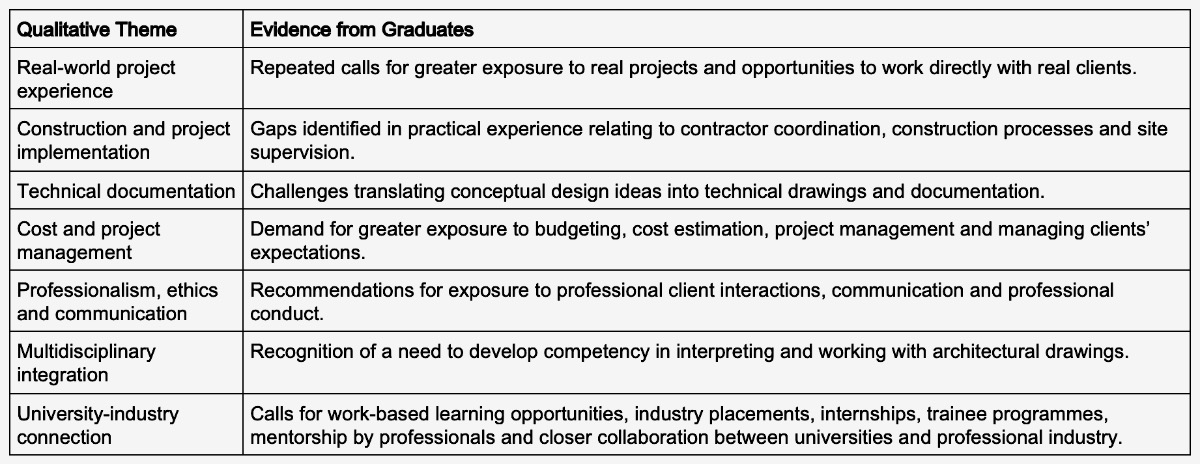
The findings highlight graduates’ perceived gaps between university learning and practice exposure, especially in professionalism, ethics and client communication, project management, construction and site supervision, costing, and technical drawings and documentation.
Overall, the graduate questionnaire findings show positive ratings, especially in landscape planning and design, but lower ratings in professional practice, construction, and project implementation.
Graduates advocated for industry engagement and training programs to bridge the gap between academic learning and industry application.
Lecturer Questionnaire
The lecturer questionnaire targeted eight core lecturers in the landscape architecture programme, excluding the author. The sample comprised two landscape architects, three architects, one urban planner, one environmental scientist, and one quantity surveyor. Four of the eight lecturers completed the questionnaire, representing 50% of the identified population. All four are practising professionals.
Figure 3 shows lecturers’ responses to the question pertaining to practice exposure activities that students are exposed to, apart from formal placement in the fourth year.
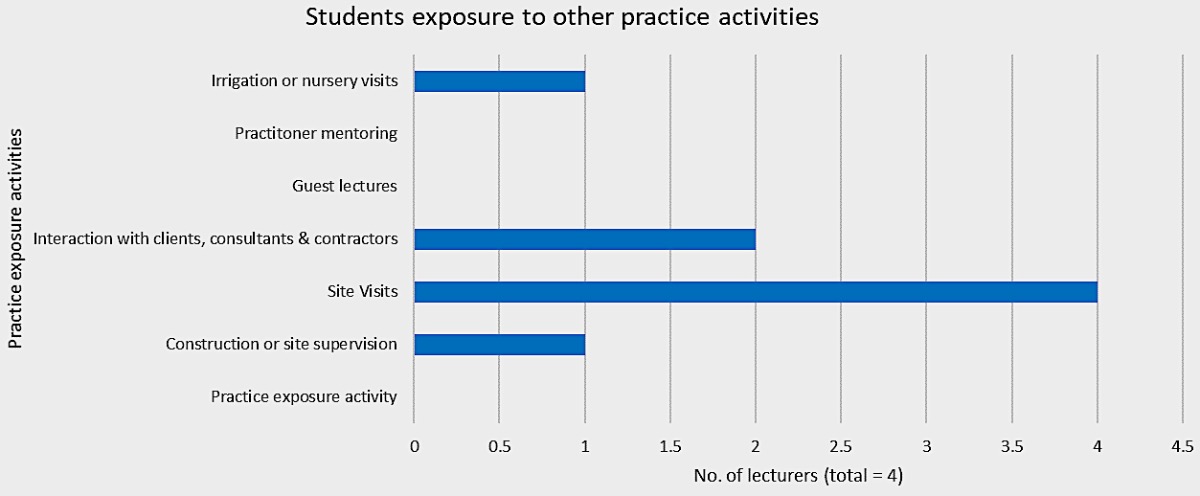
None of the lecturers reported guest lectures or practitioner mentoring as additional professional practice activities. 1/4 lecturers reported including irrigation or nursery visits, and 1/4 also reported exposure to construction or site supervision. All four lecturers reported that students are exposed to site visits, and 2/4 reported interaction with clients, consultants and contractors. Figure 4 summarises lecturers’ opinions on the adequacy of current opportunities for students to gain professional practice experience before graduation.
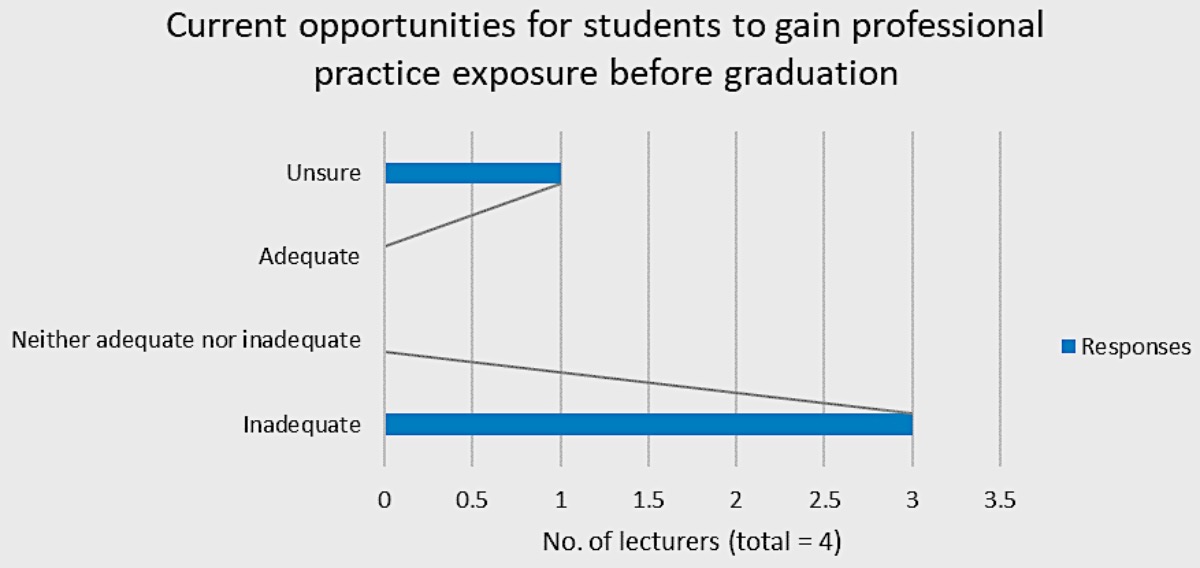
Three-quarters of lecturers considered the current opportunities inadequate. Figure 5 indicates how well the programme’s teaching and learning activities provide opportunities for each competency domain.
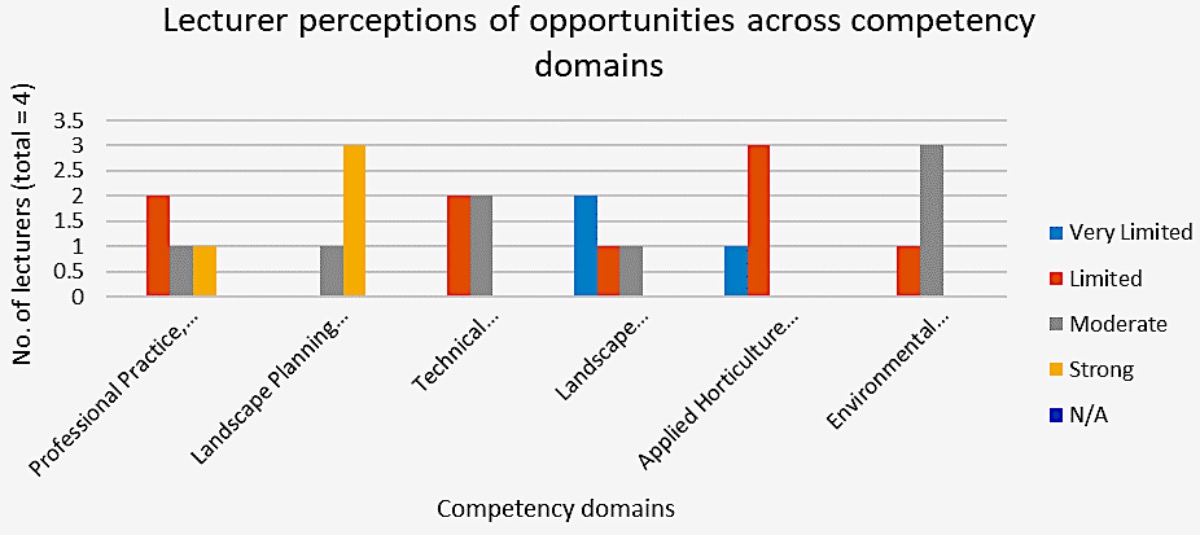
The graph shows stronger opportunities in landscape planning and design (3/4), but limited opportunities in applied horticulture and landscape technology (3/4). It also shows very limited opportunities in construction and project implementation (2/4). Table 4 summarises lecturers’ responses to the open-ended questions.
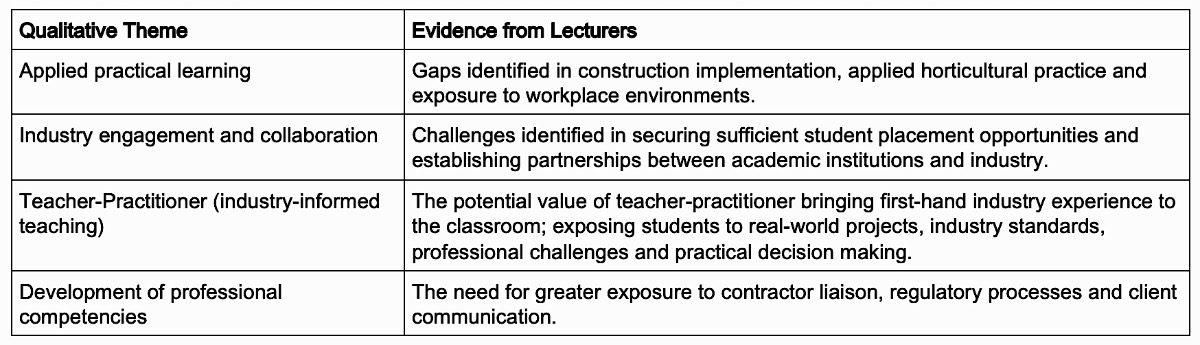
The overall findings from the lecturers’ questionnaires indicate challenges with inadequate opportunities for practice exposure, student placement capacity, and partnership arrangements with industry.
Triangulation of three evidence sources
Triangulation of curriculum document analysis, graduate questionnaires, and lecturer questionnaires indicates an uneven distribution of practice exposure opportunities across the six competency domains. Graduates reported challenges in practice-intensive areas, such as construction implementation, while lecturers indicated limited opportunities for practice exposure in the same areas, as well as in applied horticulture. These findings suggest that graduate preparedness may improve by strengthening professional practice integration throughout the curriculum.
Discussion & Proposed Framework
The findings suggest that the main challenge in landscape architecture education is limited opportunities to apply learned competencies in professional environments.
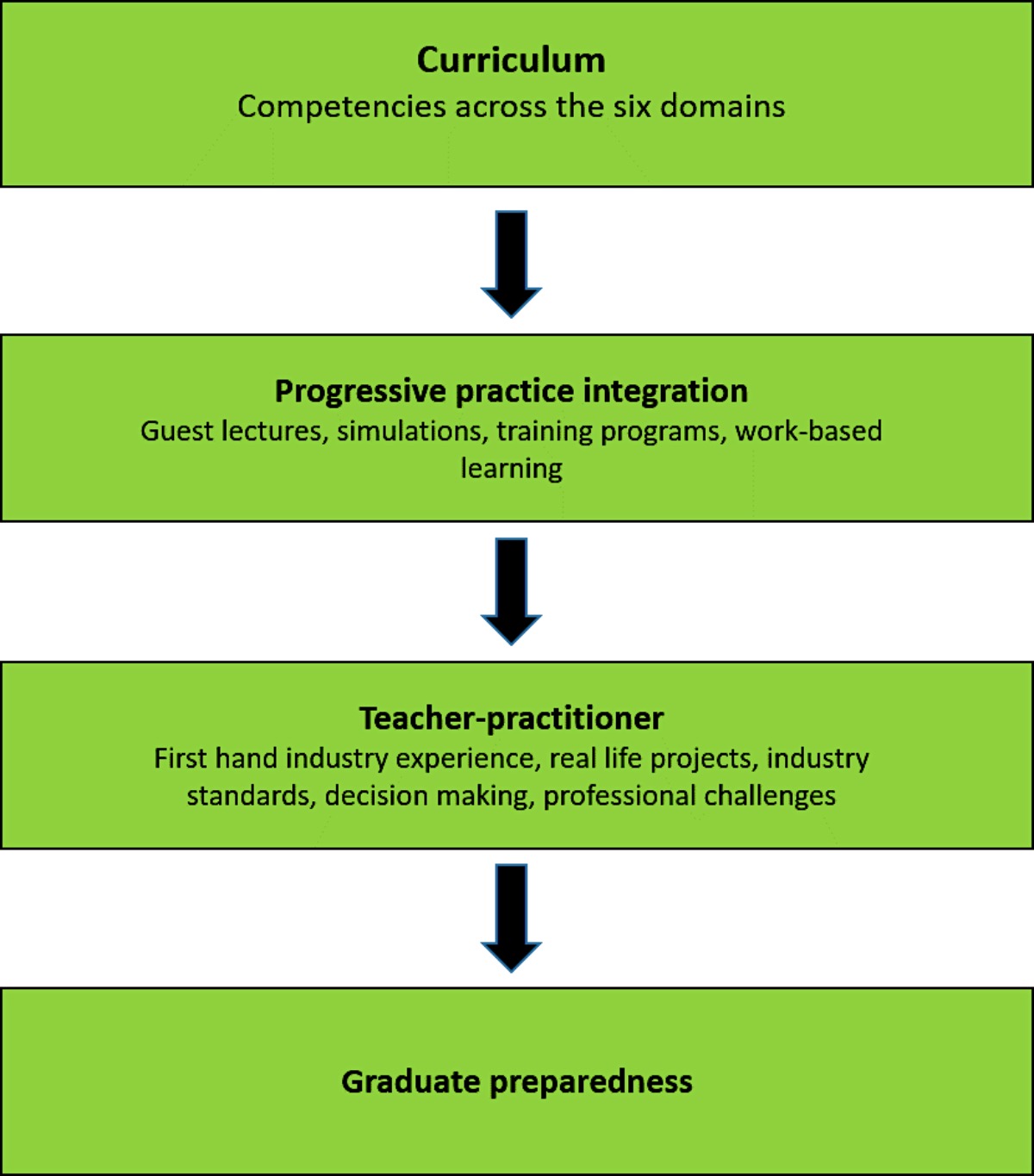
The curriculum analysis indicates coverage across the six competency domains, while graduate and lecturer responses highlight challenges in applied horticulture, construction implementation, client interactions and industry engagement. These findings suggest a need for meaningful, intentionally work-integrated learning aligned with the university curriculum (ROWE, 2017). The graduates’ preference for work-based learning, longer attachments, mentorship, training programs, and joint university and industry projects points to a broad system of practice integration. Within this system, the teacher-practitioner can help bridge academic learning and industry expectations by bringing first-hand industry experience into the classroom, incorporating real project scenarios, and exposing students to professional standards, challenges, and decision-making.
Figure 6 shows the proposed framework for practice integration into the curriculum.
Conclusion
This study highlights the importance of progressively integrating professional practice into landscape architecture education in Botswana. However, the proposed framework requires further evaluation. Positioning the teacher-practitioner as a bridge between academia and professional practice can improve graduate preparedness for practice. Given the exploratory sample of eight graduates and four lecturers, the findings are contextual but provide a basis for strengthening landscape architecture education through continued collaboration among universities, industry, and government
References
BA ISAGO University, 2022. Bachelor of Arts in Landscape Architecture. Gaborone: BA ISAGO University.
BQA, 2025. Guidelines for the implementation of Credit Accumulation and Transfer (CAT) [Online]. Available at: https://www.bqa.org.bw/sites/default/files/2026-01/DNCQF.POL05.GD01%20CAT%20Policy%20Implementation%20Guidelines_0.pdf [Accessed 23 October 2026].
Bruns, D. et al., 2010. ECLAS [Online]. Available at: https://lnicollab.landscape-portal.org/ilias.php?baseClass=ilrepositorygui&cmdNode=xg:ml&cmdClass=ilObjFileGUI&cmd=sendFile&ref_id=253 [Accessed 23 September 2026].
Collins, J., 2020. The architecture and landscape of health. 1st ed. London: Routledge.
ECLAS, 2023. The common training framework for landscape architecture as defined by IFLA Europe and ECLAS[Online]. Available at: https://www.eclas.org/wp-content/uploads/2023/09/CTF-LA-eclas-iflaeurope-brochure.pdf[Accessed 23 September 2026].
IFLA, 2017. IFLA charter for landscape architectural education [Online]. Available at: https://www.eclas.org/wp-content/uploads/2020/09/E1_IFLA-Charter-for-Landscape-Architectural-Education_2017_with_IFLA-Europe-addenda_2017.pdf [Accessed 23 September 2026].
Kart, A.N. & Yurdakul, E.S., 2025. A longitudinal analysis of landscape architecture students’ perspectives on professional education and career. Applied Ecology and Environmental Research, 23(3), pp. 4499–4520.
McMahon, M., Patton, W. & Tatham, P., n.d. Managing life, learning and work in the 21st century: Issues informing the design of an Australian blueprint for career development [Online]. Available at: https://cica.org.au/wp-content/uploads/Managing-Life-Learning-and-Work-in-the-21-Century-MMcM_WP_PT.pdf [Accessed 26 September 2026].
Rowe, A.D., 2017. Developing graduate employability skills and attributes: Curriculum enhancement through work-integrated learning. Asia-Pacific Journal of Cooperative Education, 18(2), pp. 87–99.
SACLAP, 2016. Weighted core competency table for the landscape architectural profession. s.l.: SACLAP.