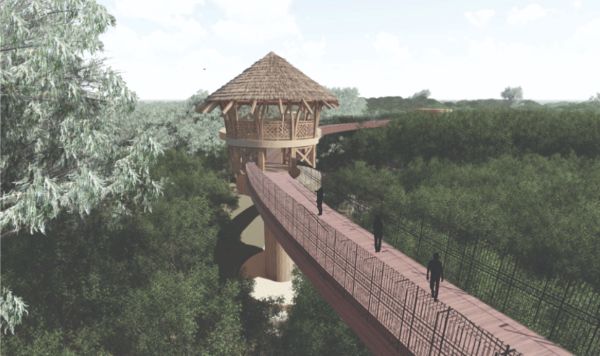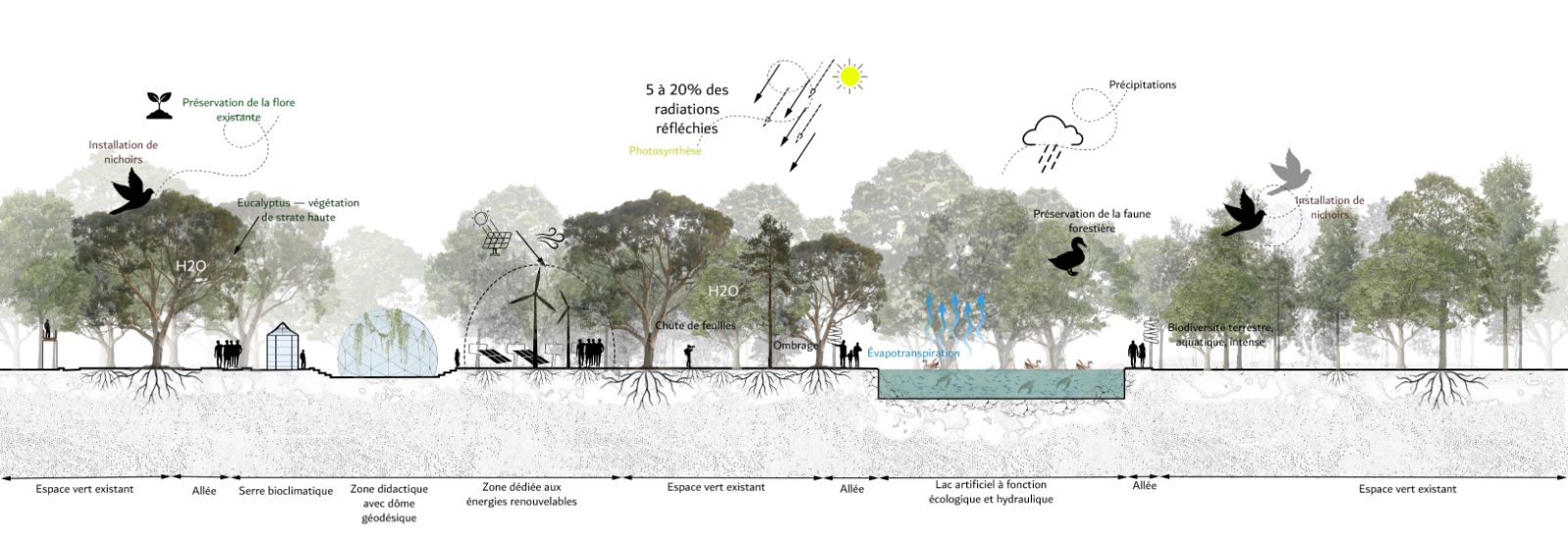
Bouskoura Urban Forest Rehabilitation, Casablanca, Morocco
ABout the Author/s



Cette étude présente un modèle de studio de paysage conçu comme un laboratoire vivant sur une zone pilote de 30 ha dans la forêt de Bouskoura à Casablanca, en milieu semi-aride. Face à la dégradation écologique, à la pression urbaine et à la rareté de l'eau, défis communs aux forêts périurbaines en Afrique, l'approche est basée sur l'apprentissage expérientiel (Kolb, 2014). La méthodologie combine un relevé de terrain, une analyse écologique et une proposition de design articulée autour de trois systèmes: écologique, éducatif et récréatif. Une stratégie clé est la gestion de l'eau via un chemin de noues pilotes reliant l'Oued Bouskoura au site pour capter le ruissellement. Ce modèle, mené par les étudiants, propose une gouvernance participative future impliquant les écoles, les associations et les gestionnaires forestiers, offrant ainsi un modèle réplicable pour la résilience des forêts urbaines.
Urban forests in Morocco face degradation from urban pressure and water scarcity, a challenge common across African cities in semi-arid regions like Casablanca. This paper presents a landscape architecture studio model conceived as a living laboratory within a 30-hectare pilot zone in the Bouskoura Forest. Based on Kolb's experiential learning theory (2014), the methodology integrates field inventory with ecological analysis. The design proposal is structured around three systems: ecological restoration with native species, an educational trail, and a low-tech water management strategy linking the Oued Bouskoura waterway to the site. While student-led, the project proposes a future participatory governance model involving local schools and associations. It offers a replicable framework for integrating landscape education with forest resilience.
Introduction
Across North Africa, peri-urban forests are under significant pressure from urban expansion, water scarcity, and climate change.
In Morocco, where 93% of the territory is affected by aridity (HCP, 2023), these forests represent vital green infrastructure. Many African cities in semi-arid zones share this challenge, from Dakar to Nairobi, where urban forests are crucial for climate resilience. The Bouskoura Forest, located 20 kilometres south of Casablanca, is one of the largest green lungs near the economic capital, with a total area of 3,000 hectares. Despite its importance, it suffers from severe degradation, invasive species, and an elevated risk of wildfire (Ministry of Agriculture, 2020). At the same time, landscape architecture education in Morocco often relies on hypothetical projects that are disconnected from real sites. This paper argues that this disconnect can be addressed by shifting the studio to the landscape itself.
The Bouskoura project proposes experiential learning as a method for ecological rehabilitation (Kolb, 2014). In this model, the forest functions not only as the object of restoration efforts but also as the classroom where students develop technical and critical skills. This paper presents the Bouskoura 30-hectare pilot zone as a student-led living laboratory model. The project was developed during the Landscape Architecture Licence Studio at the School of Architecture and Landscape of Casablanca in Spring 2024 (27 students, one semester). By combining ecological rehabilitation with participatory design, this project shows how landscape architecture education can directly support urban forest resilience in semi-arid regions.
Context and Site Description
Bouskoura Forest is located 20 kilometres south of Casablanca. The forest covers approximately 3,000 hectares and serves as a critical green lung for the metropolitan area (World Bank, 2019). For pedagogical reasons, this studio project focused on a 30-hectare pilot zone near the forest entrance.
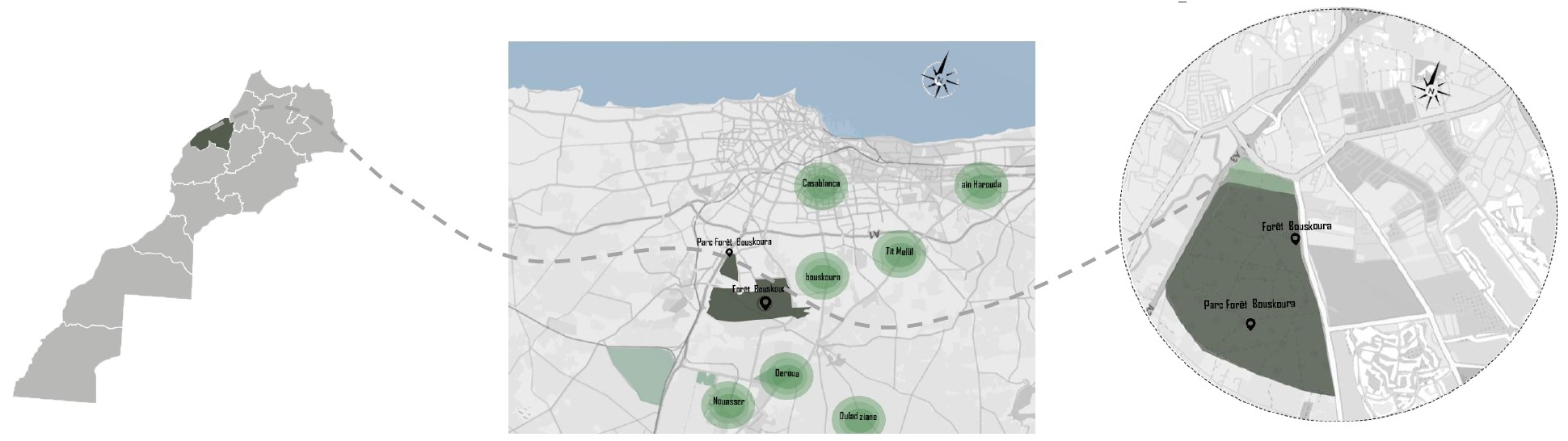
The selected site exhibits a gradient from cultivated agricultural plots to mixed shrubland, offering varied topography suitable for testing terraced planting systems, water infiltration basins, and agroforestry interventions.
Methodology
This study is based on a design studio conducted as part of the Landscape Architecture Licence at the School of Architecture and Landscape of Casablanca in Casablanca, Morocco, during the Spring 2026 semester. The studio involved 27 students and was structured in three phases over one semester, based on Kolb's (2014) experiential learning cycle.
Phase 1: Site Immersion and Analysis
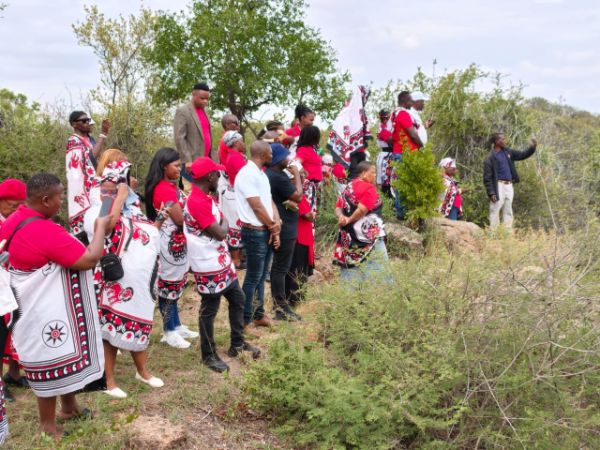
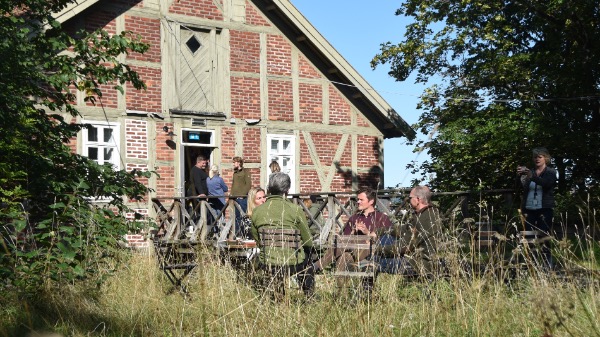
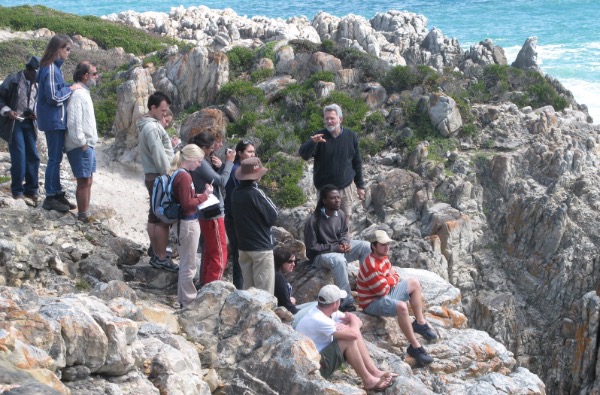
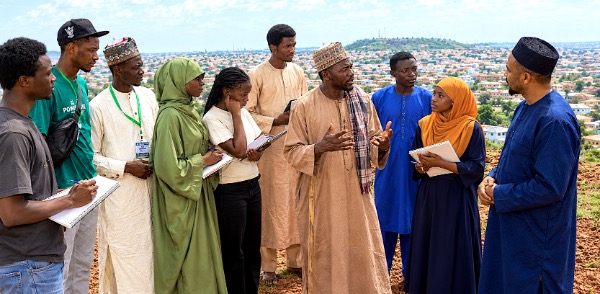
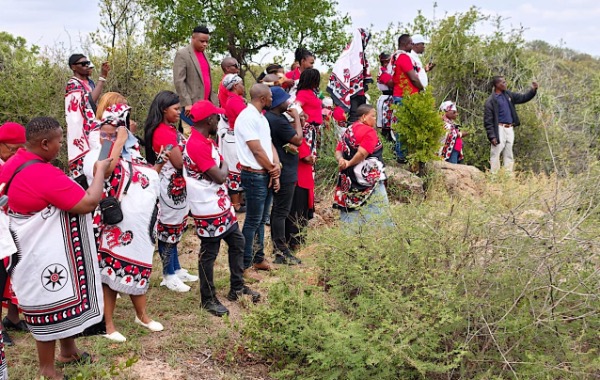
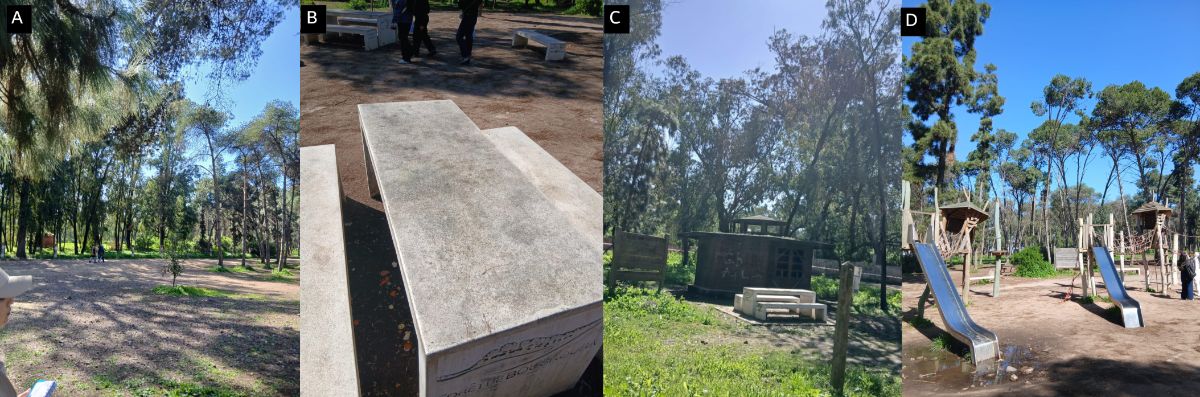
The studio included a single collective field visit to Bouskoura Forest. Site inventory methods similar to those described by Pena and Parshall (2012) were used. During this visit, tree counts, species identification, and the mapping of existing informal paths were conducted collaboratively through group discussion, as documented in Figure 2. This collective analysis helped build a shared understanding of the site constraints.
Phase 2: Ecological Design and Water Strategy
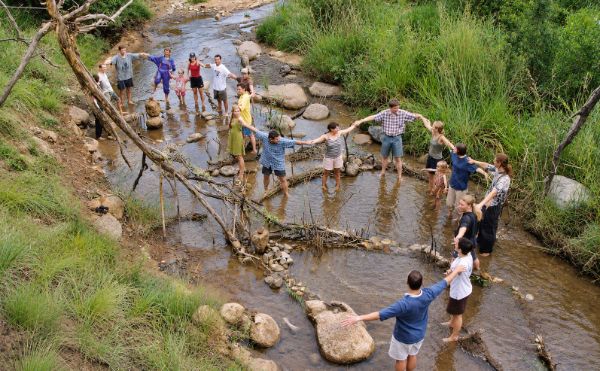
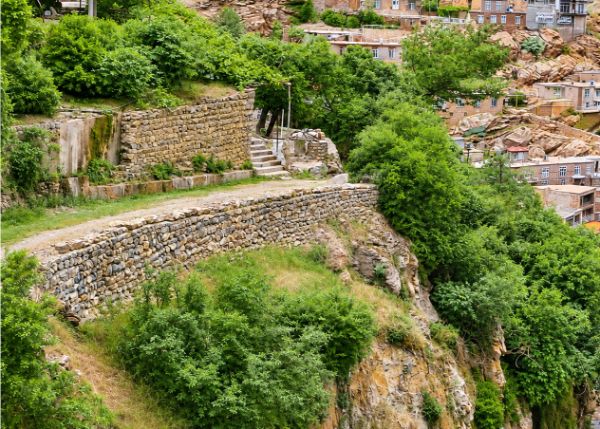
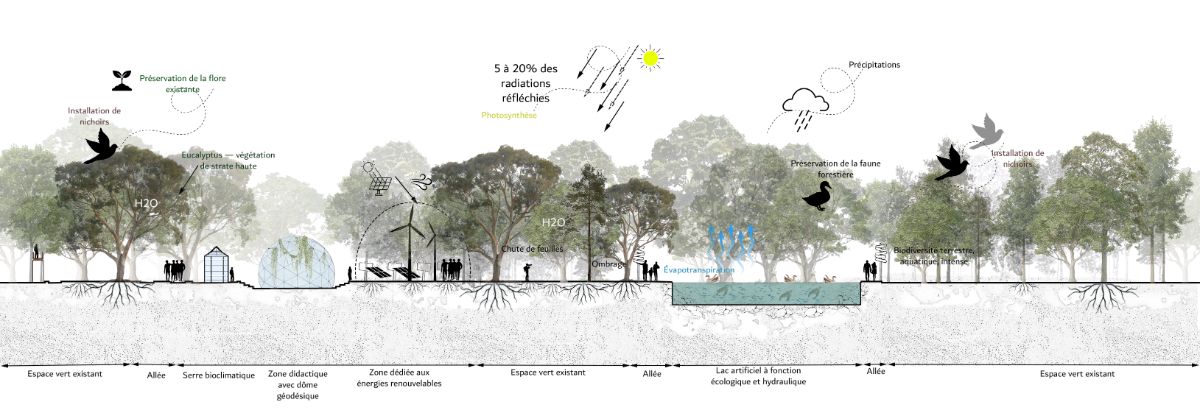
While the analysis was collective, each student then developed an individual restoration proposal. Based on the shared site analysis, the strategy prioritised native species adapted to semi-arid conditions (Tengberg et al. 1998). A key shared concept that emerged was water management. A pilot swale path was marked on-site during the field visit, as shown in Figure 3. This low-tech intervention illustrates a method for capturing rainwater runoff and directing it to infiltrate the soil within the 30-hectare pilot zone (Ladson & Brown, 2014).
Phase 3: Design Visualisation
Each proposal was subsequently developed and visualised through master planning, technical sections, and three-dimensional perspectives to communicate the design intent. This shift from collective analysis to individual design is central to the pedagogical model. In the Bouskoura context, re-naturalisation means restoring native ecological functions while allowing people to use and appropriate the forest. Through mapping and design discussions, the 30-hectare pilot design included community needs such as water saving, native trees, and public pathways.
The Proposed Design
The proposed design directly responds to the site constraints identified during the collective fieldwork: severe degradation in the central area, a network of informal paths that fragments habitats, and a lack of water retention in this semi-arid context. The design evolved from the group mapping (Figure 2), which revealed an opportunity to consolidate circulation into a single educational loop and free up core areas for regeneration. The design proposes functional zones within the 30 hectares (Figure 3), following principles of permaculture design (Mollison & Holmgren, 1978):
1- Ecological Core: This zone responds to the need for habitat restoration. It proposes dense native planting for natural regeneration with limited public access, allowing the ecosystem to recover without human pressure.
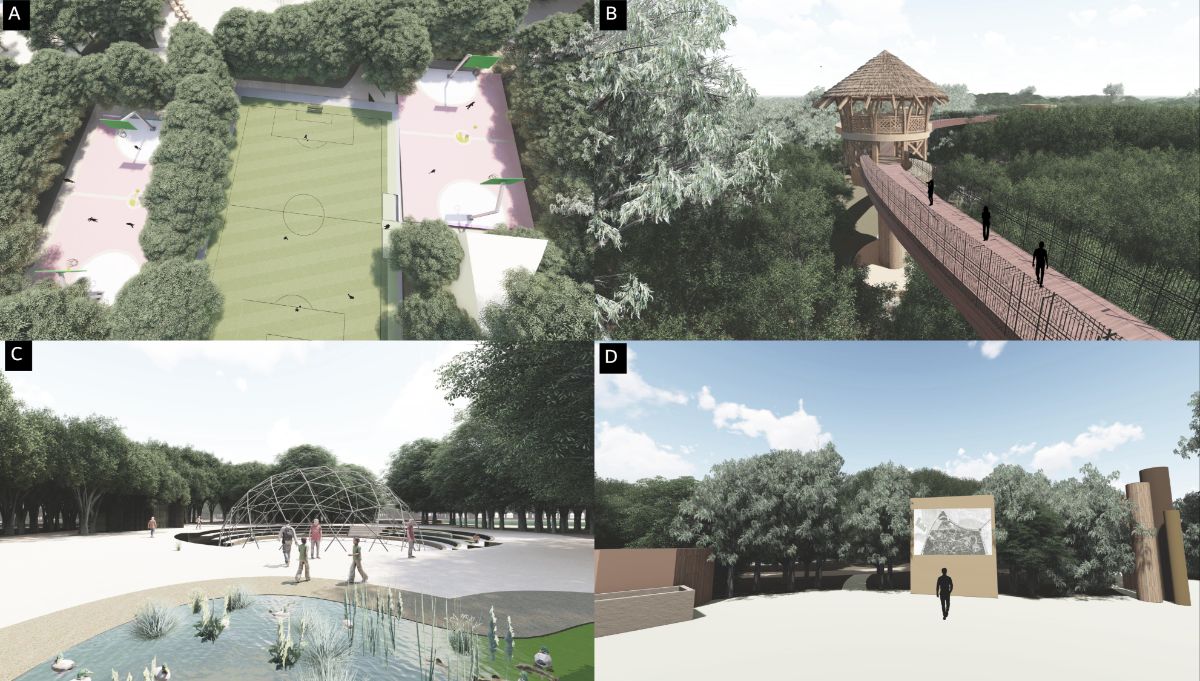
2- Educational Landscape: This zone responds to the existing social use of Bouskoura as an informal recreational area. It reorganises the dispersed informal paths into a legible 1.5-kilometre loop trail with interpretive signage and two outdoor classrooms. The aim is to channel public use to reduce trampling while creating learning opportunities about native species.
3- Water Interface: This zone responds to the hydrological challenge. The pilot swale path conceptually connects to the Oued Bouskoura waterway to harvest rainwater (Ladson & Brown, 2014). It aims to demonstrate a low-tech water management technique adapted to semi-arid conditions.
Figure 4 is an illustration of the master plan of the 30-hectare pilot zone showing the educational trail, re-naturalised areas, and water management zones.
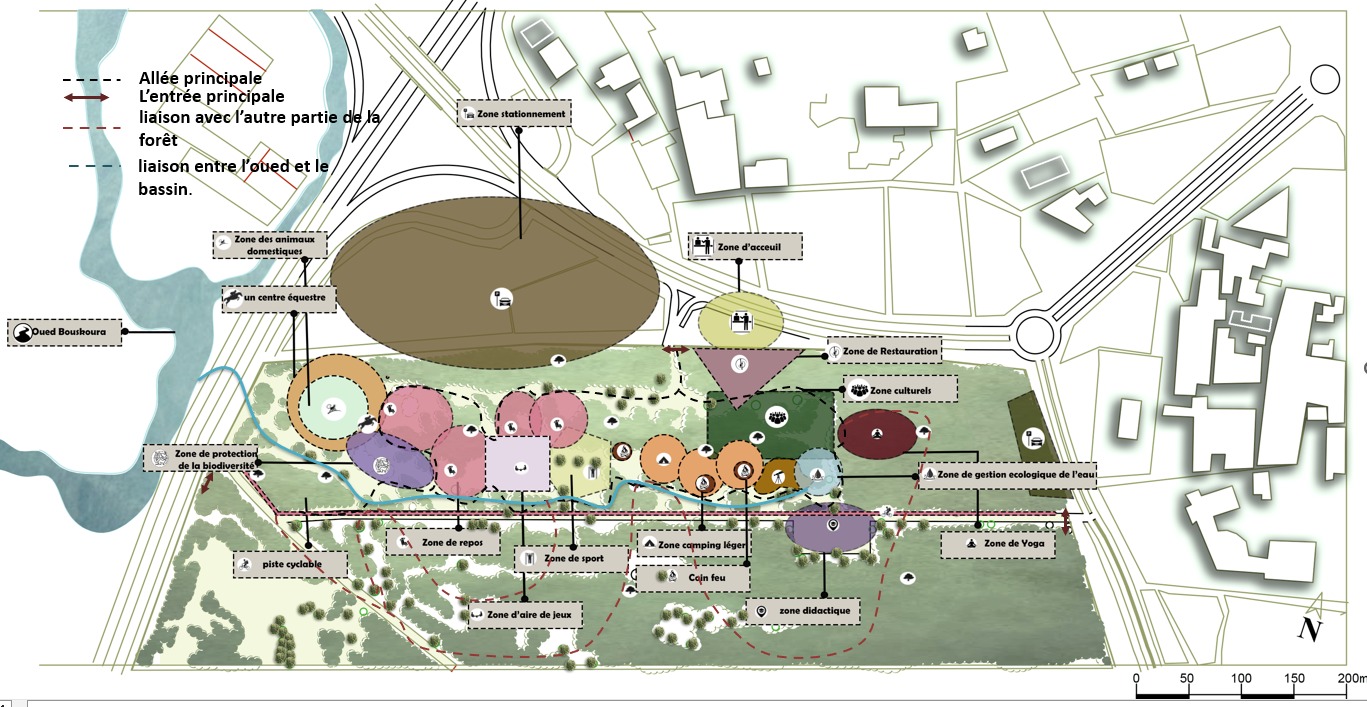
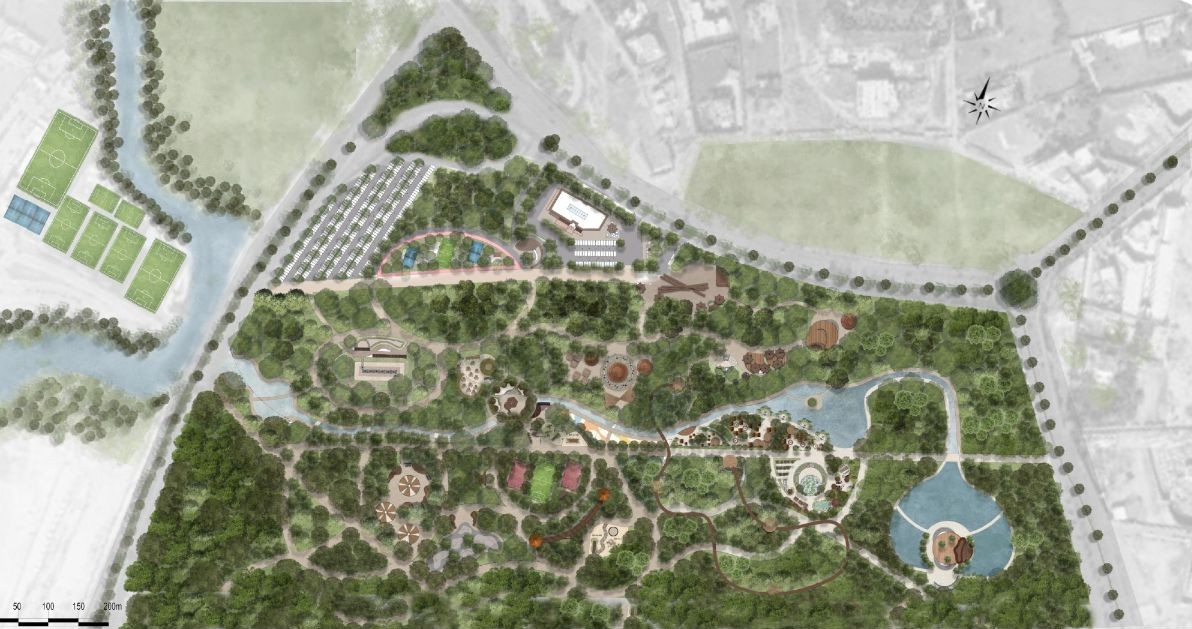
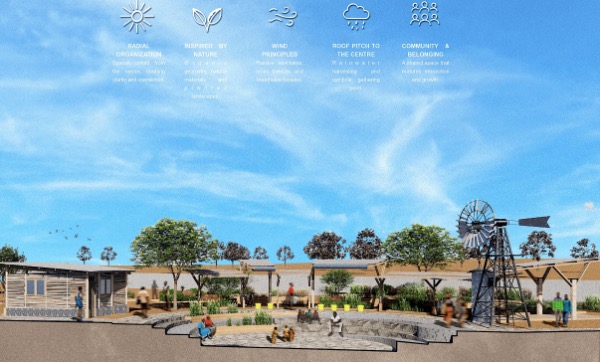
Figure 5 shows a schematic cross-section of the design, illustrating how the swale captures surface runoff and promotes infiltration to support new vegetation. The three-dimensional perspective in Figure 6 visualises the proposed educational trail integrated with the restored native landscape.
Transferability
The Forest as a Living Lab. The Bouskoura project proposes a replicable pedagogical model for Moroccan landscape schools, grounded in Kolb’s (1984) Experiential Learning Theory. Kolb’s cycle comprises four stages: (1) Concrete Experience (field immersion), (2) Reflective Observation (site analysis and mapping), (3) Abstract Conceptualisation (design proposition), and (4) Active Experimentation (pilot implementation). The studio followed this cycle: students experienced degradation firsthand in Bouskoura (Stage 1), collectively mapped constraints in Figure 2 (Stage 2), conceptualised the three-zone strategy in Figure 4 (Stage 3), and proposed low-tech interventions such as swales and native planting as testable actions (Stage 4). This pedagogical model can be transferred to other contexts in 3 steps: (1) Site Selection: Identify a 20-50 hectare degraded peri-urban area, (2) Interdisciplinary Collaboration: Partner with municipalities and local NGOs to ensure stewardship, (3) Phased Implementation: Start with analysis and small pilot interventions, then scale up.
Conclusion
The Bouskoura Forest project is an academic proposition demonstrating that landscape architecture education can drive ecological rehabilitation. As a student project, the proposal was not implemented. Still, it offers tangible solutions through plans, sections and an ecological core intended for regeneration, an educational loop intended to reduce trampling, and a swale intended to harvest water. Furthermore, this project presents a design proposal for a future participatory governance approach. The design does not claim that participation already happened. Instead, it proposes the spatial framework to make it possible: the educational trail and the two outdoor classrooms are designed to support future involvement of local schools, environmental associations, and residents. If implemented, this proposed infrastructure could support long-term sustainability.
References
Haut-Commissariat au Plan. (2023). Note sur le climat et l'aridité au Maroc. HCP.
Kolb, D. A. (1984). Experiential learning: Experience as the source of learning and development. Prentice-Hall.
Kolb, D. A. (2014). Experiential learning: Experience as the source of learning and development (2nd ed.). Pearson Education.
Ladson, A. R. and Brown, R. R. (2014). Improving water quality through stormwater management. Journal of Environmental Management, 142, pp. 112–120.
Ministry of Agriculture, Fisheries, Rural Development, Water and Forests. (2020). National forest program 2020–2030. Rabat, Morocco.
Mollison, B. and Holmgren, D. (1978). Permaculture one: A perennial agriculture for human settlements. Transworld Publishers.
Pena, W. M. and Parshall, S. A. (2012). Problem seeking: An architectural programming primer (5th ed.). Wiley.
Tengberg, A., Ellis-Jones, J. and Stocking, M. (1998). Rehabilitation of degraded lands in the Mediterranean: Lessons from the field. Journal of Arid Environments, 39(2), pp. 211–225.
World Bank. (2019). Morocco: Forests and climate resilience – Background note. Washington, DC: World Bank.