Book Review: Public Interest Design and the Future of South African Public Space
ABout the Author/s


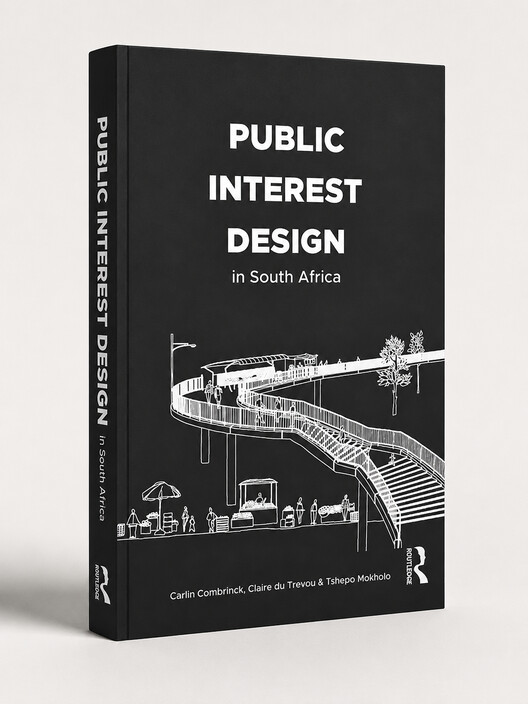
Authors: Carin Combrinkc, Claire du Trevou and Tshepo Mokholo (2026)
Public Interest Design in South Africa. Abingdon: Routledge.
ISBN 978-1-003-37729-0 (e-book).
What does it mean to design in the public interest? In South Africa, where the spatial consequences of apartheid continue to shape access to land, infrastructure and public space, this is not simply a question of architectural intention. It is a question of whose needs shape the built environment, whose knowledge informs design decisions, and who ultimately benefits from the spaces and infrastructure we produce.
In Public Interest Design in South Africa, Prof. Carin Combrinck, Claire du Trevou and Tshepo Mokholo commendably invite readers to reconsider the purpose and responsibilities of architectural practice. Drawing on projects and practices since 1994, the authors explore how collaborative, context-responsive approaches can challenge spatial inequality. Their central proposition is a shift from asking what design is to asking what design does. (Combrinck, du Trevou and Mokholo, 2026).For landscape architects and built environmental professionals, this offers a compelling framework for reconsidering the social, political and environmental responsibilities of public-space design. Offering a value proposition that takes into account the effects of design rather than the aesthetics or environmental performance alone.
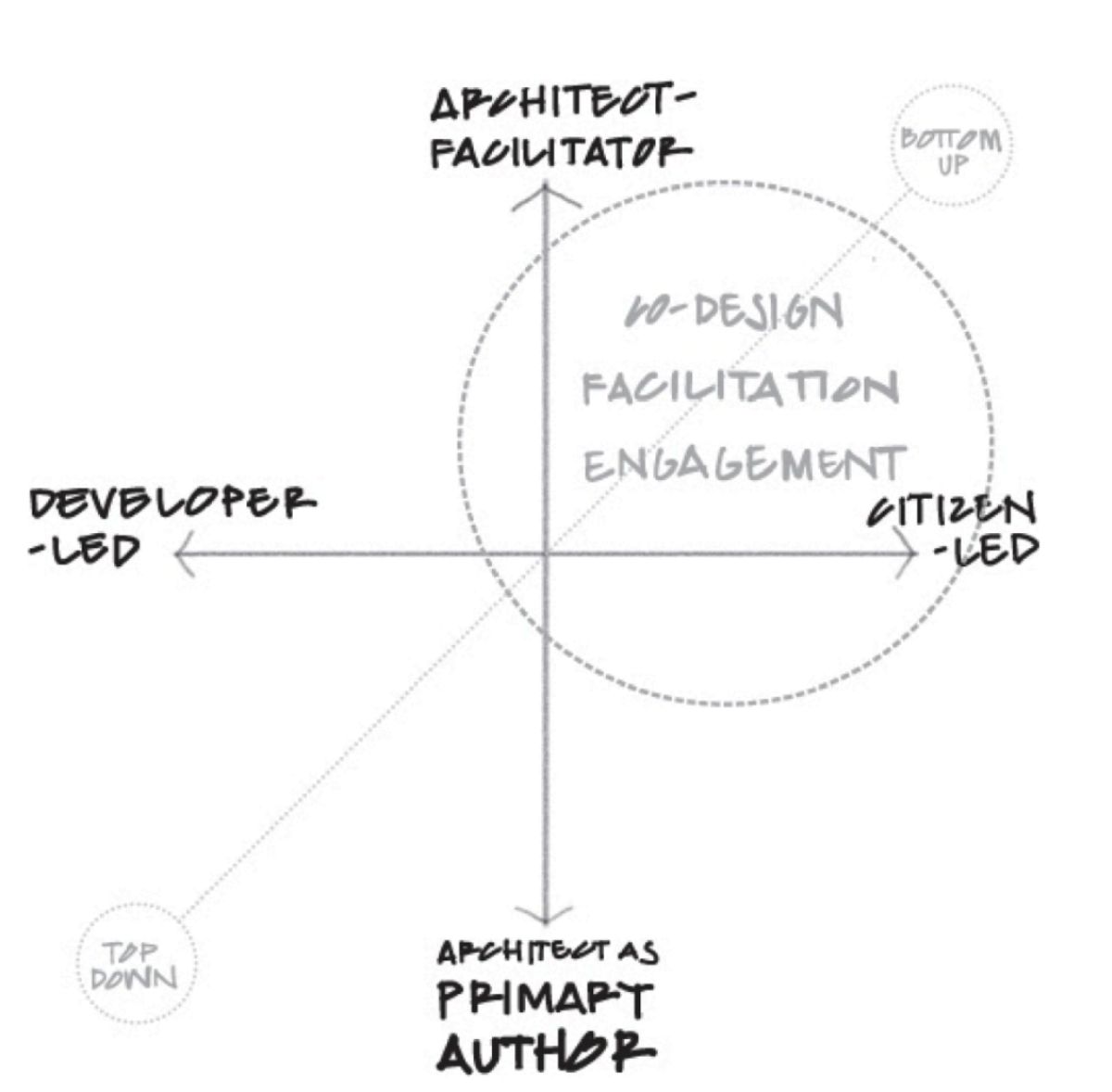
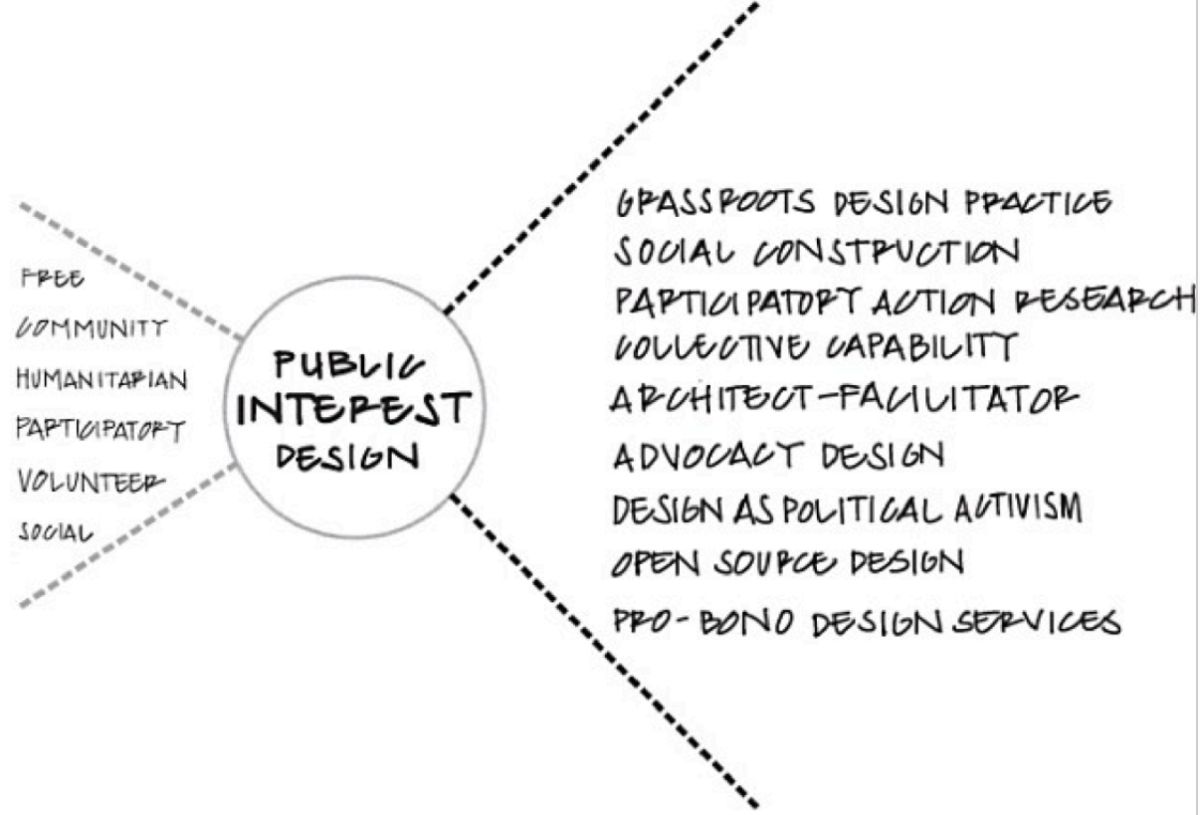
The chapters move from grassroots design and social construction to participatory action research, collective capability and the architect as facilitator. Later chapters consider advocacy, political activism, open-source design, pro-bono practice, praxis and pedagogy. The authors draw on Joongsub Kim’s taxonomy of Public Interest Design to bring a varied set of South African projects into conversation. They are not trying to provide a complete record of this work; rather, they make the case that practices often treated as peripheral deserve a more central place in architectural discussion (Combrinck, du Trevou and Mokholo, 2026).
Several examples demonstrate the relevance of this argument to public infrastructure. The Eyethu Skate Park, adjacent to Imizamo Yethu informal settlement in Hout Bay, Cape Town, emerged through collaboration between a young architect and the local skateboarding community, with support from the Hout Bay Rotary Club. The authors describe it as a shared and valued public interface (Combrinck, du Trevou and Mokholo, 2026, pp. 22–23). What matters here is not only that a recreational facility was provided, but that the initiative grew from a relationship between a practitioner and the people who would use it. The example leaves an important question for landscape architects and public clients: how can locally driven projects receive the support they need without taking control away from the communities that initiated them?
Warwick Markets in eThekwini offers a different lesson. The collaboration between architect Richard Dobson and his non-architect colleague Patrick Ndlovu is presented as an approach in which listening and facilitation matter as much as technical expertise. The interventions discussed range from first-aid stations and roof coverings to public toilets and safer cooking areas. Their scale differs, but each responds to practical needs in the everyday life of the market (Combrinck, du Trevou and Mokholo, 2026, pp. 24–25). This is a persuasive reminder that public infrastructure is not always improved through a single large intervention. Smaller changes can make a substantial difference to safety, dignity and livelihoods, particularly when they emerge from a good understanding of how a place works.
The book also examines the Violence Prevention through Urban Upgrade (VPUU) programme in Cape Town, including its use of digital technology to support learning and access to services. Alongside the ukuDoba method developed by the University of Pretoria's Unit for Urban Citizenship and international partners, these examples demonstrate how digital tools can contribute to participatory mapping and the documentation of marginalised urban environments. However, the authors also recognise the limitations of technology-dependent approaches in contexts where access to devices, connectivity and electricity cannot be assumed. This attention to the realities of implementation strengthens the book's relevance to landscape architects and built environment professionals working across unequal urban conditions (Combrinck, du Trevou and Mokholo, 2026, pp. 24–26) as well as highlighting the instrumental importance of local experts, community members and non-architects in the design process.
One of the book’s strongest points is its distinction between meaningful participation and consultation carried out simply to complete a process. The authors describe projects where engagement was incomplete or one-sided and where the resulting intervention was later neglected or rejected. Trust, continued involvement and the ability to respond to people’s concerns are therefore not optional additions to design; they influence whether a project is accepted and sustained (Combrinck, du Trevou and Mokholo, 2026, pp. 23–24). This is especially relevant to public-space projects, where responsibility often shifts between designers, public authorities, contractors and the people who use the space. Asking for community input is not the same as sharing authorship. The more difficult test is whether that input changes the decisions being made.
The discussion of pro-bono work and corporate social investment raises another uncomfortable question: should improvements to public infrastructure depend on private goodwill or professionals donating their time? Such arrangements can make worthwhile projects possible, but they also raise questions about accountability and the state’s responsibility to provide public services (Combrinck, du Trevou and Mokholo, 2026).
The book opens up this tension without suggesting that one funding model can resolve it. For me, it is an important reminder that good intentions cannot substitute for the resources and institutional support needed to maintain a project over time.
The authors acknowledge that the projects they selected do not provide a comprehensive or geographically balanced picture of public-interest design in South Africa. Their account is shaped partly by which projects have been documented and made visible in published sources (Combrinck, du Trevou and Mokholo, 2026, pp. 20–21). A further challenge is how to assess long-term impact. The book points towards the possibility of a public-interest design rating system, but measuring social value is not straightforward. Standard indicators may help compare projects, yet they can also miss the lived experience, changing needs and local priorities that give a place meaning. This is an area where further research would strengthen the field.
These questions were also part of the online launch of the book on 18 August 2026, which I had the opportunity to host. Our conversation returned to shared authorship, the politics of design, the practitioner’s role as facilitator and what allows projects to endure after designers or funding partners have moved on. Those issues stayed with me because they point beyond the design process itself to the conditions that make public-interest work possible.
Public Interest Design in South Africa is a valuable contribution to conversations about the social responsibilities of the built-environment professions. Its relevance to landscape architecture lies less in offering a formula than in asking practitioners to pay closer attention to the people, relationships and forms of local knowledge that shape a place. The book also leaves a practical challenge: how can these ways of working become part of ordinary public-sector practice, rather than remain dependent on committed individuals or exceptional projects? Answering that will require meaningful participation, sustained resources and a willingness to judge success by what changes in people’s everyday lives, not only by what is delivered.
References
Combrinck, C., du Trevou, C. and Mokholo, T. (2026) Public Interest Design in South Africa. Abingdon: Routledge. Available at: https://doi.org/10.4324/9781003377290.