Urban and Landscape Design at the University of Mpumalanga
ABout the Author/s



Cet article présente et analyse les stratégies de conception et de mise en œuvre architecturales paysagères élaborées par kwpCREATE pour six des quatorze projets paysagers du nouveau campus de l’Université de Mpumalanga (UMP) à Mbombela, réalisés entre 2018 et 2025 en réponse au cadre urbanistique, à l’architecture du campus et aux conditions environnementales.
L’université accueille de nombreux étudiants issus des provinces rurales du Mpumalanga et du Limpopo, souvent privés d’un environnement d’apprentissage, de socialisation et de loisirs véritablement propice et stimulant. Le cadre urbanistique, préparé et actualisé par LHA Urban Designers, définit des lignes directrices générales pour orienter les réponses architecturales paysagères et garantir que le campus offre, grâce à des espaces ouverts publics et semi-privés, un environnement contribuant à la santé, à la sécurité et au bien-être des étudiants, du personnel et des visiteurs.
Ces lignes directrices sont brièvement résumées, puis traduites en objectifs spécifiques. Six projets d’architecture paysagère sont ensuite présentés, illustrés et commentés selon la manière dont ils répondent à ces objectifs et lignes directrices.
This article presents and discusses the landscape architectural design and implementation strategies for six of the fourteen landscape projects undertaken at the University of Mpumalanga’s (UMP) new Mbombela campus in South Africa. Landscape implementation took place between 2018 and 2025 in response to the campus’s urban design framework, architectural character, and surrounding environmental conditions. The University attracts many students from rural Mpumalanga and Limpopo, who have often lacked access to supportive learning, social, and recreational environments. The urban design framework, prepared and maintained by LHA Urban Designers, sets out broad guidelines for how landscape architecture should contribute to creating a healthy, safe, and socially enabling campus environment through well-designed semi-private and public open spaces. These guidelines are summarised, and from them, specific design objectives are developed. Six landscape architectural projects are then presented, illustrated, and discussed in relation to the extent to which these guidelines and objectives have been met.
Introduction
In the University of Mpumalanga’s (UMP) Spatial Design Framework and Infrastructure Development Plan, prepared by LHA Urban Designers, the following quote from David Engwicht provides a valuable tertiary institution mission statement:
“University campuses are intended to facilitate exchange of information, friendship, culture, knowledge, insight, skills, and also exchange of emotional, psychological, and spiritual support.” (Engwicht, D. quoted in LHA Urban Designers, 2018)
The UMP is a relatively recently established university in a province with historically limited access to tertiary education. Consequently, new buildings and infrastructure are being provided at an accelerated pace compared to more established universities.
The SA Department of Higher Education and Training (DHET), in its vision and principles for UMP, describes the institution as an African university “being part of a broader network and community of African institutions of higher learning with a long tradition of scholarship rooted in the African experience, contributing to African knowledge production and generating ideas and insights with global relevance.” (DHET, 2012).
Community and communal values should therefore inform urban, architectural, and landscape architectural design decisions. The UMP aims to contribute significantly to education and, ultimately, to the socio-economic upliftment of Mpumalanga citizens.
Many students lack reliable internet connections at home and safe, creative spaces for study. University buildings and open spaces must provide this. The campus, as custodian of knowledge, learning, and memory, should offer sanctuary for students and staff to collaborate, connect, and explore. Facilities should empower users and support staff and students from disadvantaged backgrounds.
The UMP was established through the conversion of the previous Lowveld Agricultural College to an independent SA university. The original campus was located some distance from the City of Mbombela and even though subsequent urban developments have moved closer to the UMP, it is still not integrated with and has little connection to the local urban context.
Urban Design and Regulatory Guidelines
Urban Design Guidelines
The UMP urban design framework provides broad guidance for landscape architectural responses. Key guidelines include:
• Building entrances should be clearly visible and demarcated using landscape components and design considerations such as pathways, tree lanes as edges and street furniture.
• Let the land and topography dictate building and infrastructure placement, ensuring pedestrian corridors follow natural contours.
• Natural watercourses, wetlands, and sensitive habitats should guide campus development, in accordance with the Environmental Impact Assessment Report.
• Irrigation using the Boschrand dam water, combined with storm water detention, retention, and flood peak attenuation strategies, to satisfy water management requirements. It should be noted that one of the other landscape projects, not presented in this article, dealt with increasing the dam’s capacity and constructing three retention dams in the run-off water course from the dam. The water course work also entailed removing alien invasive plants and rehabilitation with indigenous trees and shrubs.
• Connectivity and access are priorities; streetscapes should be pedestrian-friendly, safe, and navigable.
• Defensible space strategies should be incorporated at street, block, and project levels to assist in crime prevention through design.
• The African notion of meeting under a tree informs informal social spaces, as demonstrated in the student pavilion’s designs presented in this article.
• Campus infrastructure should be pedestrian-oriented, with generous covered or semi-covered spaces promoting social interaction while providing protection from the climate.
Other Regulatory Requirements
Landscape and rehabilitation works are regulated by:
• Township establishment conditions, including minimum landscaping and prescribed plant species. In the case of the UMP, based at an existing agricultural college, located outside the Mbombela city perimeter, its relationship and response to the urban fabric were not a relevant consideration.
• Environmental Authorisation and the associated Environmental Management Programme (EMPr) by Lidwala Consulting Engineers, addressing soil erosion, pollution prevention, protection of indigenous flora and fauna, and control of invasive alien plants. Although the UMP was and still is being developed on primarily brownfield sites, aspects such as soil erosion prevention, protection of the baobab trees and control of invasive species were applicable and adhered to.
• EMPr guidance applies across planning, construction, and operational (maintenance) phases, and landscaping projects must comply with all three phases. For the projects discussed here, twelve-month post-completion landscape maintenance contracts were included to ensure proper maintenance by the responsible landscape construction contractors and to allow time for the UMP to appoint and train their own maintenance staff.
Landscape Architectural Strategies
The UMP campus exhibits varied topography—from steep granite hills to sandy plains—diverse flora and ecosystems, and modern functional architecture. Although the landscape designs were to a large extent informed by the campus’ urban and architectural layouts, which were mostly completed beforehand, the objectives listed below were able to be achieved.
Create appropriate outdoor and courtyard social spaces
Provide landscaped areas for passive recreation, comfort, and shade, supporting both private and social interactions. Spaces should ensure safety, legibility, and ease of orientation.
Use locally indigenous flora
Conserve and protect on-site indigenous species, with careful transplanting or replacement with same or similar species where necessary. The EMPr. identified several scarce or threatened on-site tree species, and these were either protected during construction or replaced with new similar species where transplanting was not an option.
Promote low-water-demand landscapes
Use water from the Boschrand dam and implement xeriscaping where feasible to minimise irrigation demand.
Rehabilitate natural landscapes
Restore leftover spaces affected by construction, such as contractor work and laydown areas or topsoil stockpiles.
Promote environmental sustainability
Harvest, store and re-use topsoil, prioritise indigenous plants, and enhance biodiversity, including flora, insects, and birds.
Minimise maintenance costs
Design with low-maintenance lawns, planter edges, and flowering species that do not require frequent pruning, while maintaining a natural appearance.
Selected Landscape Projects
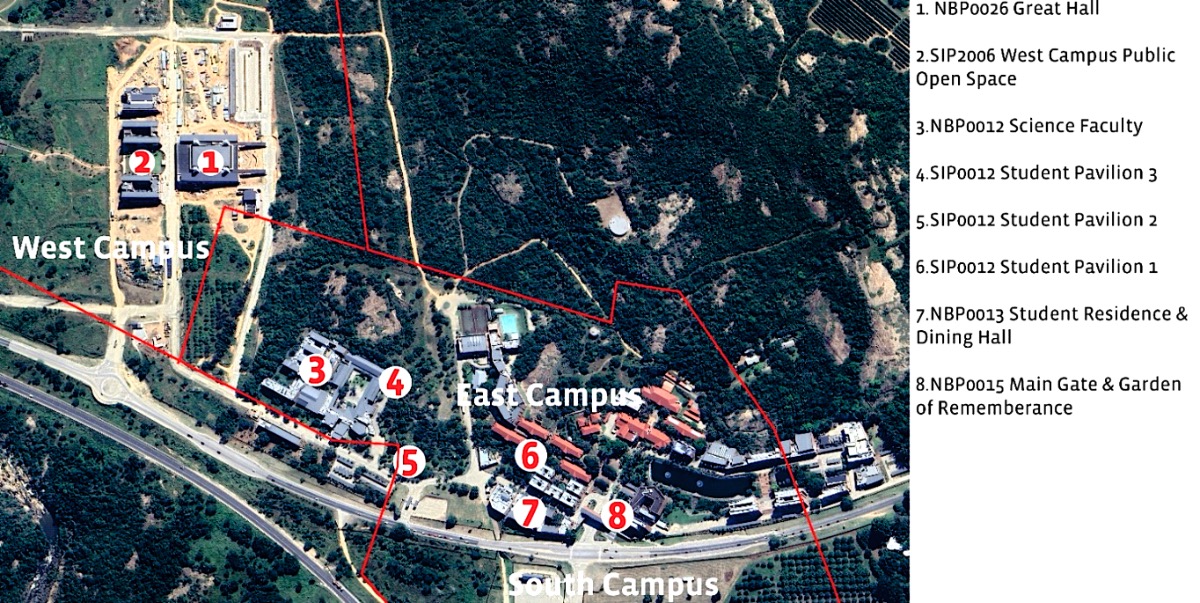
Six completed UMP landscape projects are presented and are indicated on a campus plan, (see Figure 1) the UMP consisting of the East (the original), West and South campuses. New buildings on the East Campus (original College buildings are red-roofed) are mainly situated along the provincial access road where the slopes are less steep. The West Campus is situated on previous fruit tree orchards and cultivated fields, consisting of decomposed granitic sandy soils. The layout of the West Campus urban layout is more coherent and allows for the landscape architecture to respond to the urban design philosophy.
Science Faculty
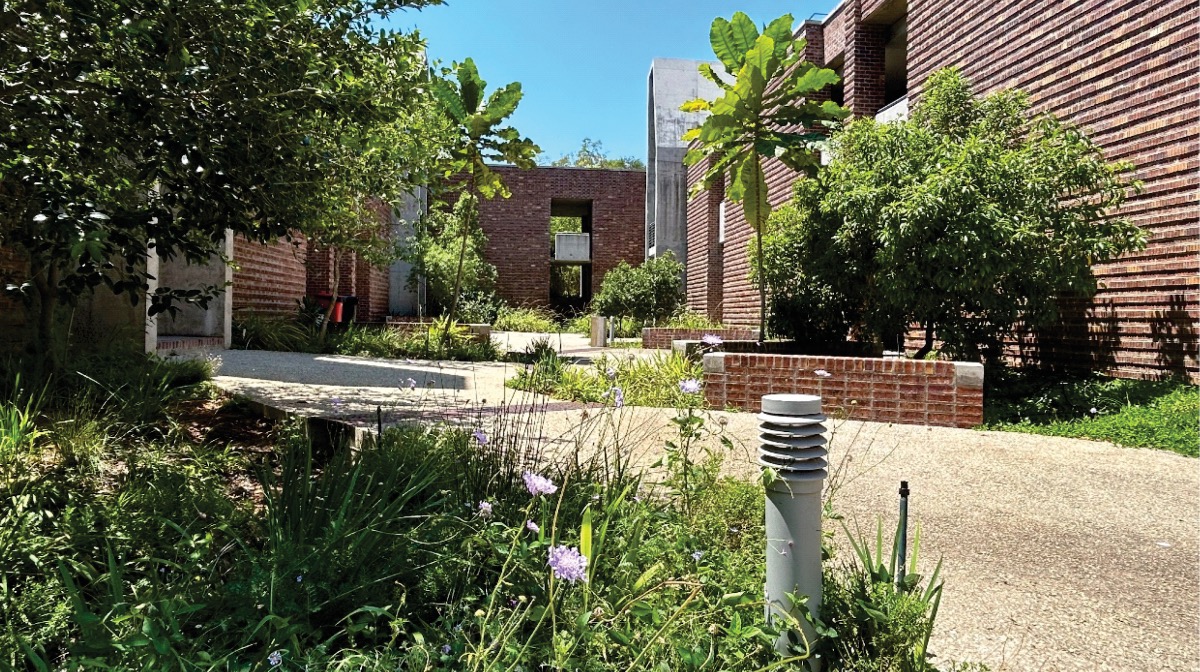
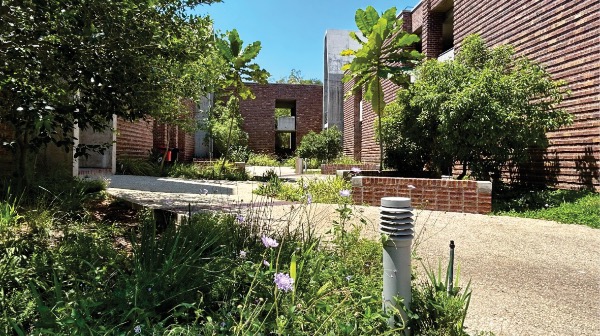
The Science Faculty is situated on the western edge of the East Campus and consists of five blocks with internal courtyards and a central square integrated into a steep site (see Figure 2). Break-out spaces in the courtyards have been intensively landscaped to provide visual and physical relief. The buildings are set against a steep slope adjoining a pristine natural landscape which had to be carefully protected. Storm water runoff from the hill behind has been diverted via a vegetated swale into a rainwater pond stabilised by rock filled wire mesh mattresses to promote infiltration. A listed Marula tree was protected by a retaining wall to compensate for new ground level differences.
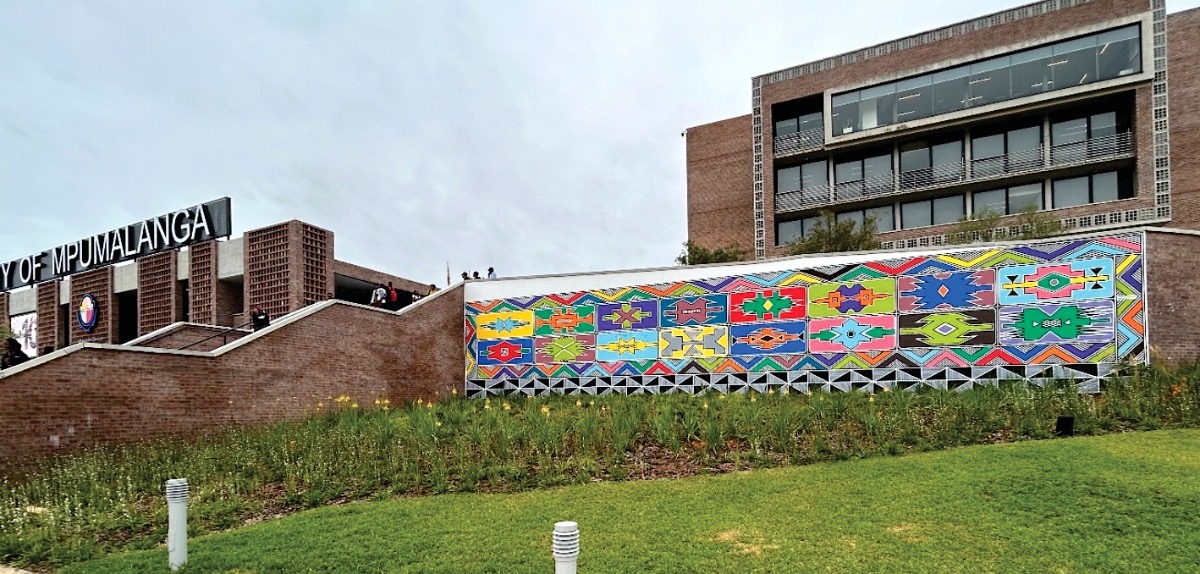
Main Gate and Garden of Remembrance
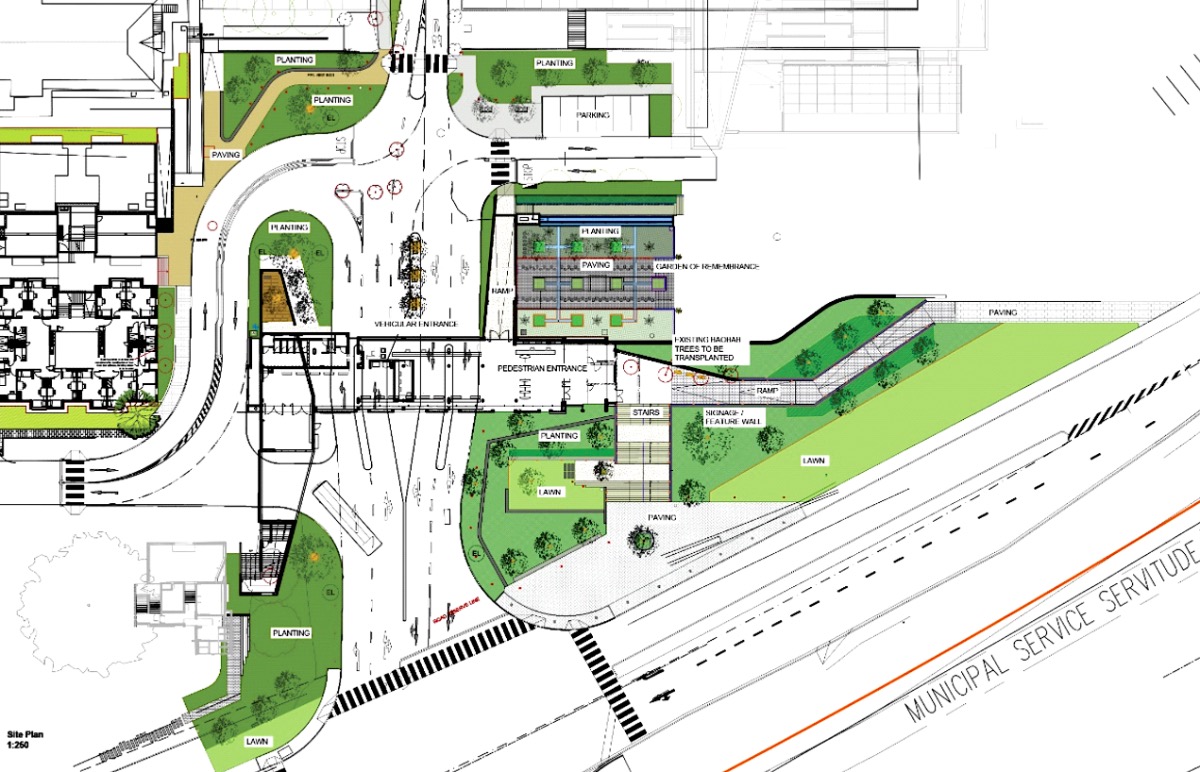
The new main entrance for vehicles and pedestrians replaced the inadequate original entrance on the East Campus (see Figures 3 and 4).
Great Hall
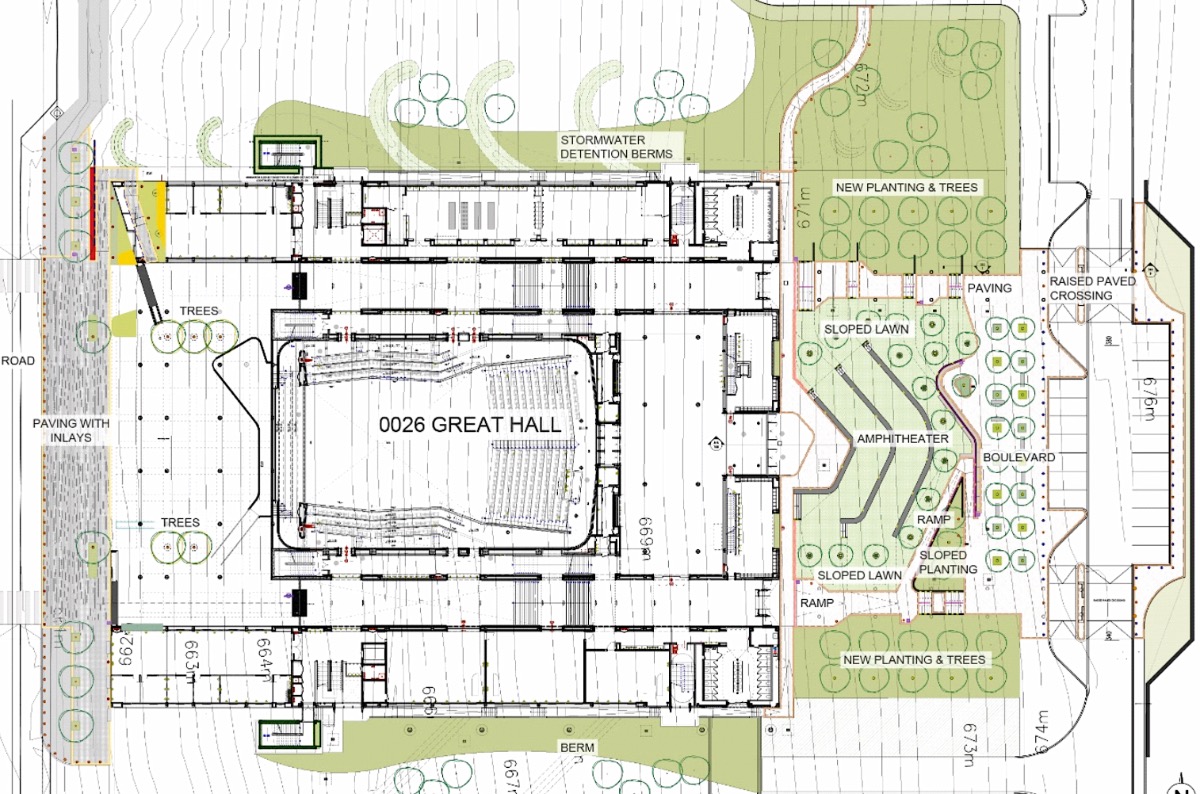
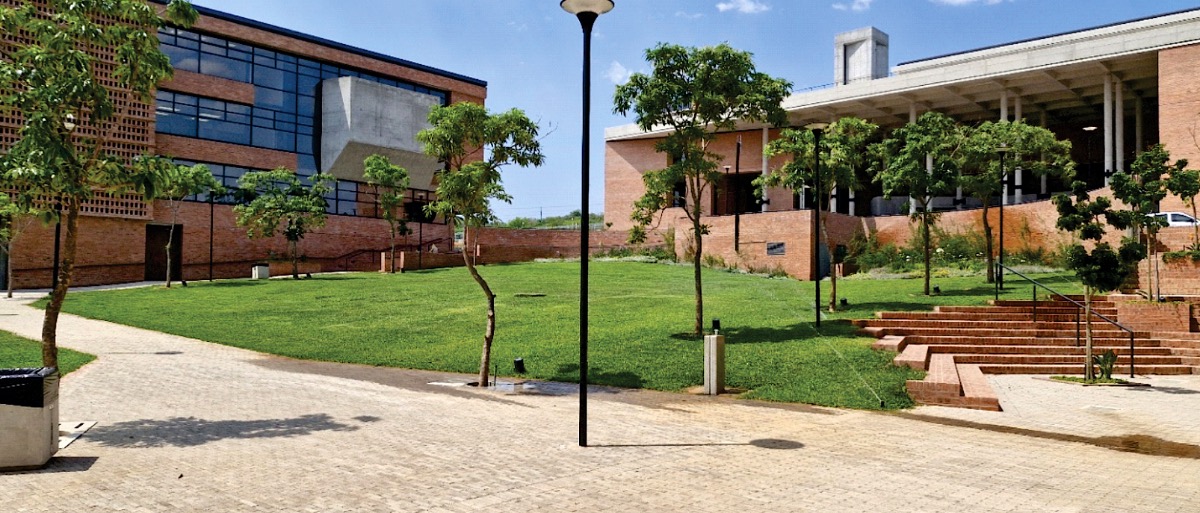
Situated on the newly developed West Campus, formerly mainly orchards and cultivated fields, the building has been designed to host large numbers for events such as graduations and performances. From an urban design consideration, the western façade forms one of three built-up edges framing the main public open space discussed later, see Figures 5 and 6.
Student Pavilions
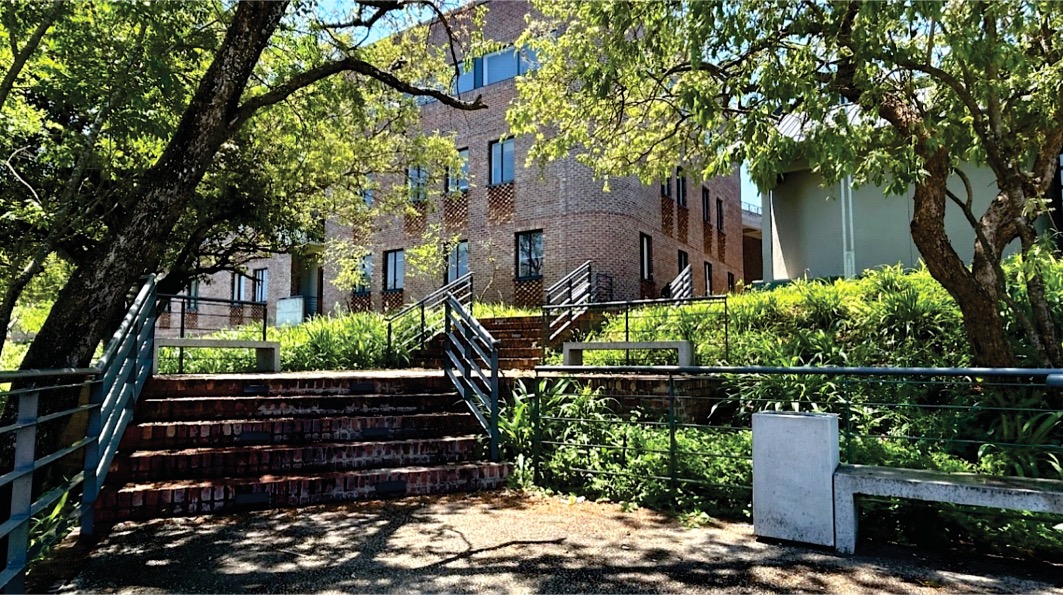
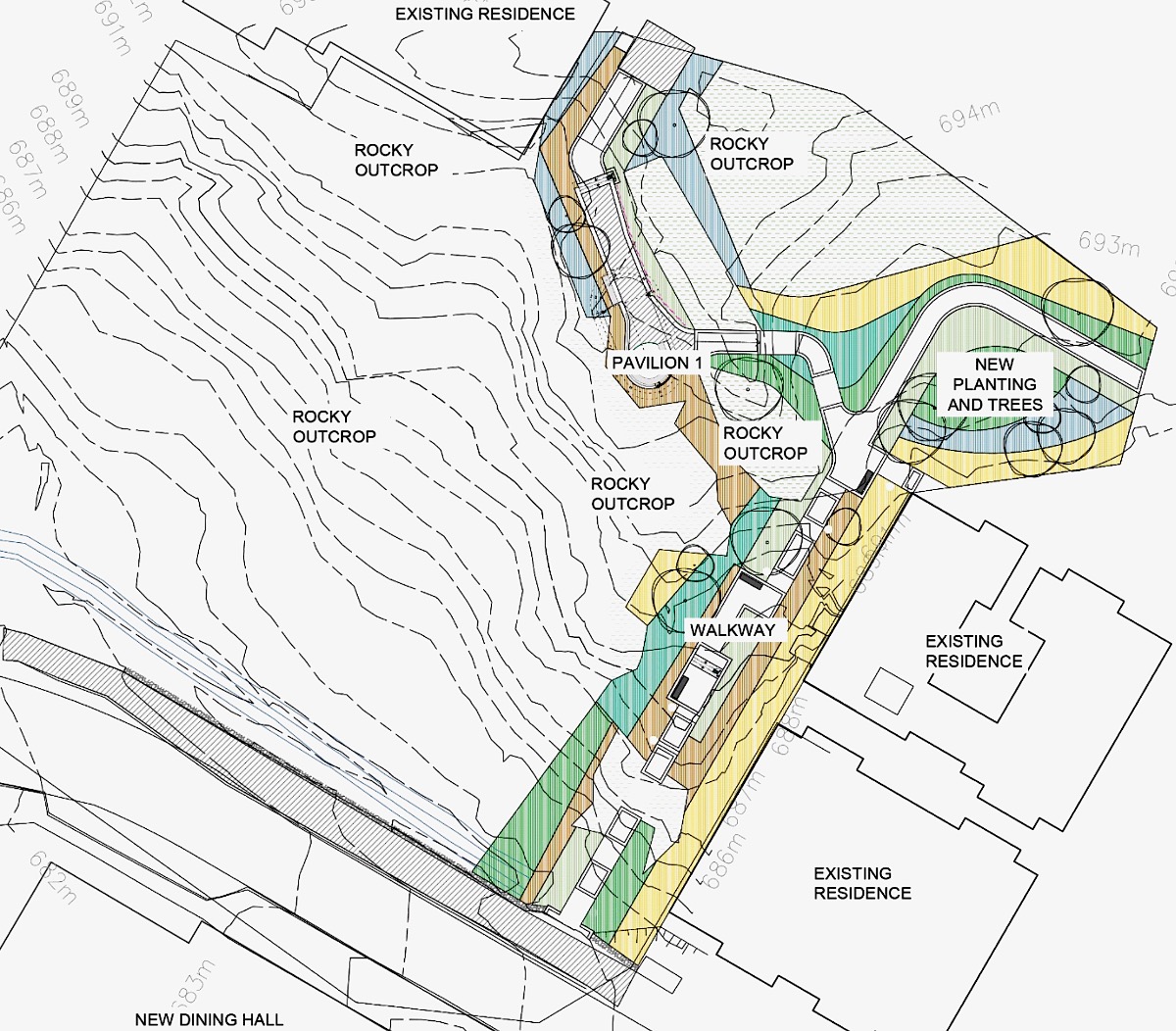
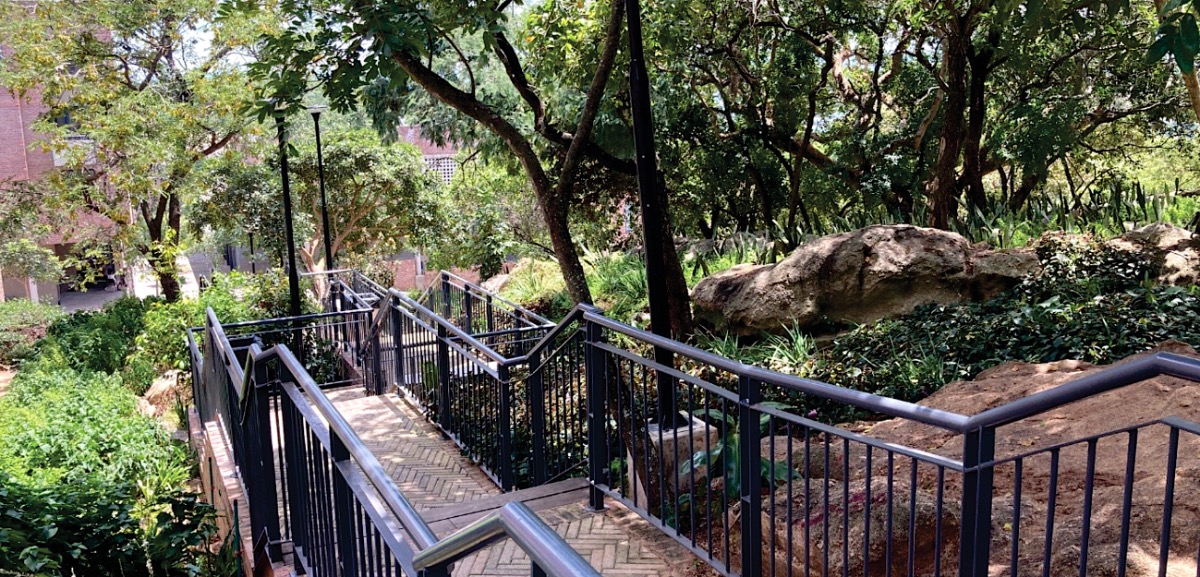
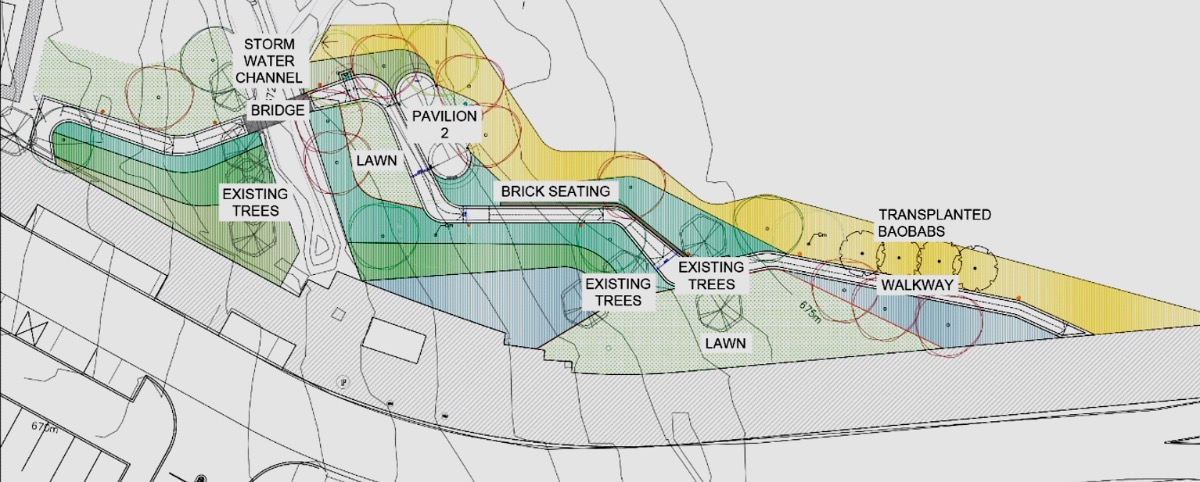
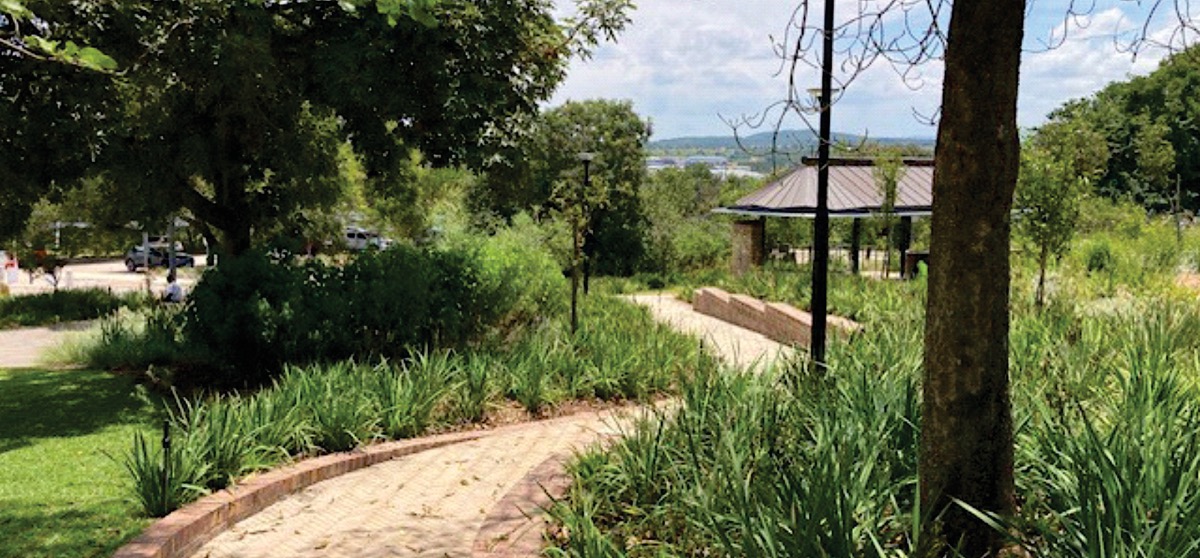
Three small pavilions on the East Campus are positioned along long pedestrian routes to provide shaded rest and social spaces although the routes themselves are not roofed which may be a discomfort to pedestrians in an area where hot temperatures and intensive rain showers are often experienced. Safety is ensured by clear walkways and avoidance of hidden corners. Pavilions include drinking fountains, litter bins, and phone charging points. Pavilion 1 is set along a very steep pedestrian route between residences and a dining hall and in a relatively pristine wooded rocky site (see Figures 7 to 10).
West Campus Public Open Space
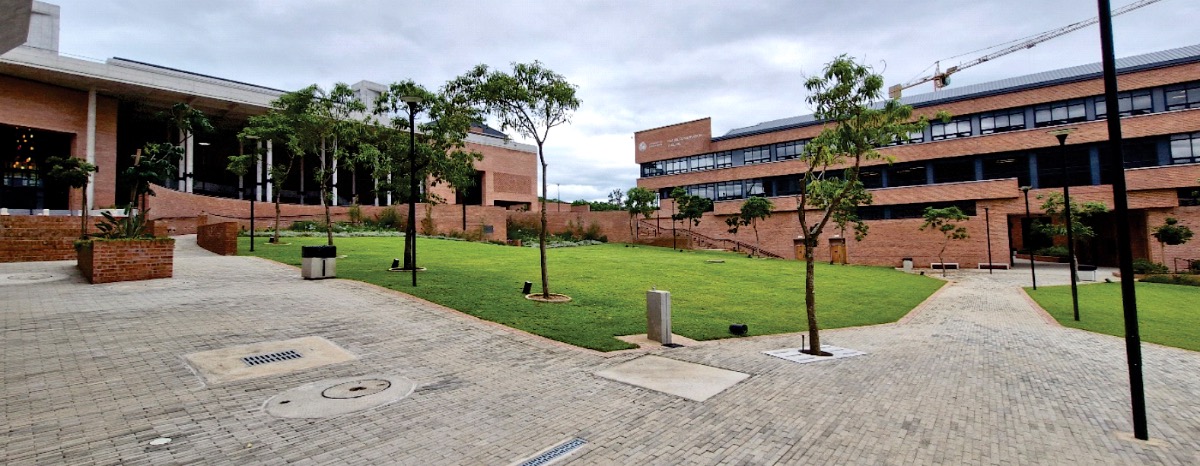
A large, centrally located public open space on the West Campus connects two new Faculty buildings and the Great Hall, see Figure 11. A hard-paved amphitheatre was created to provide access to a lower ground floor entrance.
Conclusion
The six projects demonstrate that the urban design objectives and planning guidelines have been taken into consideration. Some conclusions are:
• Continuing to meet the objectives will require dedicated and ongoing landscape maintenance, even though low maintenance was an objective for each project, including minimised lawn areas, hard-edged planters to facilitate maintenance, while planted areas retain a natural appearance.
• Every project included a contractual 12-month landscape maintenance period by the landscape sub-contractor reducing the workload on the UMP in-house staff and ensuring that any latent defects in the landscape maintenance could be rectified.
• To ensure sustainable irrigation management for the future, the design strategy included additional filtering at each building of the water sourced from the Boschrand Dam on the West Campus.
• It was recommended to the UMP Facility Management Department to establish an on-site mulching and composting facility to manage plant waste and reduce imported material costs.
• Any future planned residences and faculty buildings on the West Campus, together with pedestrian-friendly routes with sufficient shaded resting places, should help to alleviate the problem of the distance between the West and East campuses, the original East Campus having not allowed for future developments.
References
Engwicht, D. quoted in LHA Urban Designers, 2018. The University of Mpumalanga: Architectural Guidelines & Building Package. Updated unpublished report. Johannesburg.
Google Earth, 2026. University of Mpumalanga site plan, downloaded on 14 Feb 2026 and subsequently annotated.
kwpCREATE Landscape Architects, 2025. Images taken by kwpCREATE Landscape Architects November 2025 and January 2026.
SA Department of Higher Education and Training (DHET), 2012. Development Framework for New Universities in the Northern Cape and Mpumalanga Provinces. Unpublished report. Pretoria.
Credits
All plans and images are by kwpCREATE (2025). Assistance by various kwpCREATE personnel in providing the figures and images is acknowledged.





.jpg)
