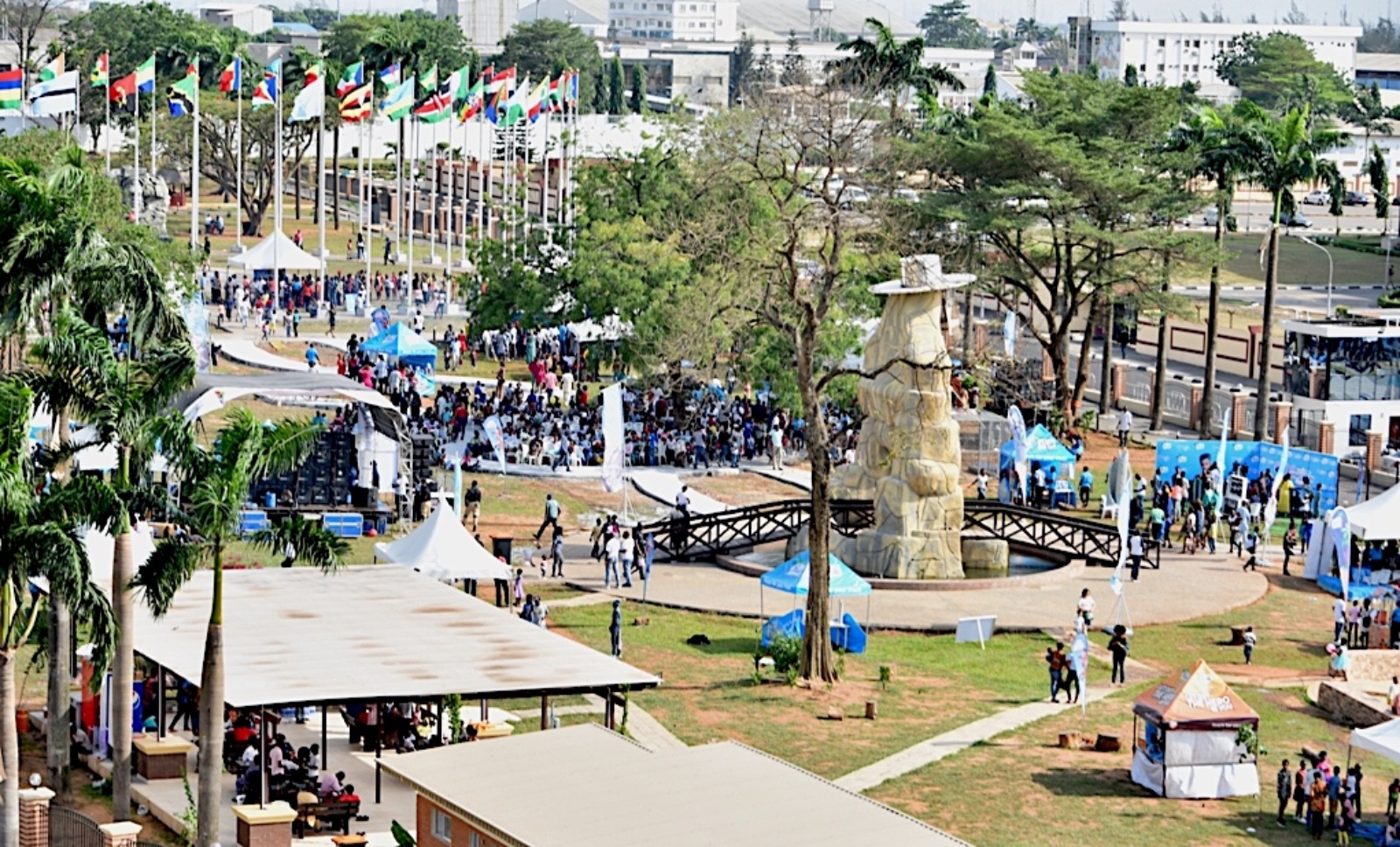
An Empirical Assessment of Public Open Space in Lagos, Nigeria
ABout the Author/s



L'aménagement paysager urbain est un facteur déterminant pour la durabilité, le bon fonctionnement et la qualité de vie des villes modernes. À mesure que la population continue de s'installer en ville, le besoin d'un aménagement adéquat des espaces publics ouverts, favorisant un environnement durable, les interactions sociales et le bien-être des personnes, s'est considérablement accru. Cet article examine l'impact de l'aménagement paysager urbain sur l'amélioration de la qualité de vie en ville, en tenant compte du rôle essentiel des espaces publics ouverts. La recherche s'est concentrée sur le parc Johnson Jakande Tinubu, à Ikeja, dans l'État de Lagos.
Une approche de recherche mixte a été adoptée, comprenant des enquêtes auprès des usagers et des observations sur le terrain. Elle a examiné des éléments clés de l'aménagement paysager tels que la composition de la végétation, l'agencement spatial, les équipements, l'accessibilité et les pratiques d'entretien. Les résultats ont révélé que des éléments d'aménagement paysager bien intégrés améliorent la satisfaction des usagers, le confort environnemental et les interactions sociales. L'étude a identifié l'aménagement paysager urbain fonctionnel comme un élément central pour améliorer la qualité de vie en milieu urbain et recommande l'intégration de principes de conception respectueux de l'environnement, centrés sur l'usager et durables dans les politiques d'urbanisme.
Traduit avec DeepL.com (version gratuite)
Urban landscape design is a major factor in determining the sustainability, functioning and livability of modern cities. As people continue to migrate to cities, the need for a proper design of public open spaces that promote a sustainable environment, social interaction, and human well-being has significantly increased. This paper examines the impact of urban landscape design in enhancing urban livability, considering the critical role of public open space. The research focused on Johnson Jakande Tinubu’s Park, Ikeja, Lagos State. A mixed-methods research approach was adopted including user surveys and field observation. It examined key landscape design elements such as vegetation composition, spatial layout, amenities, accessibility, and maintenance practices. The findings revealed that well-integrated landscape design elements improve user satisfaction, environmental comfort, and social interaction. It identified functional urban landscape design as central to enhancing urban livability and recommends the integration of eco-friendly, user-centred, and sustainable design principles into urban planning policies.
Introduction
Rapid urbanisation has increased global concerns about the quality, accessibility, and functionality of public open spaces in contemporary cities. In fast growing metropolitan areas such as Lagos, increasing population density, environmental stress, and infrastructure pressures have heightened the demand for well-designed urban landscapes that support sustainable and livable urban environments. Urban landscape design plays a critical role in sustainable urban development by integrating green infrastructure that enhances environmental quality, aesthetic value, and human well-being.
Urban landscapes include parks, gardens, streetscapes, and other public open spaces, that provide multiple ecological and social benefits. Beyond their aesthetic value, these spaces contribute to urban environmental regulation by moderating microclimates, improving air quality, and supporting biodiversity (Janhall, 2015). They also facilitate recreation, social interaction, and physical activity, thereby enhancing mental health and overall quality of life (Olszewska-Guizzo, 2018). Consequently, well-designed and effectively managed urban landscapes are essential for improving urban livability.
Urban livability refers to the extent to which urban environments support human well-being, comfort, safety, and life satisfaction. However, rapid urban expansion in many developing cities has led to the degradation and fragmentation of urban green spaces, reducing environmental quality and limiting opportunities for recreation and social engagement (Nasution & Zahrah, 2014; Lapointe, Gurney & Cumming, 2020; Dipeolu & Ibem, 2020). These challenges are particularly evident in cities of the Global South where competing land uses and weak maintenance frameworks often undermine the effectiveness of public open spaces.
In response to the above challenges, the government of Lagos State established the Lagos State Parks and Gardens Agency in 2011 to green and beautify the city, create and manage public open spaces, and reclaim degraded landscapes through initiatives such as tree planting and environmental renewal programs. However, urban landscape design influences urban livability by shaping how people experience and interact with the built environment. This study provides an assessment of public open spaces in Lagos, examining how landscape design elements and management practices contribute to social interaction, environmental comfort, and overall urban livability.
Literature Review
Urban landscape design and urban livability are closely interrelated concepts within contemporary urban studies, reflecting a growing emphasis on human-centered, sustainable, and resilient cities. The literature reveals that the quality of urban landscapes significantly influences how livable a city is perceived and experienced by its inhabitants.
Conceptualizing Urban Livability
Urban livability is a multidimensional concept that encompasses quality of life, well-being, environmental quality and socio-economic conditions within urban environments. It emerged as a response to the limitations of modernist planning, which often prioritised efficiency and mobility over human experience. Barton J. (2009) argues that livability is not only about the provision of infrastructure but also about how people interact with their environment. It includes factors such as accessibility, safety, social inclusion, environmental comfort, and availability of services. Contemporary frameworks conceptualise livability as the interaction between people, place, and urban systems, integrating physical, social, and economic dimensions.
Urban Landscape Design as a Determinant of Livability
Urban landscape design plays a central role in shaping livable environments by structuring the physical form and experiential quality of cities. According to Kevin Lynch (1960) early urban theorists emphasized the importance of spatial elements such as paths, nodes, edges, and landmarks in influencing human perception and movement within cities. The design of urban landscapes including parks, streetscapes, green infrastructure and public open spaces affect environmental performance, social interaction, and aesthetic appeal. Salem, et al, (2022) highlights walkability, accessibility and comfort directly contributing to livability outcomes.
Key Dimensions Linking Urban Landscape Design and Livability
The relationship between urban landscape design and urban livability is multidimensional, encompassing environmental, social, spatial, perceptual, and health-related components that collectively shape the quality of urban life. Well-designed urban landscapes enhance environmental quality by improving air conditions, regulating microclimate, and mitigating urban heat through the integration of vegetation and green infrastructure, thereby supporting ecological sustainability and human comfort.
Landscape design fosters social interaction and cohesion by creating accessible and inclusive public spaces that encourage community engagement and a sense of belonging.
Accessibility and connectivity further reinforce livability, as walkable environments, proximity to essential amenities, and well-structured pathways enable efficient movement and spatial integration within cities. In addition, aesthetic and perceptual qualities such as visual appeal, spatial coherence, and landscape identity significantly influence users’ perceptions of safety, satisfaction, and attachment to place. These factors also contribute to improved physical and mental health, as exposure to green and thoughtfully designed environments promotes overall well-being.
Theoretical Perspectives and Approaches
Human-centered design theory emphasises the importance of user needs, comfort, and behavior in shaping functional and responsive urban spaces. Ecological and sustainable design theory highlights the integration of natural systems to enhance environmental performance and urban resilience. Place-making theory underscores the role of cultural identity, local context, and community participation in creating meaningful and vibrant public spaces. Meanwhile, complex systems theory conceptualizes cities as dynamic and interconnected systems in which spatial design influences social interactions and environmental processes.
Synthesis of the Literature
All literature reviewed consistently demonstrates that urban landscape design is a fundamental determinant of urban livability, influencing not only the physical structure of cities but also the social experiences and environmental conditions that define quality of life. The integration of natural and built elements, combined with user-centered and sustainable design approaches, is essential for creating inclusive and resilient urban environments.
Study Area
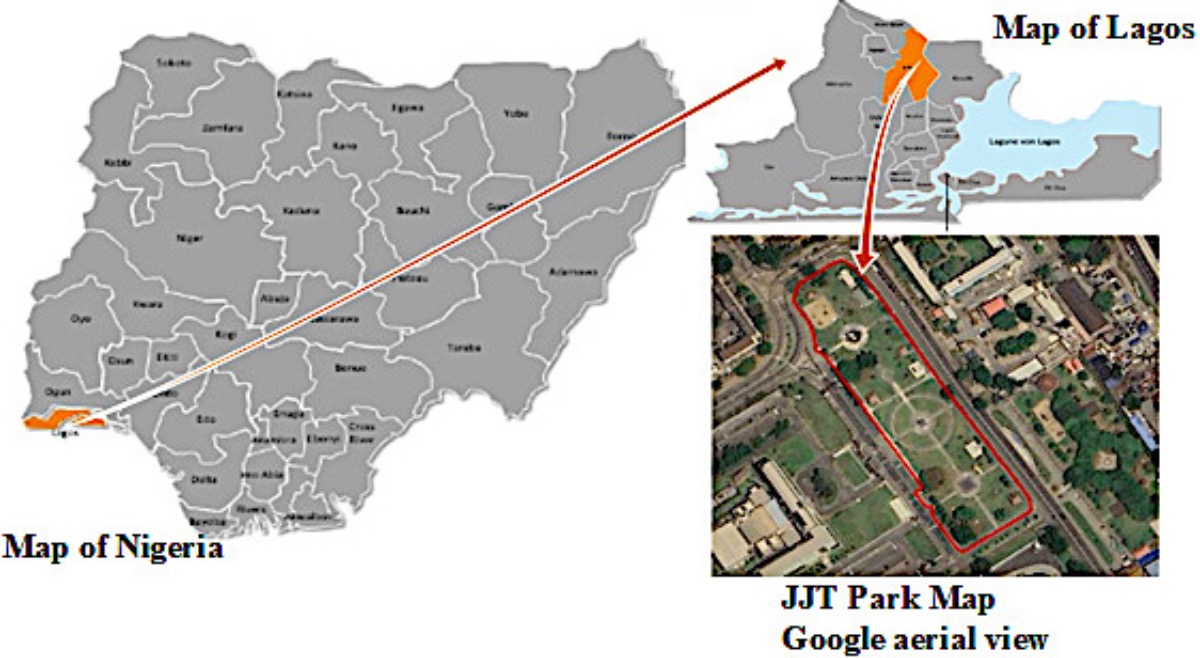
The study was carried out at Johnson Jakande Tinubu Park, Ikeja, Lagos State, Nigeria (Figure 1). Geographically, the park covers a total land area of 21,880 square meters. The Park, a major public open space located within Ikeja, serves recreational, social, and relaxation needs of diverse users including residents, workers, and visitors. Its strategic location, landscape features, and high level of patronage make it suitable for assessing the relationship between urban landscape design and urban livability.
Lagos continually experienced rapid urbanisation, the initial green spaces suffering rapid depletion as more lands are cleared for various forms of urban development. As a result, the Lagos State Government established the Lagos State Parks and Gardens Agency (LASPARK) in 2011 (Dipeolu, 2017). The agency was created to expand access to public green space and provide nature-based solutions to environmental challenges. Since its creation, LASPARK has continued to create various categories of parks and gardens in the state and manage all green public open spaces across the city.
Research Design
A mixed-methods research design was adopted to examine the relationship between urban landscape design and urban livability in Lagos. The quantitative component involved a structured questionnaire survey, using descriptive statistics (mean scores, frequencies) to assess respondents’ perceptions, and inferential analyses (correlation and regression) to test relationships between landscape design features and urban livability. The qualitative component followed an exploratory approach using field observation, photographic documentation and aerial imagary to capture users’ experiences and spatial characteristics of public open spaces. The integration of both approaches ensured a more comprehensive and reliable understanding of how urban landscape design influences urban livability.
Results
User perception of landscape quality and comfort
At inception, the design quality and comfort of Johnson Jakande Tinubu’s Park were shaped by planning priorities, contextual factors, and implementation decisions. Conceived as a landmark civic space, the park emphasizes aesthetics, symbolism, and public image featuring monuments and water elements. As a government-led project, its design aligns strongly with urban beautification and city branding objectives.
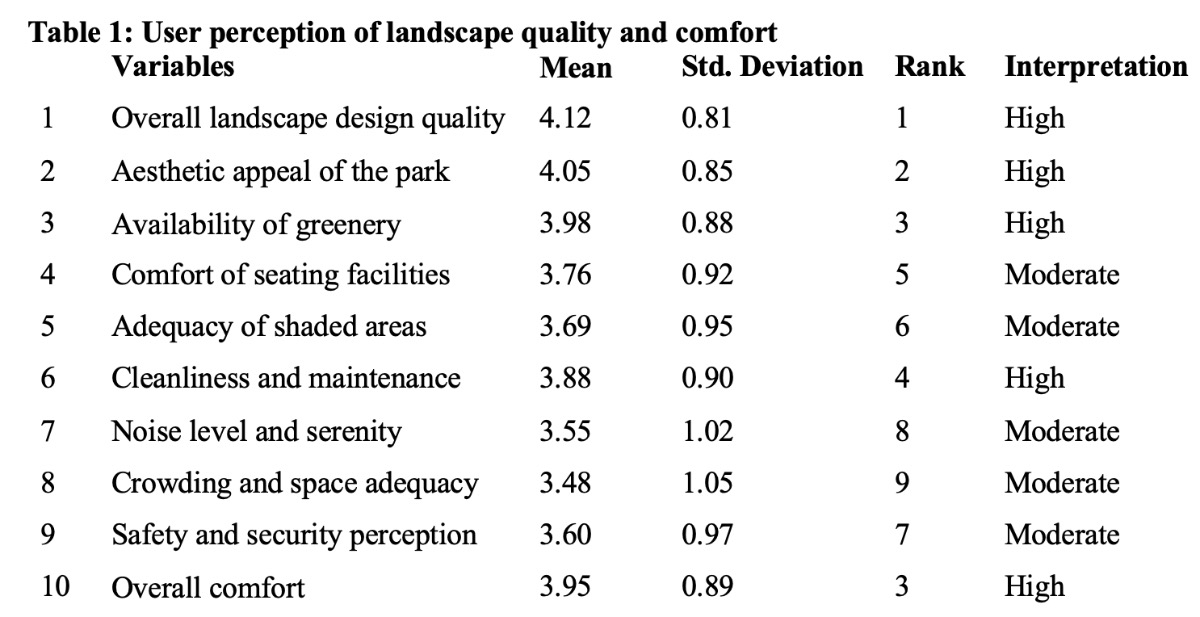
Table 1 shows the results which indicate a positive user perception, as most evaluated variables recorded mean scores above the 3.50 threshold, reflecting a high level of satisfaction. Notably, overall landscape design quality emerged as the highest-rated attribute (x̄ = 4.12), underscoring the effectiveness of the park’s spatial organisation, visual appeal, and integration of greenery. This is closely followed by strong ratings for aesthetic quality and vegetation provision, suggesting that the park successfully delivers on key ecological and visual design objectives.
However, comparatively lower mean scores for comfort-related variables particularly seating adequacy, availability of shaded areas and crowding highlight critical deficiencies in user-oriented infrastructure. These findings suggest that while the park excels in its visual and environmental design components, improvements in functional amenities and spatial capacity are necessary to enhance user comfort. Addressing these gaps is essential for maximising the park’s contribution to urban livability and ensuring a more inclusive and satisfying user experience.
Landscape Design Elements Ranking
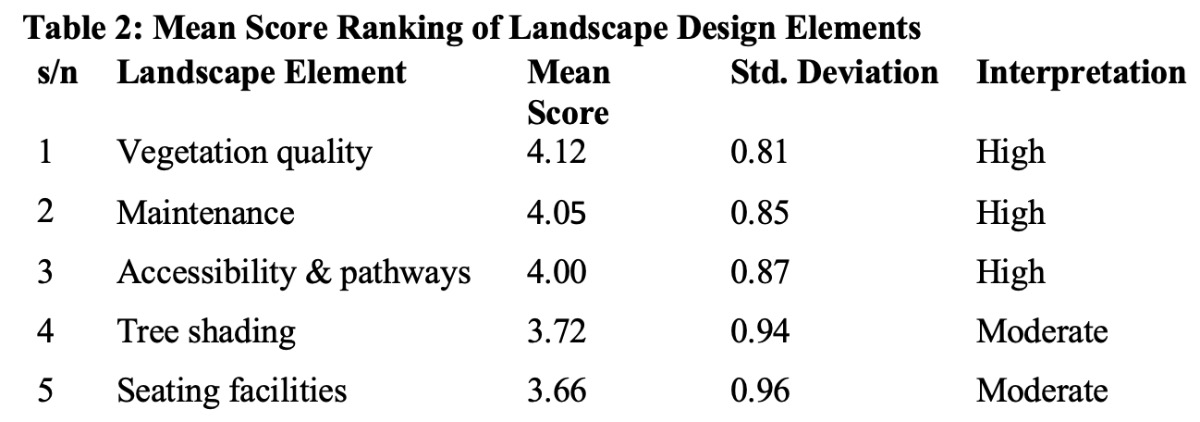
The results in Table 2 revealed that vegetation quality recorded the highest mean score (x̄ = 4.12), followed closely by maintenance (x̄ = 4.05) and accessibility and pathways (x̄ = 4.00), all of which fall within the high satisfaction category. This suggests that respondents perceive the park as well-maintained, visually appealing, and functionally accessible. In contrast, tree shading (x̄ = 3.72) and seating facilities (x̄ = 3.66) recorded comparatively lower mean scores, indicating moderate satisfaction and highlighting potential inadequacies in comfort-oriented features. Overall, the findings suggest that while the park performs strongly in ecological quality, maintenance, and circulation, improvements in shading provision and seating infrastructure are necessary to enhance user comfort and support urban livability.
Landscape design elements and urban livability
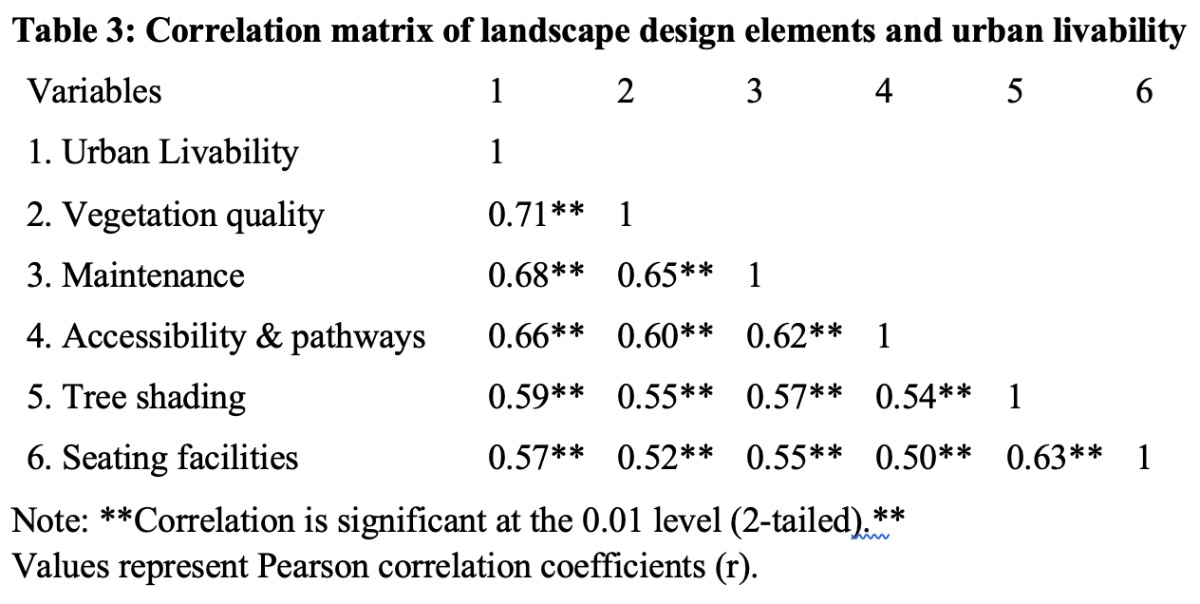
The correlation analysis indicates that all selected landscape design elements are positively and significantly related to urban livability according to Table 3. Vegetation quality exhibits the strongest relationship with urban livability, suggesting that well-maintained and visually appealing green elements play a major role in enhancing user experience. Maintenance (r = 0.68) and accessibility and pathways (r = 0.66) also show strong positive correlations, indicating that functional management and ease of movement within the park significantly contribute to perceived livability.
Tree shading (r = 0.59) and seating facilities (r = 0.57) demonstrate moderate positive relationships, implying that comfort-related features also influence livability, though to a lesser extent compared to ecological and accessibility factors. Overall, the findings suggest that improvements across all landscape design elements, particularly vegetation quality and maintenance, are critical for enhancing urban livability outcomes.
Field Observation Analysis
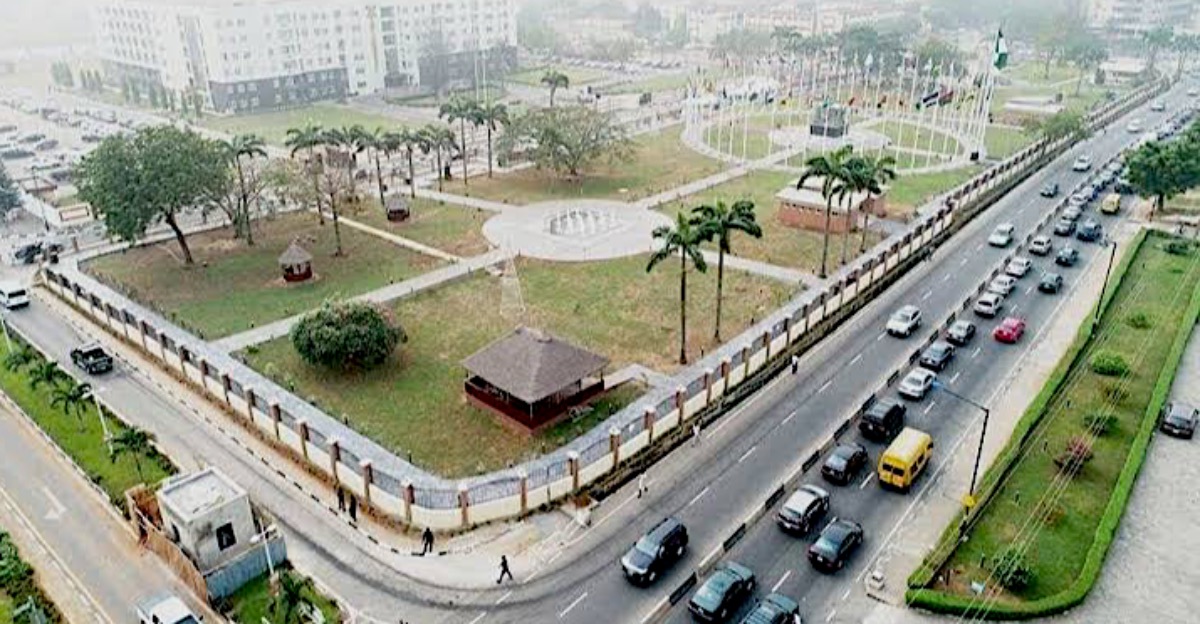
Figure 2 highlights the key features of Johnson Jakande Tinubu Park (JJT Park), revealing the position of the children's playground, food court, gazebo, Eyo fountain, the statue of Bola Ahmed Tinubu, restroom facilities and others. These elements are strategically distributed across the park in a manner that promotes functional efficiency and spatial coherence. Pathways link the various features seamlessly, enhancing internal accessibility and circulation. In addition, multiple access points connected to surrounding major roads enhance the parks visibility and make it easy to locate and access. This demonstrates a thoughtful urban landscape design approach that supports movement, usability, and user convenience, thereby contributing positively to the urban livability.
Park Accessibility and Pathway Design
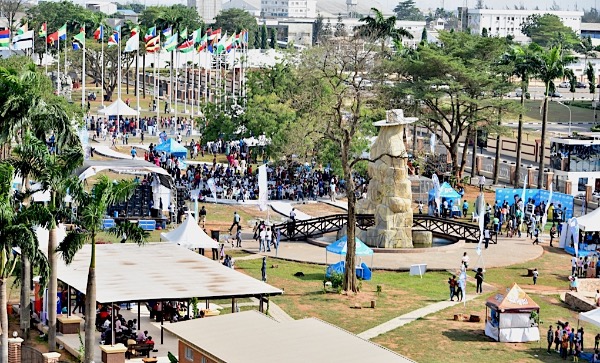
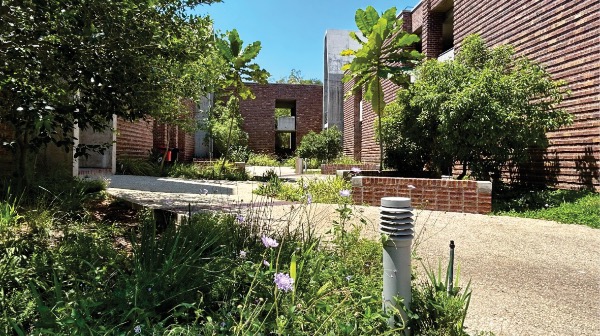
The wide pathways facilitate easy circulation, aligning with respondents’ high ratings of accessibility and indicating that users can navigate the park with ease. This reflects key urban landscape design principles such as connectivity, permeability, and user-friendly circulation. In terms of urban livability, effective pathway design enhances frequency of use, mobility, and user satisfaction, encouraging social interaction and engagement, while poorly designed routes can restrict these benefits.
Shade Trees and Garden Seating
Although the park satisfies aesthetic design principles, comfort-related features such as the provision of garden seating are inadequate, as reflected in their lower mean scores (Table 2). This suggests that while the park is visually appealing and easily accessible, it does not fully meet users’ comfort needs. The insufficient and uneven distribution of seating restricts opportunities for rest and extended stay, while limited tree cover and shading reduce thermal comfort, especially under hot conditions. Consequently, these deficiencies negatively impact frequency of use, duration of stay, and overall user satisfaction, thereby constraining the park’s capacity to support recreation, relaxation, and social interaction.
Discussion
The result provides insight into the relationship between urban landscape design and urban livability within Johnson Jakande Tinubu Park, highlighting the extent to which specific landscape elements influence users’ experiences. Overall, the results indicate that the park performs strongly in terms of ecological and visual landscape qualities, while showing relative limitations in comfort-oriented and spatial adequacy components. This imbalance reflects a broader pattern often observed in public open spaces in rapidly urbanising cities, where aesthetic and environmental considerations tend to receive more attention than functional user comfort according to Dipeolu & Ibem (2020).
The high mean scores recorded for vegetation quality, aesthetic appeal, and overall landscape design suggest that the park successfully integrates greenery and visual design principles that enhance environmental quality and visual satisfaction. This aligns with established urban design theories which emphasize the role of green infrastructure in improving psychological well-being, reducing stress, and fostering social interaction as documented by Breed et al. 2023 and Cooper et al. 2014).
The strong performance of vegetation-related elements also indicates effective maintenance practices and a deliberate design approach that prioritizes ecological features. These findings support the notion that well-designed green spaces contribute significantly to perceived urban livability by offering restorative environments within dense urban settings as discussed by Dipeolu et al. (2024).
Strong positive relationships between vegetation quality, maintenance, accessibility, and urban livability suggest that both ecological and functional components are critical in determining user satisfaction.
Vegetation quality emerged as the most influential factor, indicating that green coverage and plant health play a central role in enhancing the perceived quality of the environment. Maintenance also showed a strong relationship, underscoring the importance of continuous upkeep in sustaining usability and aesthetic appeal over time.
Accessibility and pathway design were also found to significantly influence urban livability, highlighting the importance of circulation efficiency, inclusivity, and ease of movement within the park. Well-connected and navigable pathways contribute to user comfort by facilitating access to different zones of the park and accommodating diverse user groups, including children, elderly individuals, and persons with mobility challenges. These findings are consistent with urban design principles that emphasise universal accessibility as a key component of inclusive public spaces (Dipeolu & Ibem, 2022).
In the context of Lagos, where urban density and environmental stressors are prevalent, the role of well-designed public open spaces becomes even more critical. Johnson Jakande Tinubu Park provides essential relief spaces with environmental, social, and psychological benefits to urban residents. Therefore, enhancing landscape design elements that support comfort, inclusivity, and usability is not only a design issue but also a broader urban planning priority.
In a nut shell this study reveals that while the park successfully delivers high-quality visual and ecological experiences, there remains a need for strategic improvements in comfort-related infrastructure (such as provision of adequate seating and shading through tree canopy or structures) and spatial organisation (such as functional zoning e.g. active vs passive areas). Addressing these gaps will strengthen the park’s contribution to urban livability by ensuring that it meets both the aesthetic and functional expectations of its users.
References
Barton J. Hine R. Pretty J. (2009). The Health Benefits of Walking in Greenspaces of High Natural and Heritage Value. J. Integr. Environ. Sci.6, 261–278. 10.1080/19438150903378425
Breed, C.A., Du Plessis, T., Engemann, K., Pauleit, S. & Pasgaard, M. (2023). Moving green infrastructure planning from theory to practice in sub-Saharan African cities requires collaborative operationalization. Urban Forestry & Urban Greening, 89, article 128085. https://doi.org/10.1016/j.ufug.2023.128085
Cooper, C.H.V., Fone, D.L. & Chiaradia, A.J.F. (2014). Measuring the impact of spatial network layout on community social cohesion: A cross-sectional study. International Journal of Health Geographics, 13(11), pp. 1-14. http://www.ij-healthgeographics.com/content/13/1/11
Dipeolu, A. (2025) “Perceived influence of urban green infrastructure on quality of life in Lagos Metropolis, Nigeria”, Town and Regional Planning, 86, pp. 122–135. doi:10.38140/trp.v86i.8983.
Dipeolu, A.A. & Ibem, E.O. (2020). Green infrastructure quality and environmental sustainability in residential neighbourhoods in Lagos, Nigeria, International Journal of Urban Sustainable Development, 12(3), pp. 267-282. https://doi.org/10.1016/B978-0-08-101132-4.00015-1
Dipeolu, A.A. (2017). Impact of green infrastructure on environmental sustainability in selected neighborhoods of Lagos metropolis, Nigeria. Unpublished PhD dissertation, Department of Architecture, Federal University of Technology, Akure, Nigeria.
Dipeolu, A.A., Akpa, O.M. & Fadamiro, J.A. (2020). Mitigating environmental sustainability challenges and enhancing health in urban communities: The multifunctionality of green infrastructure. Journal of Contemporary Urban Affairs, 4(1), pp. 33-46. https://doi.org/10.25034/ijcua.2020.v4n1-4
Dipeolu, A.A., Taiwo, A. & Adebara, T. (2024). Urban green infrastructure and social cohesion in Lagos metropolis, Nigeria. Acta Structilia, 31(2), pp. 123-149. https://doi.org/10.38140/as.v31i2.8516
Janhäll, S. (2015). Review on urban vegetation and particle air pollution – Deposition and dispersion. Atmospheric Environment, 105, 130–137. https://doi.org/10.1016/j.atmosenv.2015.01.052
Lapointe, M., Gurney, G.G. & Cumming, G.S. (2020). Urbanization alters ecosystem service preferences in a small island developing state. Ecosystem Services, 43, article 101109. https://doi.org/10.1016/j.ecoser.2020.101109.
Lapointe, M., Gurney, G.G. & Cumming, G.S. (2020). Urbanization alters ecosystem service preferences in a small island developing state. Ecosystem Services, 43, article 101109. https://doi.org/10.1016/j.ecoser.2020.101109
Lynch, K. (1960). The Image of the City. Cambridge, MA: MIT Press.
Nasution, A.D. & Zahrah, W. (2014). Community perception on public open space and quality of life in Medan, Indonesia. Procedia – Social and Behavioral Sciences, 153, pp. 585-594. https://doi.org/10.1016/j.sbspro.2014.10.091.
Olszewska-Guizzo, A. A. (2018). Contemplative landscapes: Toward healthier built environments. Environment and Social Psychology, 3(2). https://doi.org/10.18063/esp.v3.i2.742.
Salem, D., Khalifa, S. I., & Tarek, S. (2022). Using Landscape Qualities to Enhance Walkability in Two Types of Egyptian Urban Communities. Civil Engineering and Architecture, 10(5), 1798-1813. DOI: 10.13189/cea.2022.100508.





.jpg)
