
Distilling a Few Meaningful Urban Design Quotes
ABout the Author/s


La réflexion revêt une importance capitale dans le domaine de l'urbanisme, où la valeur de la théorie est limitée par les exigences du contexte et par la nécessité de rester à l'écoute des conditions locales. Le fait de revenir sur une sélection de citations accumulées au cours d'une carrière de trente ans dans la pratique interdisciplinaire de l'urbanisme et de l'architecture offre à l'auteur l'occasion d'une réflexion personnelle et permet de faire connaître la valeur de chaque citation à d'autres professionnels de l'environnement bâti.
La structure de l'article consiste à identifier l'origine de chacune des sept citations sélectionnées, suivie d'une réflexion sur leur signification et d'exemples pertinents de leur application dans la pratique.
Reflection is highly relevant in urban design, where the value of theory is limited by the demands of context and by the need to remain responsive to local conditions. Revisiting a selection of quotes accumulated during a thirty-year career in interdisciplinary urban design and architectural practice provides the author with an opportunity for personal reflection and for the dissemination of the value of each quote to other practitioners of the built environment. The structure of the article comprises identifying the origin of each of the seven selected quotes, followed by reflection on their meaning and relevant examples of their application in practice.
Introduction
Reliance on urban design theory is notoriously difficult in urban design practice. This is linked to a default reflective, “learning in action” methodology that is required to work across varying contexts and at different scales. General theory hits and misses the target when the brief is ever evolving. Moreover, of the theory that exists, precious little originates from the Global South.
Normative quotes from those who hold wisdom through reflection on past urban design successes and failures, and to which one is sporadically exposed during one’s career, become precious nuggets of information. They both inspire us to take certain routes and caution us to avoid others. One’s own work, and the work of others, becomes more focused and meaningful when read through this collective, reflective lens.
In the space of this short article, I will focus on seven quotes and animate the salient features associated with each while referring to examples in my own work, and that of others, as appropriate.
The seven quotes are:
- ‘Start small but in the biggest possible way’
- ‘If you maximise everything, you optimise nothing’
- ‘Look out, not in’
- ‘Here….there, now…soon…later’
- ‘A house is not a home unless it becomes a village’
- ‘You know too much’
- ‘If you build better streets, you build better cities’
Before presenting the origin of each and exploring its relevance as a reflective practitioner, readers may want to imagine what each means in the context of their own research or work in Africa and beyond.
Quote 1: ‘Start small but in the biggest possible way’
Origin: David Jack
The quote is associated with David Jack, a pioneering urban designer in Cape Town who became an internationally recognised waterfront development specialist. It is a gentle reminder for every urban designer who works on large sites not to get excessively bogged down in complexity, and to demonstrate value on the ground early in the engagement process by initially revealing and realising parts of the whole at a manageable scale.
Underlying Principles:
- Prioritise the early introduction of smaller, fine-grained catalysts, particularly for larger sites
- Recognise that people universally enjoy intimate, people-oriented spaces
- Early investment in urban design quality demonstrates a commitment towards creating a high-quality “in-between” for larger developments over time
Practical Application
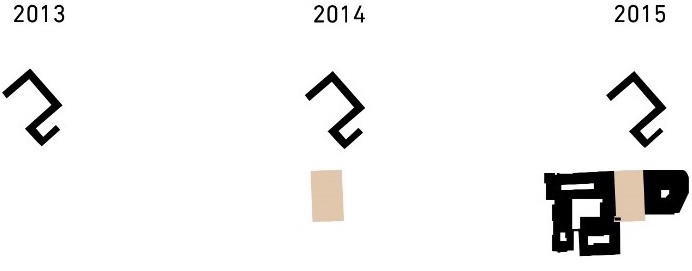
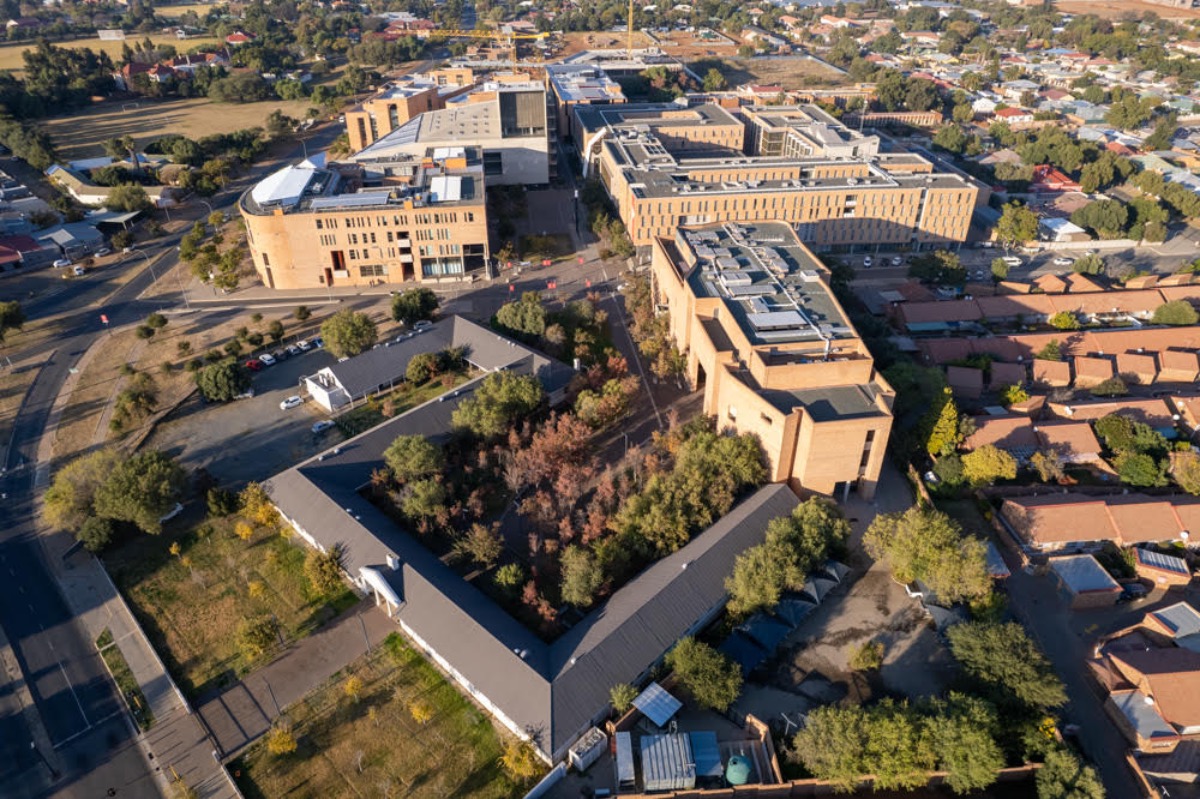
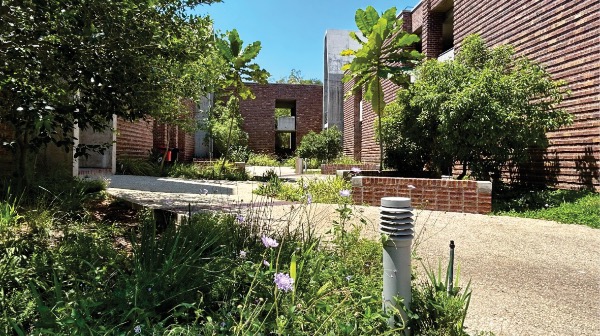
Sol Plaatje University is a new university that is consciously embedded in a decaying part of Kimberley in South Africa, a town that has been in decline due to diminishing diamond mining activities. It is not a gated campus and prioritises walkability over car access.
The placement of building footprints, and the quality of the “in-between”, were guided by an urban design framework developed for the larger site by Ludwig Hansen and Associates.
The phasing logic dictated that buildings be clustered around a founding central square. These initial buildings, all designed by different architects in concert, had as their first priority the definition of the central square and the pedestrian network that flows from it. It is a good example of starting small, but in the biggest possible way. As the campus grows, the space becomes more central.

Quote 2: ‘If you maximise everything, you optimise nothing’
Origin: Erky Wood
This quote is from Erky Wood’s Roelof S. Uytenbogaardt UDISA Memorial Lecture of 2017. In this lecture, he referred to ‘maximisation’ and ‘optimisation’ in the context of engineered road infrastructure, in which standards are often applied in a technocratic, top-down manner and at the expense of a more integrated, people-centred in-between.
It also has a wider meaning in the context of urban design, where the necessary focus is on overlap, negotiated trade-offs, ambiguity, and creative compromise rather than outright efficiency. This relates to Christopher Alexander’s seminal essay of 1965 titled A City is Not a Tree, in which he explores the greater availability of choice through casual overlaps in the way we negotiate cities on foot (Alexander 1965, p. 60).
For urban designers, a narrow, busy, and congested but well-connected street is a place of opportunity for people to celebrate urban life. For engineers, who often work in isolation and have greater power in the funding and delivery matrix, this is habitually seen as an outright failure.
This is compounded by what Nabeel Hamdi refers to as a centrally controlled, and therefore more technocratic, developmental landscape in Africa compared to more developed nations, where the slower pace of post-industrial development allows for greater interdisciplinary engagement.
Underlying principles
- Density and the opportunities and constraints of people movement in and out of the city associated with it need to be embraced rather than being considered a time- and cost-related problem seen in isolation from a motorised transport perspective.
- The point of arrival cannot be endlessly postponed in cities with an expansive footprint, as is increasingly the case in fast-growing African cities.
- Rome is a primary symbolic reference for good urban design because its founding predates the invention of the car. To invert the equation is to erase the precious qualities established over many centuries and those that remain inherent to both pre-industrial and pre-colonial settlements. Good urban design is conservative in this sense; it tries to protect not only the finer grained qualities found in Rome but also the pedestrian-oriented qualities found in African cities of the precolonial era.
- It is possible, and in certain instances necessary, to invert excessive infrastructure associated with the modernist planning era
Practical Application
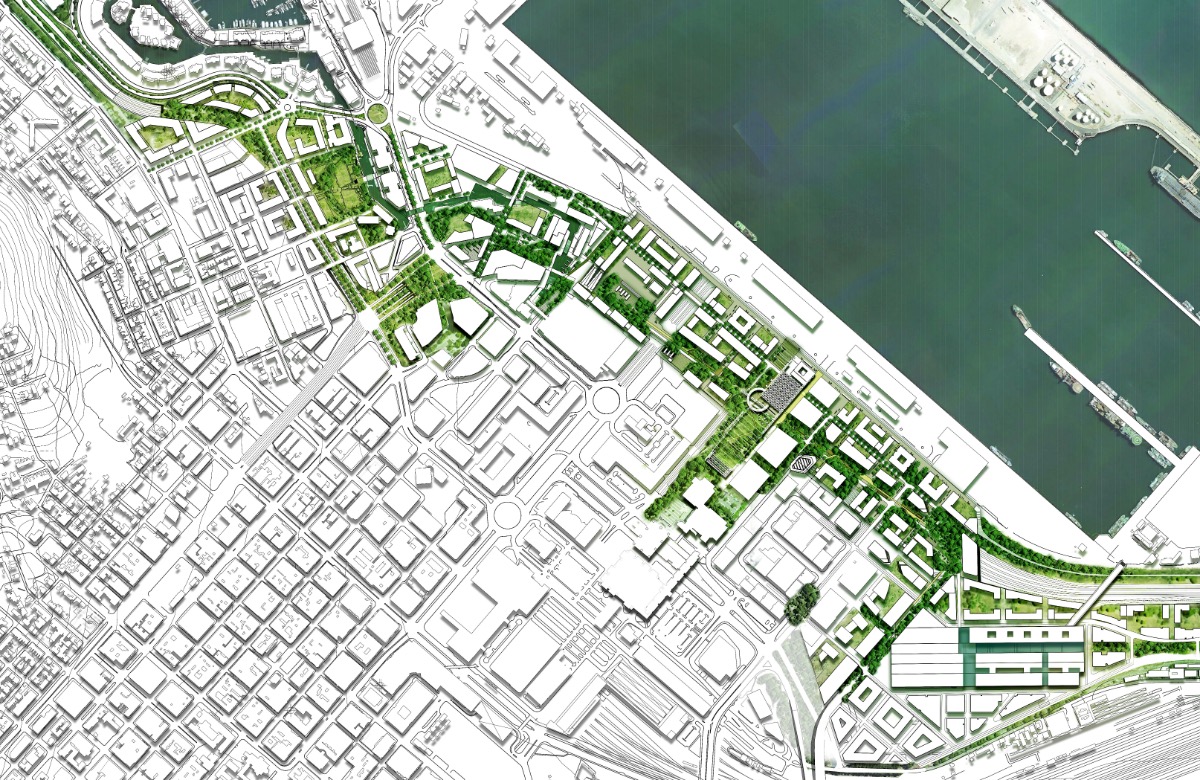
Cape Town’s wasteful elevated freeways were introduced in the 1960s and early 1970’s. As happened in many cities of the industrialised world, these imposing structures, founded in Corbusian planning traditions, dramatically cut the historic inner city off from the sea, with a sudden and lasting loss of significant amenity value.
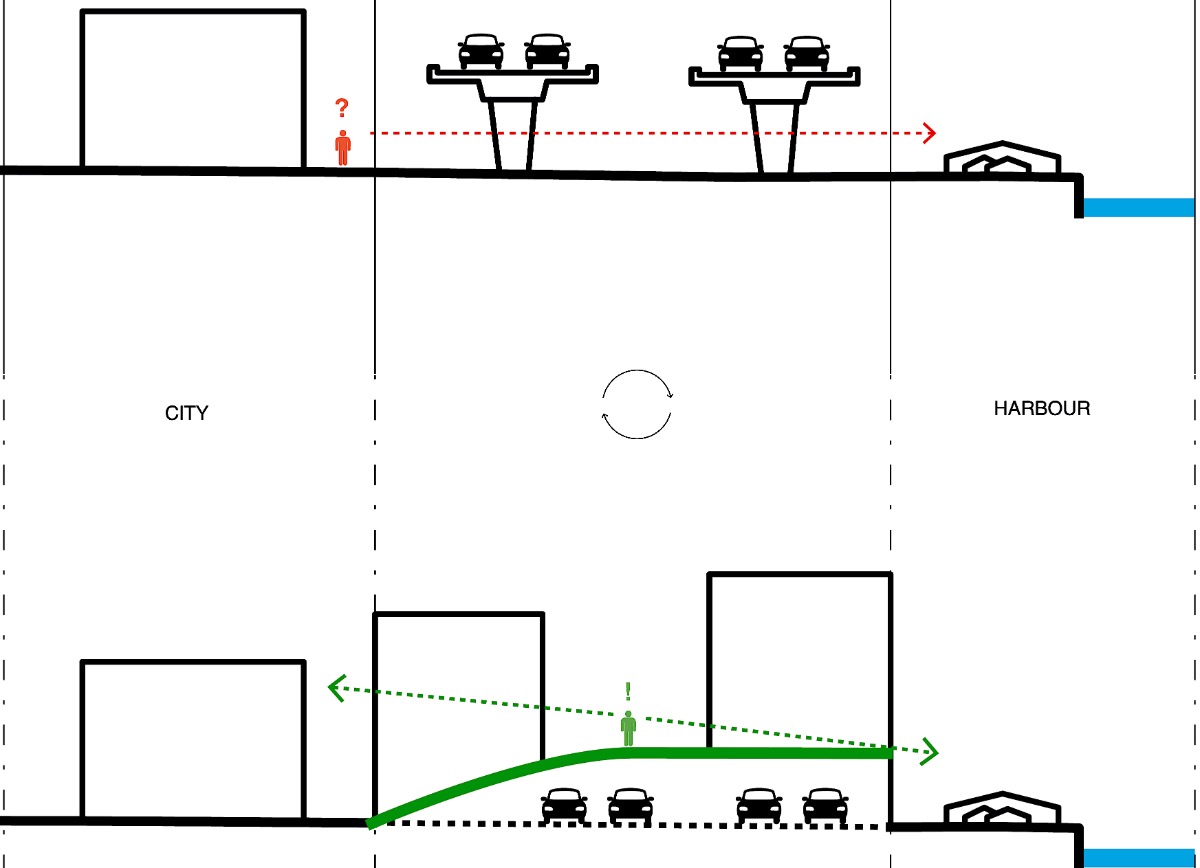
Considered fit for purpose in the field of transport engineering when introduced, their vertically segregated geometries provided quantifiable guarantees for vehicles to enter the inner city en-masse and at greater speeds. Today, that rationality has given way to them becoming virtual parking lots, with cars backed up for miles during extended peaks. The city has seen its population increase two-fold in the past two decades, whilst the physical channel through which access into the inner city is possible has remained static. The belt can no longer be loosened, suggesting that the diet must change through urban design-led optimisation in lieu of the original engineered maximisation. Their purpose and continued existence, when seen in a people-centred context, has been consistently questioned by local urban designers, who consider it an outdated folly.
Apart from being acutely aware of the problems associated with the maximalist mindset locally, they point to the place-led principles underlying America’s extensive freeway removal programme, where dozens of such imposing freeways have been removed through public concern and consultation over the past three decades. If these concerns led to such dramatic reversals in their predominant place of origin, the folly of their existence in African cities is even more acute.
Several consortiums answered a proposal call for improving conditions in the context of the elevated freeways some ten years ago. None of these proposals have been implemented. One of the unbuilt, urban design-led proposals, named City Lift, was submitted by an interdisciplinary consortium. The commendable proposal is concerned with mitigation through optimisation strategy, in contrast to the failed experiment in maximising motorised flow.
Quote 3 ‘Look out, not in’
Origin: Allies and Morrison
In 2008, I visited Graham Morrison, co-founding partner of the practice Allies and Morrison, at their offices in Southwark in London. Upon leaving, he handed me a set of twelve postcards. Each contained a principle and a symbolic image that underscored the ethos of their practice. One of these postcards had a picture of a boy peering outward through a window and included the caption “look out, not in.”
Below the caption was found this subtext:
‘Too many contemporary masterplans are so self-absorbed in their vision for the interiors of their sites, that they fail to address the often much more significant, and much more difficult issues pertaining to the edges’.
Underlying principles
- Build with nature
- Conceptually erase cadastrals and other artificial boundaries that are not legible in space when designing at scale
- Accept continuity and change
- Acknowledge fuzzy edges/ support edge permeability
- Acknowledge overlap/ collective ownership of space
- Respond fluidly to features of the edge rather than creating gated enclosures
Meaning and Application
The principle calls for responsive design. To be able to respond and therefore to integrate, we need to “look out, not in,” beyond the immediate limits of the site whilst erasing artificial boundaries that exist only in attachments to title deeds.
In a historic city context, the constraints of an established urban pattern often limit and guide new development. Responsiveness is spontaneous and culturally embedded. The palimpsest of such historic contexts developed slowly over time to create unique and meaningful sets and subsets of integration that have historically been recorded by scholars like Camillo Sitte but remains both difficult and inappropriate to transplant.
Commercial development in Africa and elsewhere often happens rapidly and at scale, with cataclysmic funding arriving in bursts to serve growing demand. Developers often seek out unencumbered stretches of land in peripheral locations and arrive with the intention to brand and gate development from the outset. Forms appear suddenly in the landscape and mutate into endless landscapes of blight.
Moving to the other side of the scale, a more responsive insertion logic can be seen in many of the educational facilities and public buildings designed by Diébédo Francis Kéré in West Africa (Burkina Faso, Mali, Benin and Togo). In his work, local landscapes become important determinants of form and outward connectedness. Sites become disaggregated in his work so that buildings and the open spaces associated with them meet surrounding landscapes and structures seamlessly.

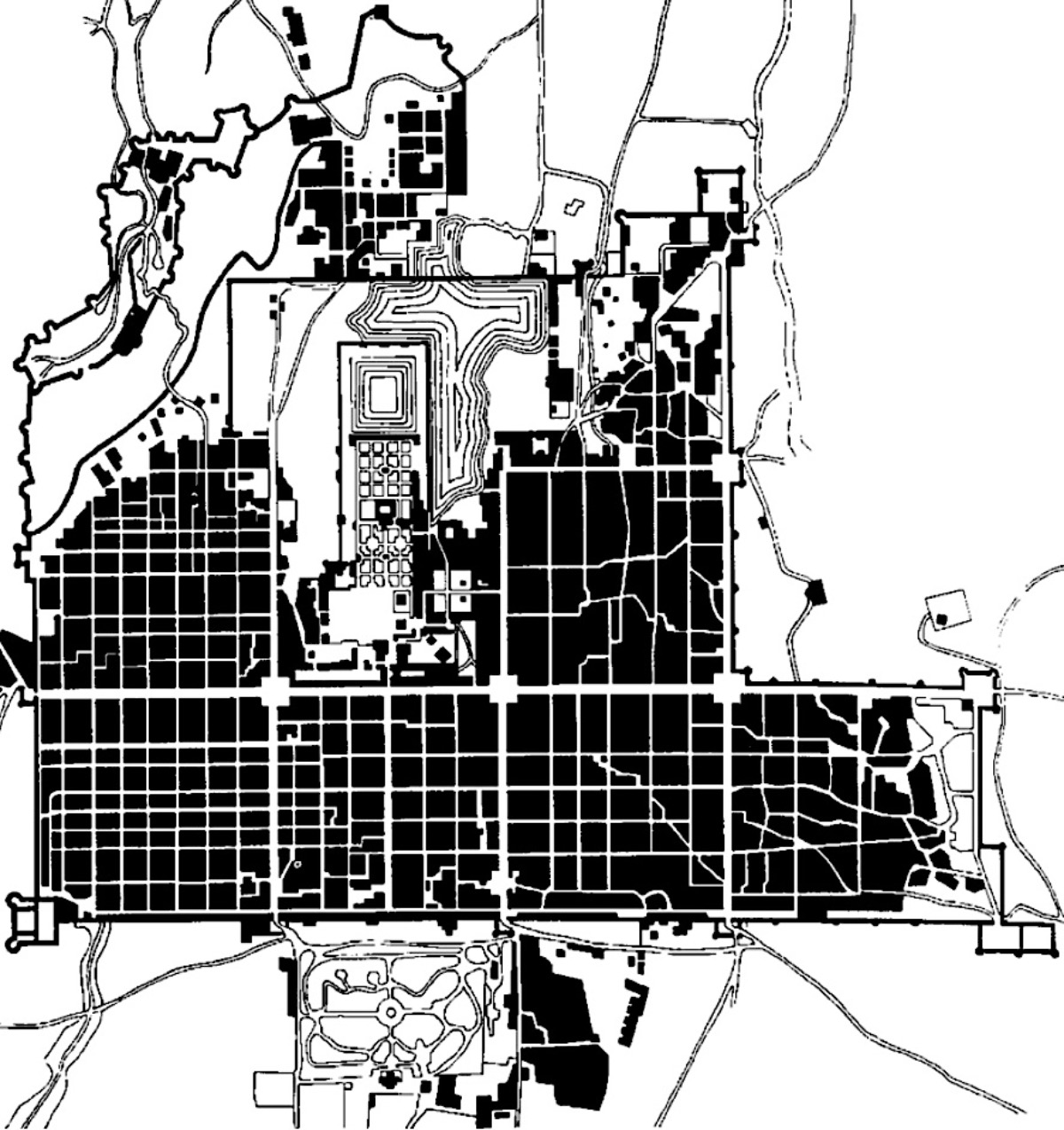
Apart from the need for improved policy, urban design has an important role to play in advocating for regional thinking and in demonstrating how responsive design can influence outcomes. An important precedent is found in an important urban design reference of the Global South in Jaipur. Here a “looking out, not in” approach is found in the integrated logic of the city. The entire gridded city with a cascading urban block pattern was planned in 1727 by Maharaja Sawai Jai Singh II to nestle into a surrounding landscape of hills while being adjusted to the specifics of the context. The pattern is subtly frayed at the edges and interrupted internally in response to immediate opportunities and constraints.
Quote 4: ‘Here….there, now…soon.…later’
Origin: Prof Nabeel Hamdi
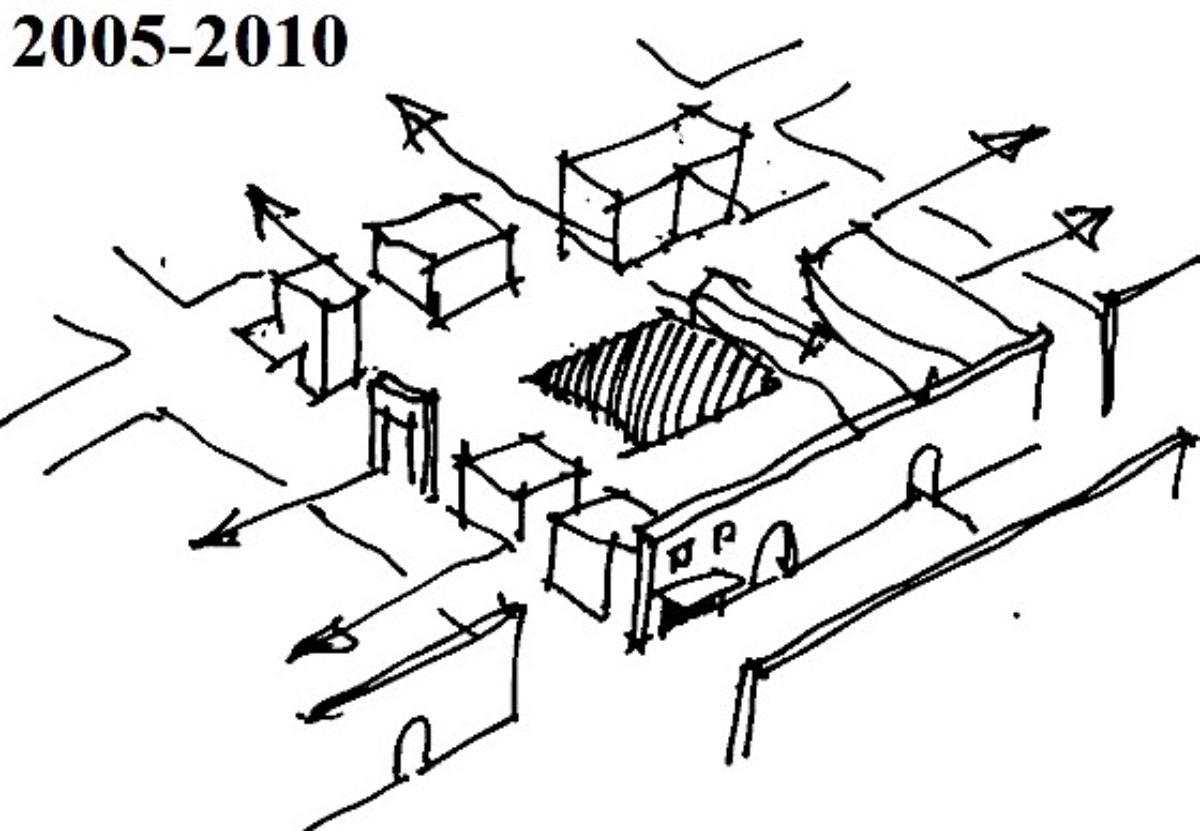
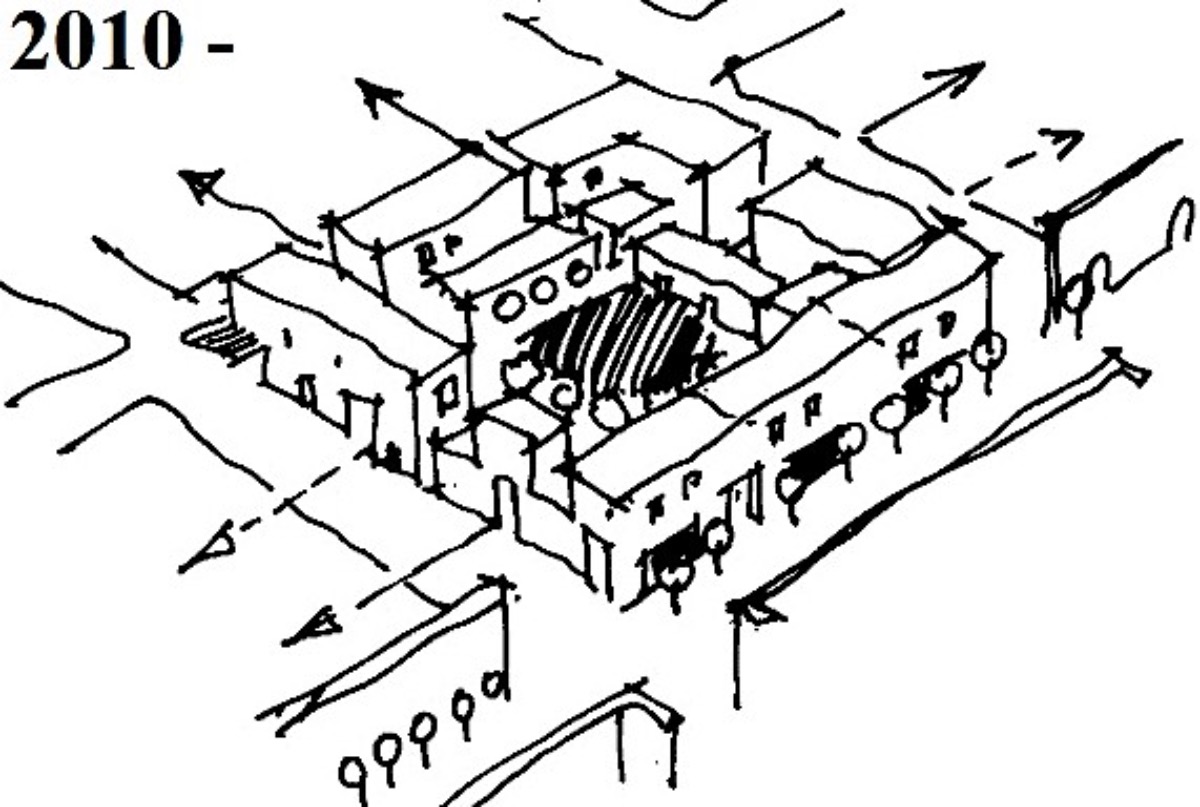
Prof. Nabeel Hamdi, the author of well-known books on participatory practice such as Housing Without Houses and Small Change, is a master at simplifying design language and dispelling jargon when working in everyday situations. He expects the same from professionals so that they remain relevant. While supervising my research at Oxford Brookes University, he often used the phrase “here…there, now…soon... later” to remind me of the dynamic nature of participatory engagement.
Underlying principle
- being aspirational is a virtue
- design is a process and so is its application
- incrementalism is empowering by providing access to processes for those who have greater basic needs
- to start is important in a context of low resources since it gives hope and provides opportunities for small scale entrepreneurship
- rather provide minimal support and have things happen from the ground up than wait endlessly for the levers of corporate interest and state bureaucracy to impose it from the top.
Practical Application

Quote 5 ‘You know too much’
Origin: Prof Roelof Uytenbogaardt
This quote is synonymous with Roelof Uytenbogaardt, the well-known South African Rome Scholar of the 1950s and past professor of urban design at the University of Cape Town. “You know too much” is often repeated by his former students in conversation to point to a need for sharpening our focus by reverting to first principles in the way we engage with a complex world.
Underlying principles
- Support a first principles approach
- Remain rooted
- Clearly define, articulate and defend first principles
- Support essence
- Sharpen focus
Practical Application
The application of a first principles approach is part of an everyday culture embedded in learned experience and wisdom. It may come across as dogmatic or didactic to some but can be defended in the context of an overly complex world where greater focus is often required to prevent excessive dilution of ideas.
Knowing too much refers to shutting out noise and ignoring non-essential distractions that are either too general or too specific. Urban design is now too often conflated with urban sociology, geography, static mapping, urbanist commentary, and so forth, which contributes to it losing its identity. With the invention of social media, there are now many self-styled urbanists who are commentators rather than practitioners with the tools to actively influence outcomes through design.
Space and form remain central to urban design action and need to remain a key priority for it to assert its relevance. This also points to the reality that good urban design needs to be conservative to be effective. This means “conservative” in terms of stable method, not political backwardness. In the words of Paul Murrain, urban designers are good at “looking back and learning.” Through immersion in urban spaces shaped by others in the past, they develop skills in distilling the essence of what may make places good today (Murrain, P. 1993). In time, their understanding becomes more intuitive, and some words may become superfluous. This relates to Uytenbogaardt’s other famous quote, “draw me your words.” Without the ability to draw across scales convincingly while thinking on our feet, we reduce our influence.


Quote 6 ‘A house is not a home unless it becomes a village’
Origin: Peter Rich
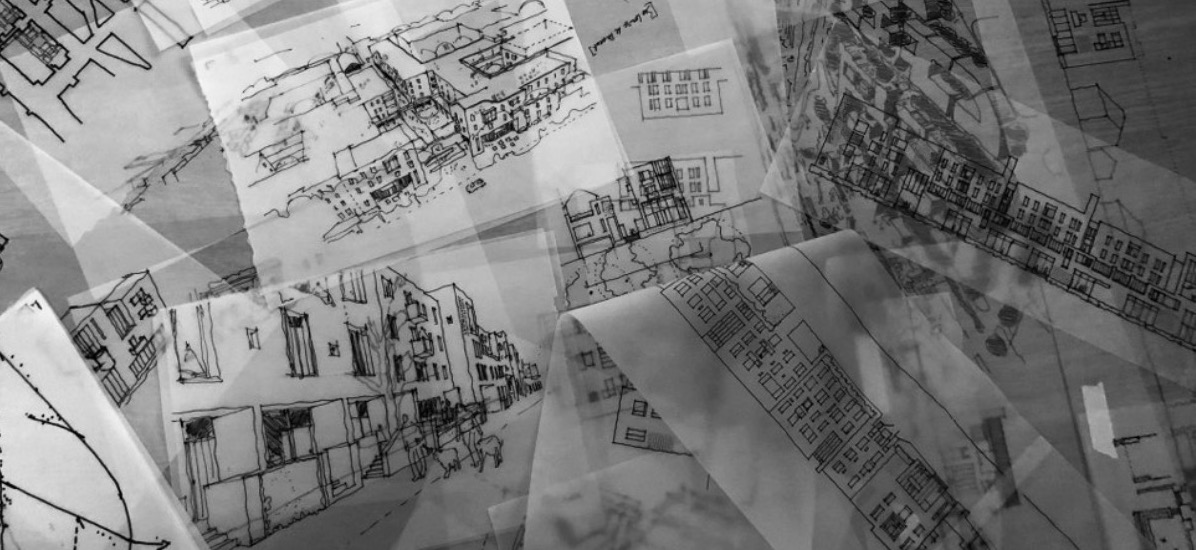
The quote is associated with a close friend and colleague, the architect Peter Rich, who is known for his appreciation of community and its clear expression in built form, as derived from African and Indian vernaculars. He has been studying these phenomenologies with great reverence and care over many decades (Noble, 2020). His approach applies equally to rural and urban contexts. For him, design at any scale should be rooted and humanistic. Place should relate to the richness of community culture rather than to stylistic expression or imported systems. There are clear parallels between Rich’s work and the rooted but contemporary work of Charles Correa and B. V. Doshi in India.
Underlying principles
- Embrace the everyday, the unselfconscious and the open ended
- Remain culturally rooted.
- Remain in constant dialogue from the ground up
- Craft intimate open-to-sky spaces/ human scaled in-betweens
- Consciously dilute boundaries to integrate space
- Introduce finely knitted and granular urban fabric on the urban floor
Practical Application
Today, cities are built expediently by using systems of diverse sorts that shout at us to love them, yet few do. In this digitally induced process, the overlapping semi-public and semi-private layers are unwittingly stripped out of urban environments in favour of systemised coarseness. The everyday functions of the city, such as housing, retail, and office space, become insular commodities, prepackaged for sale as if the city were temporarily housed in a giant supermarket, waiting to be bought and taken away. Villages are not like that. They thrive on rootedness.
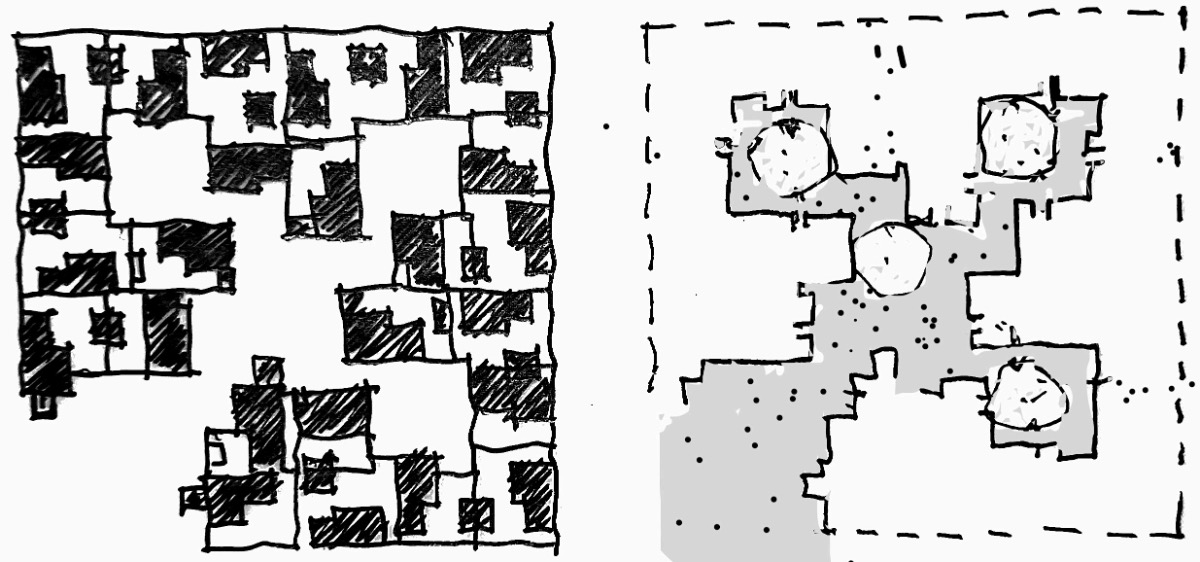
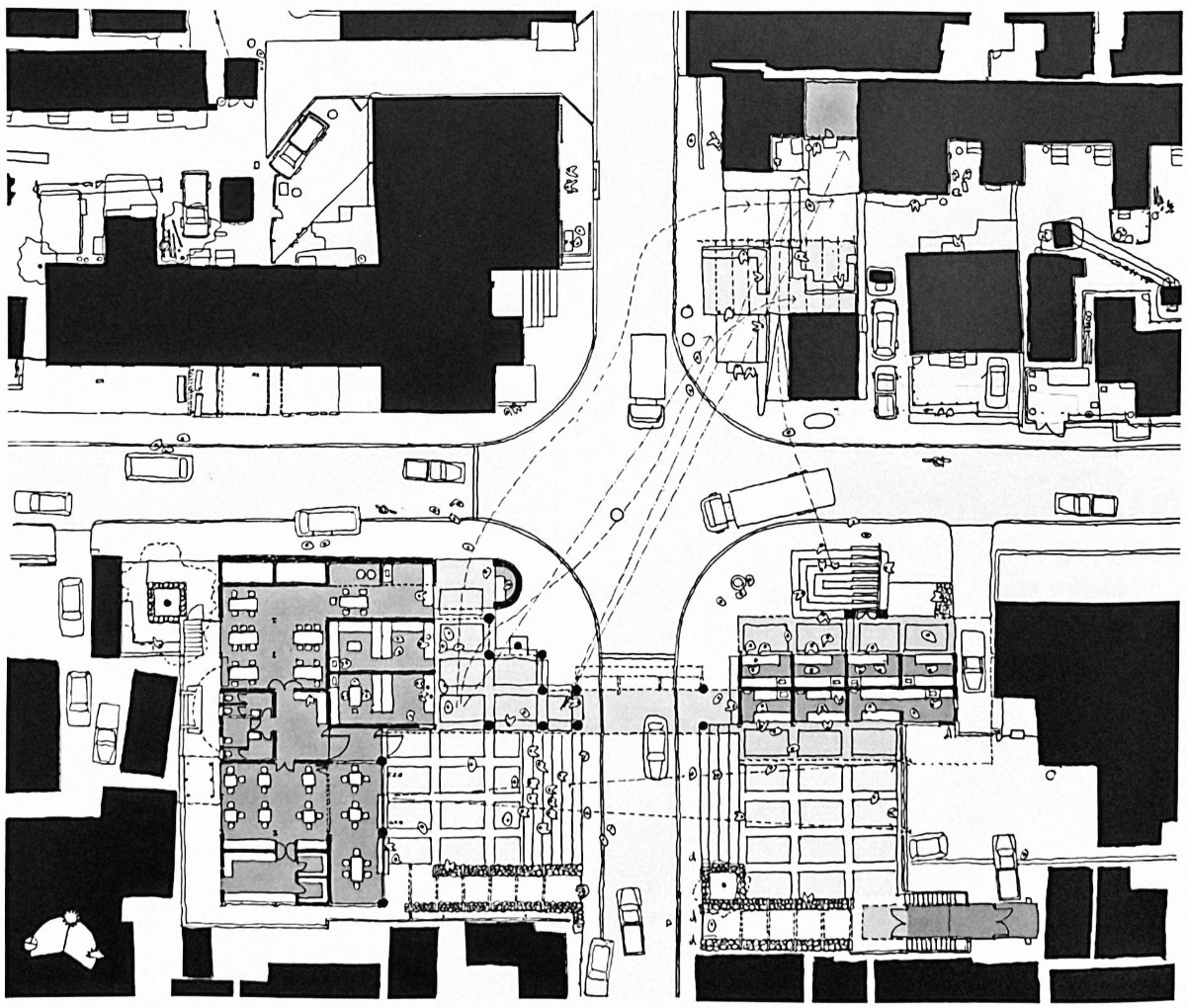
In his quote, “A house is not a home unless it becomes a village,” Peter Rich reminds us of the richness associated with fine-grained overlap. Communities need these types of places to facilitate spontaneous engagement between people as part of conducting their everyday lives, and while moving between everyday functions.
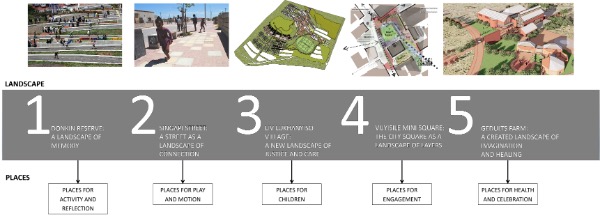
The three case studies presented here hint at what “village” in the context of Rich’s quote means. Although these are all modest in scale, the village concept is scalable, as is evident in some of the much larger projects of BV Doshi and Charles Correa.
Quote 7: ‘If you build better streets, you build better cities’
Origin: Rob Adams
The quote is from Rob Adams. Zimbabwe born Adams studied architecture in Cape Town, after which he completed postgraduate studies in urban design at the Joint Centre for Urban Design in Oxford. He worked at the City of Melbourne, Australia, for 40 years, 24 of those as Director of City Design and Projects.
Underlying principles
- Streets dominate the city scape as a percentage and should be much more than engineered conduits for motorised transport
- Streets should be designed as three-dimensional elongated urban rooms with high amenity value in an optimal low rise, medium density environment
- The interface between buildings, landscape and street needs to be carefully considered in urban design terms
- Urban designers need to demonstrate the potential quality of streets and lobby for greater public sector investment in them
Practical Application
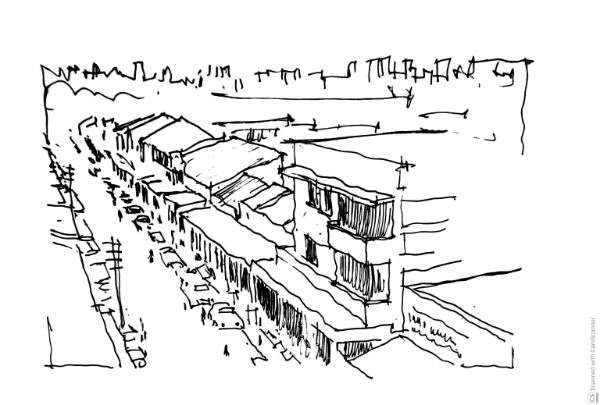
Traditionally, there was much greater balance in the composition of streets. As cities began to grow and the percentage of citizens who owned private cars increased, street width and hard-surfaced areas began to increase proportionately. Planners and engineers took control of their implementation as generic pieces of infrastructure rather than as important place-making opportunities. The calculus was always about movement and flows and never about arrival in these linear spaces of the city. Urban design, as an integrating discipline, needs to work alongside engineers and public authorities to unlock the potential for streets to contribute to building better total cities.


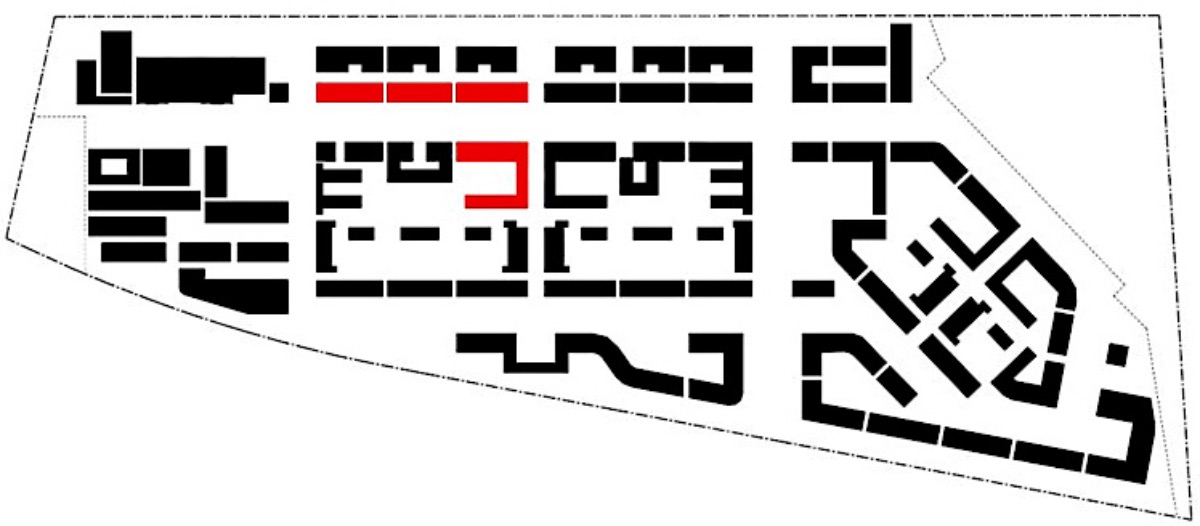

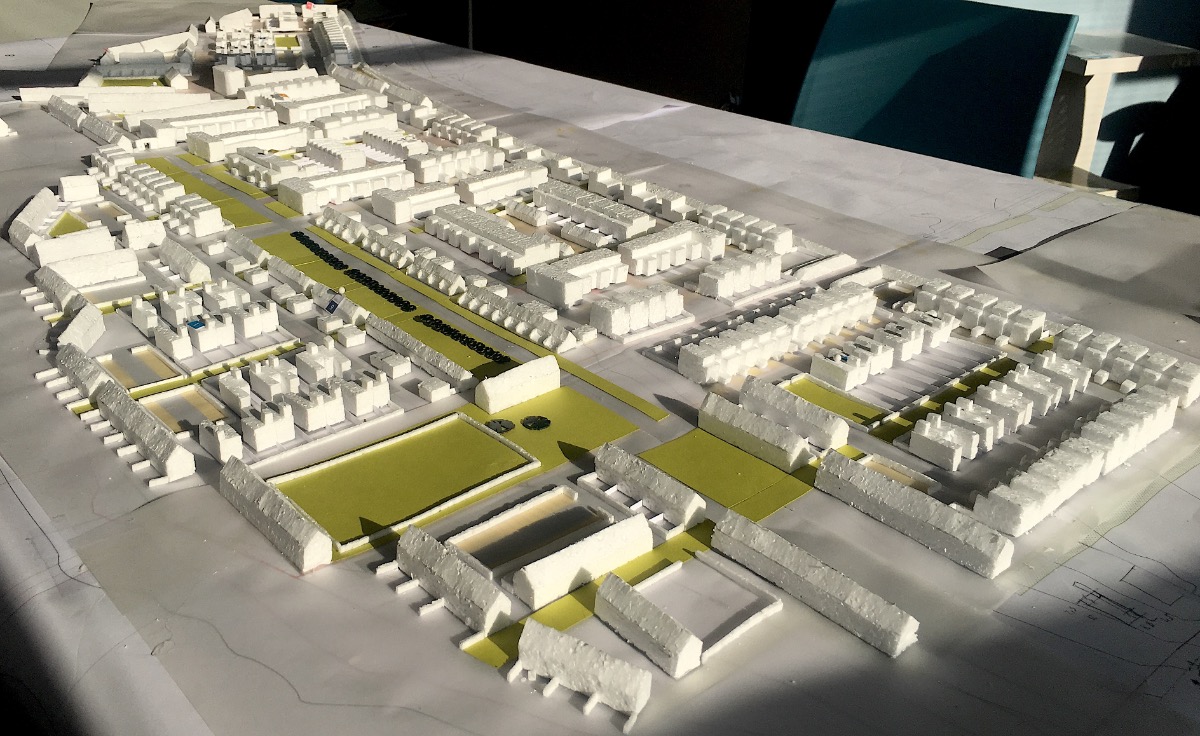
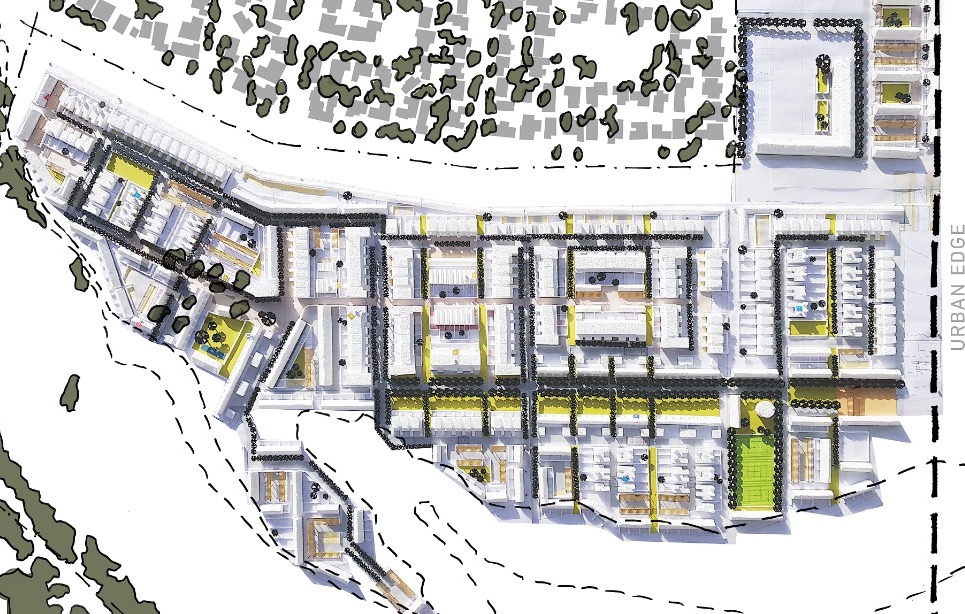
In our role as urban designers of an ungated mixed-use precinct at Devonbosch, outside Cape Town, the proposed building footprints are arranged to support an evolving series of streets that contribute towards creating total, integrated environments. While buildings will be designed by different architects over time to create variety, the urban design code enforces good manners so that each piece contributes to the creation of an integrated whole.
Conclusion
Reflection on these quotes provides context-specific meaning. Their exploration in this short article points to the fact that our wisdom is collective. All practitioners working in Africa are partners in a strong storytelling tradition that adds meaning to our everyday actions. Each quote is subjective when considered individually but often displays convergence and overlap when read collectively. They become part of the essence of what David Crane called The City of a Thousand Designers.
Often simplified nuggets of wisdom, such as those presented here, are valuable pointers in the complex problem-solving world of urban design. Where they have relevance to us working in Africa, they serve as powerful reminders of both what makes our actions rooted and where we should focus in making our cities and towns part of a better world.
As Kevin Lynch, author of several influential books on the making of cities noted, cities anywhere are too complex to be understood in their entirety, but we can make better sense of parts of them through the sharing of our individual experiences.
References
Alexander, C. (1965) A City is Not a Tree. Architectural Forum, 122(1), pp. 58–62.
Bizcommunity. (2018) City Lift master plan proposes reimagining of Cape Town Foreshore Freeway Precinct. Available at: https://www.bizcommunity.com/Article/196/492/184451.html� (Accessed: 22 March 2026).
Comrie, H.P., 2003. The role of urban design in South African corridor development. PhD. University of Greenwich.
Davidson, F. and Payne, G. (1983) Urban projects manual: A guide to the preparation of projects for new development and upgrading relevant to low-income groups, based on the approach used for the Ismailia Demonstration Projects, Egypt. Liverpool: Liverpool University Press.
Dewar, D. and Uytenbogaardt, R.S. (1991) South African Cities: A Manifesto for Change. Cape Town: Urban Problems Research Unit, University of Cape Town.
Frampton, K. (1996) Charles Correa. London: Thames & Hudson.
Gopalan Colleges (2026) City Planning of Jaipur. Available at: https://www.gopalancolleges.com/gsap/pdf/jaipur.pdf (Accessed: 22 March 2026).
Hayward, R., & McGlynn, S. (Eds.). (1993). Making Better Places: Urban Design Now. Oxford: Butterworth-Architecture.
Murrain, P. (1993) ‘Chapter title’, in Hayward, R. and McGlynn, S. (eds.) Making Better Places: Urban Design Now. Oxford: Butterworth-Architecture.
Noble, J. (2020). The Architecture of Peter Rich: Conversations with Africa. London: Thames & Hudson.
Stevens, P. (2021) Kéré architecture reveals plans for Benin’s national assembly building in Porto-Novo, Designboom, 9 February. Available at: https://www.designboom.com/architecture/francis-kere-benin-national-assembly-building-porto-novo-02-09-2021/ (Accessed: 22 March 2026).






.jpg)
