The Opportunities of Micro-Places in Urban Design Practice
ABout the Author/s



Cet article examine la pratique professionnelle de l'urbanisme et de l'architecture paysagère en Afrique du Sud, en s'intéressant au potentiel des micro-espaces au sein de systèmes plus vastes, souvent façonnés par des infrastructures inégales, un héritage colonial et une gouvernance fragmentée. À partir d'études de cas menées par The Workplace Agency, l'article passe en revue des projets réalisés à Gqeberha et Makhanda, notamment la réserve Donkin, la rue Singapi, la mini-place Vuyisile, le village LIV Lukhanyiso et la ferme Gedult. L'analyse suggère que les micro-espaces tels que les parcs, les rues et les places constituent des opportunités ciblées et localisées pour la pratique de l'urbanisme.
Les politiques et les projets accordent souvent la priorité aux infrastructures à grande échelle et aux stratégies à niveau macro. Cet article propose que les micro-espaces puissent servir de catalyseurs pour l'engagement social, l'expression culturelle et la transformation durable, contribuant ainsi à façonner de manière plus positive le paysage global. Ces lieux ne constituent pas des interventions isolées, mais des réponses ancrées dans leur contexte au sein d'un système plus vaste. Cette focalisation et cette oscillation entre perspectives macro et micro contribuent à établir des liens essentiels à l'échelle du système dans l'urbanisme et l'architecture paysagère.
This paper examines professional practice in urban design and landscape architecture in South Africa, considering the potential of micro-places within broader systems, often shaped by uneven infrastructure, colonial legacies, and fragmented governance. Using case studies from The Workplace Agency, the paper reviews projects in Gqeberha and Makhanda, including Donkin Reserve, Singapi Street, Vuyisile Mini Square, LIV Lukhanyiso Village, and Gedult’s Farm. The analysis suggests that micro-places such as parks, streets, and squares serve as focused, localised opportunities for urban design practice. Policies and projects often prioritise large-scale infrastructure and macro-level strategies. This paper proposes that micro-places can be a catalyst for social engagement, cultural expression, and sustainable transformation, ultimately better shaping the broader landscape. These places are not isolated interventions but contextually grounded responses within a larger system. This focus and movement between macro and micro perspectives help establish essential system wide connections in urban design and landscape architecture.
Introduction
Urban landscapes in contemporary South African cities are places of opportunity and re-definition. Practitioners need to reflect on historical legacies, contemporary contexts, and future opportunities. This paper positions urban design and landscape architecture within this context, emphasising micro-places as entry points for engagement and transformation. These places—such as parks, streets and squares—are socially significant settings where everyday life unfolds. They provide opportunities to engage with community identity and local socio-spatial realities. Despite their modest scale, micro-places can serve as catalysts in environments marked by uneven policy, fragmented infrastructure, and neglected public spaces.
My practice as an architect and urban designer has been shaped by active listening, stakeholder engagement, and creating spaces that reflect diverse input. Over the past two decades, work in Gqeberha, Makhanda, and the Eastern Cape has necessitated ongoing negotiation between macro-level governance and the specific spatial and cultural contexts of micro-places.
Practice Framework
This approach is guided by a professional orientation, grounded in urban design processes, and centred on the concepts of placemaking and micro-places.
There are specific stages of work that shape the urban design practice process: analysis, concept, design, and implementation. Analysis grounds the work in context, addressing the site in relation to its systems, historical landscapes, and socio-economic dynamics. Concept development articulates design responses that are spatially coherent and contextually grounded. Design transforms ideas into technical documentation and preparation for physical implementation. Implementation refers to the physical realisation of the works. It requires sensitivity to the realities of governance structures, budget constraints, and numerous other aspects of construction factors, without compromising the integrity of the design proposal opportunity.
Definitions of placemaking and micro-places are important to understand how these concepts support each other. A 'place' is often defined as the optimal combination of physical, social, and cultural elements.
Placemaking is understood to be both a process and an outcome, creating environments that foster attachment, activity, and a sense of coherence. It intentionally shapes the public realm so that physical form supports the social, cultural, and economic goals of the space.
In this paper, micro-places refer to specific, localised sites that move from the broader scales of macro urban design and landscape architecture to more focused contexts. Micro-places, as tangible public spaces, are where placemaking becomes immediate and lived. Examples include street corners, stalls, parks, transport stops, courtyards, and arrival or gathering points. These places facilitate engagement, conversation, and public activity on a human scale. They can also serve as points of negotiation between heritage and modernity, memory and aspiration, as well as governance and daily life.
The notions of placemaking and micro-places are closely aligned with other concepts previously elaborated on in the African Journal of Landscape Architecture, such as the Sense of Place (AJLA Issue 5, May 2023).
Case Studies
The following case studies have been chosen to represent, first, early work that was implemented on-site and definitive in relation to the public realm. Secondly, current work aims to highlight a public space project and two private developments, chosen for their strong urban design and landscape qualities. All case studies are physically implementable (the first two being completed) allowing elaboration on notions of placemaking and micro-places. The first two case studies are urban redevelopment projects in Gqeberha: a public open space park and a public street.
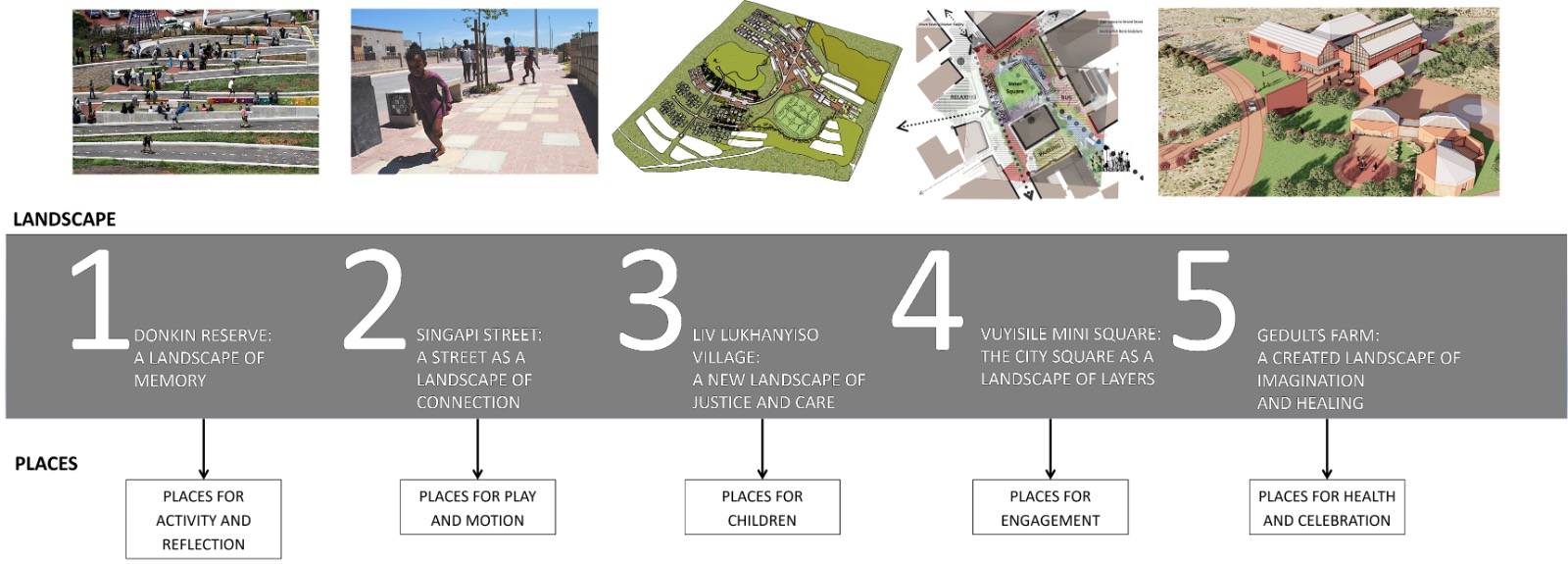
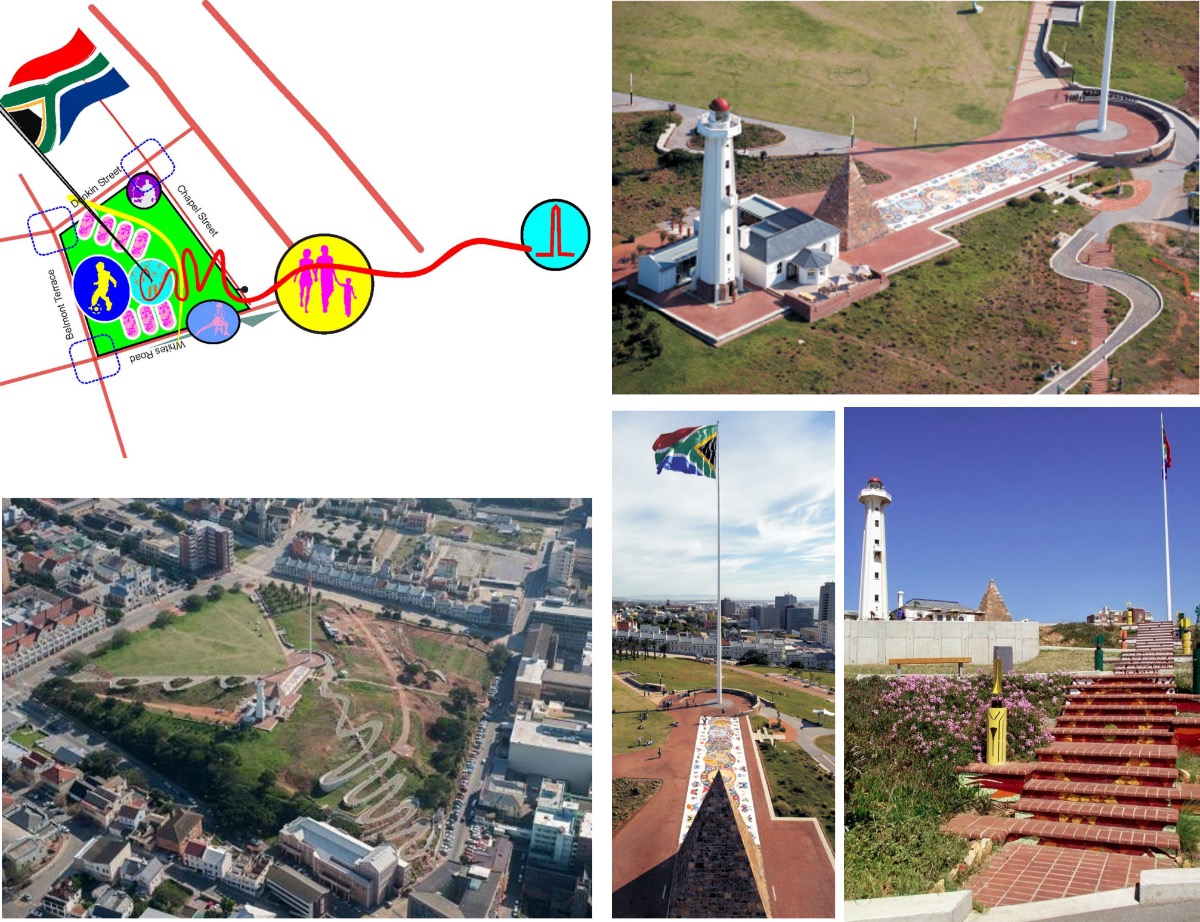
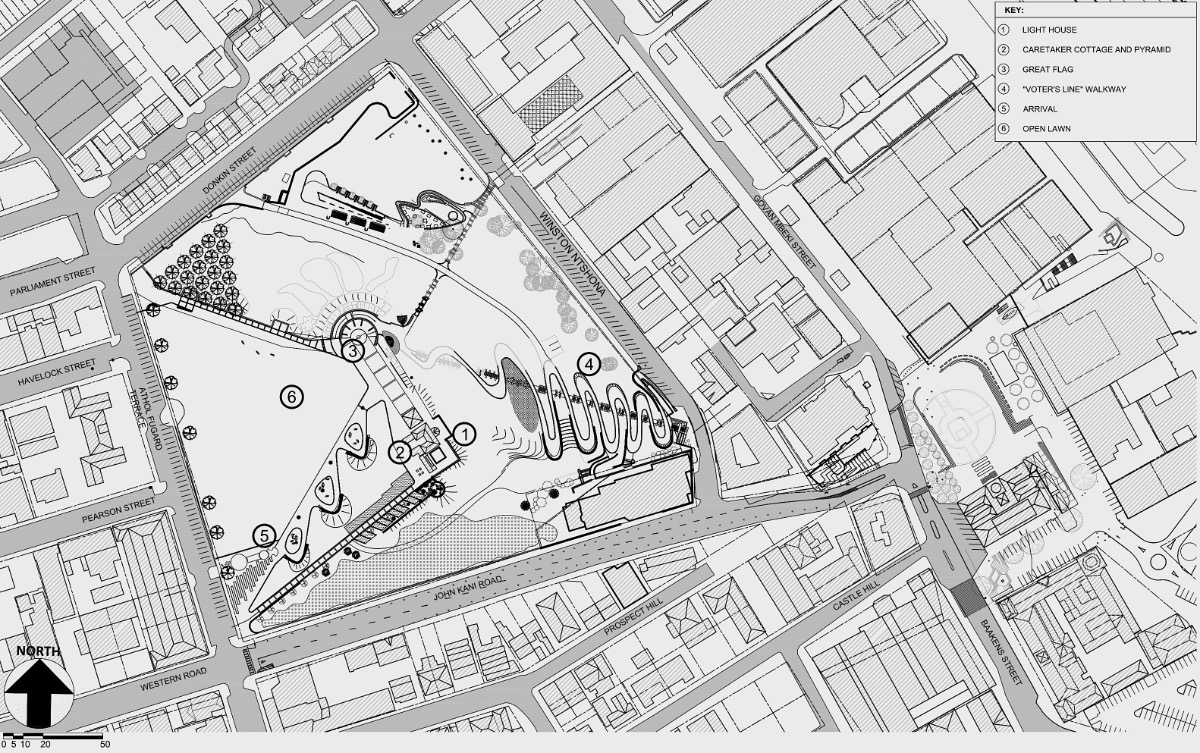
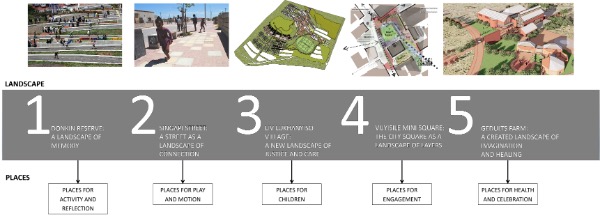
Donkin Reserve (2009–2016): A Landscape of memory that allows space for activity
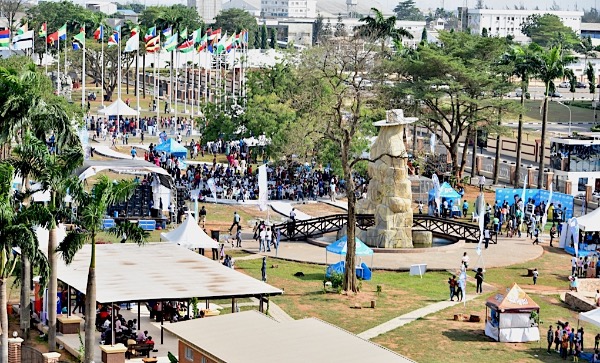
The Donkin Reserve in Central, Gqeberha, is a layered historical landscape and a significant heritage site, although its relevance and use have been contested over time. It has always been the undeveloped centre of the oldest suburb in central Gqeberha. Commissioned by the Mandela Bay Development Agency (MBDA), this case study aimed to reimagine the Reserve as an inclusive urban park. Stakeholder engagement revealed differing perspectives: some advocated for heritage preservation, while others supported redevelopment to reflect the city's transformation, and many highlighted aspects of use and security.
The design addressed these tensions (and practicalities) by layering existing structures with storytelling, public art, and improved accessibility. This approach defined the Reserve as an urban park micro-place overlooking the city centre and harbour. A broader framework connected the reserve to surrounding routes, tourism circuits, and daily activities. Over eight years and four phases, implementation balanced heritage conservation with new interventions, including Route 67 public artworks, a large South African flag, re-landscaping and new uses for existing structures. Events such as skateboard competitions and the daily flag raising further activated the space.
The result is a socially resonant space where heritage is reframed within contemporary identity and civic life. This project illustrates how micro-places can serve as cultural anchors in post-colonial cities, necessitating careful negotiation of meaning, inclusivity, and functionality. Since the completion of this project, challenges have included loss of some of the landscaping to invasive grass, concerns regarding ongoing maintenance, vandalism of many of the public art works and the installation of new insensitively placed infrastructure such as flood lights and water tanks.
Singapi Street Upgrade (2012–2018): A street as a Landscape of connection that creates Places for play and motion
Singapi Street in New Brighton, Gqeberha, serves as the gateway to the Red Location Cultural Precinct and older residential areas of New Brighton, the oldest township in Gqeberha. Spatial constraints and inadequate infrastructure had limited its potential as a safe, inclusive urban space.
This case study was initiated by the MBDA, which led an environmental upgrade through a participatory process. Community workshops revealed everyday practices: the street as an integral part of household life, a place for children’s play and sports, road safety, and an allowance for informal trade. The design was built on these insights, incorporating widened pavements, upgraded surfaces, lighting, public facilities, and heritage-driven public art. The use of simple, repeatable elements such as coloured pavers, tile mosaic details, and concrete bollards ensured affordability and replicability.
Phased implementation over eight years delivered tangible improvements, although maintenance and governance challenges remain. The project demonstrates how micro-places, such as well-designed streets, can support community narratives, encourage activity and play, and anchor cultural memory. It reframes the street as a lived landscape of connection and activity rather than merely a transit route.


The following three case studies are current and build on lessons from earlier work. One focuses on a city square, while the other two are new developments on the outskirts of Gqeberha and Makhanda.
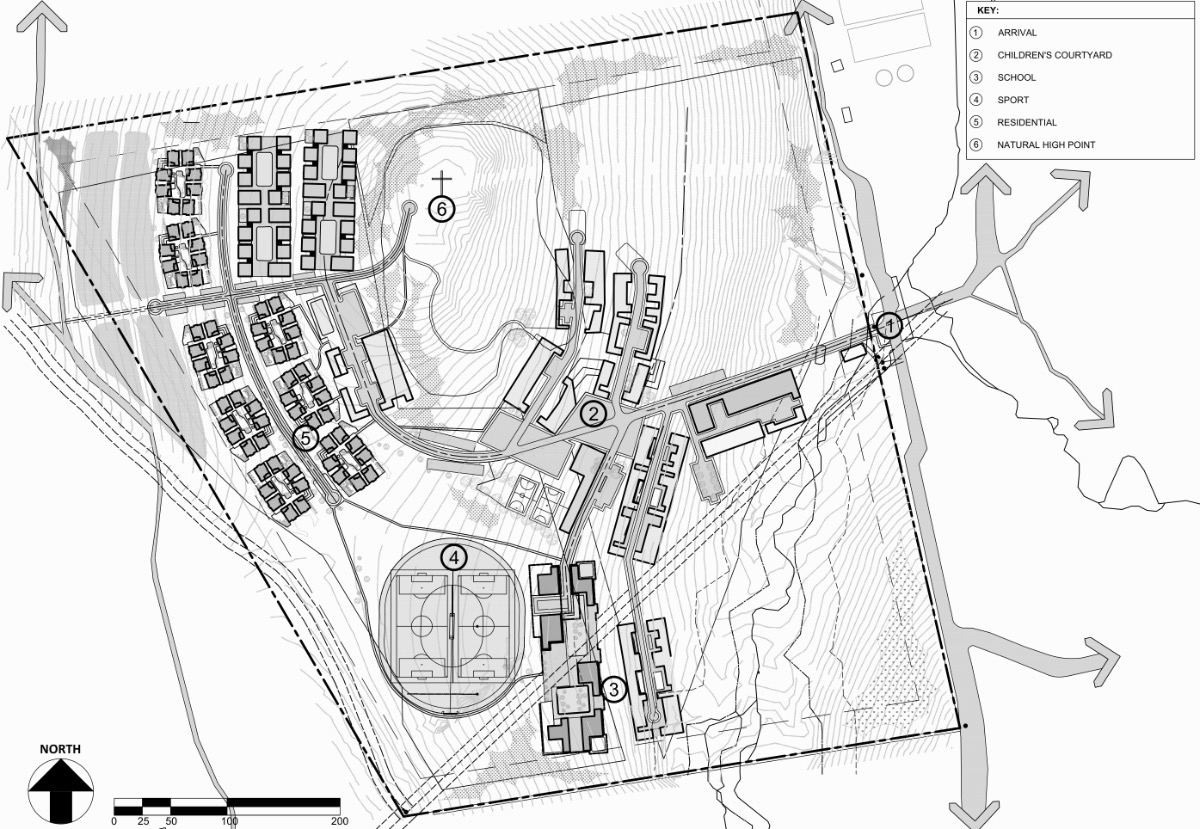
LIV Lukhanyiso Village (2021–): A new Landscape of justice and care, creating a place for children
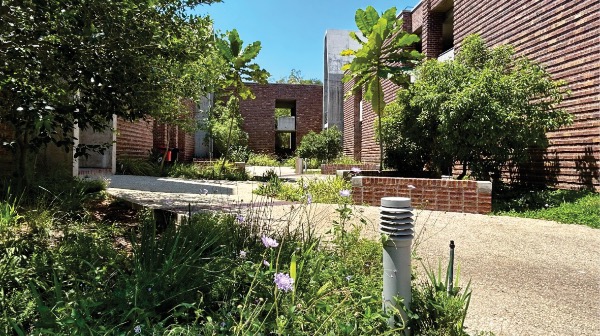
LIV Lukhanyiso Village, on the northern edge of Makhanda, is a project dedicated to creating a village for the upbringing and education of vulnerable children. The client (who has undertaken work of this nature elsewhere in South Africa) requested a holistic environment that combines housing, education, care, and supportive services. The design process has led to a masterplan framework consisting of fifteen compact mini-villages, each centred on a courtyard. These are aligned to movement routes along the contours of the site. The public spaces between these mini-villages either remain as indigenous landscaping or are developed to support movement, play, and gathering in the form of sports facilities and larger public spaces.
Phase 1 of the work included cost-effective residential villages that follow the site's contours on the slopes of a gently sloping indigenously vegetated hill. The design leverages topography and climate to create compact, sheltered, socially supportive courtyards. Sustainability considerations extend beyond materials to encompass long-term functionality, with a focus on minimising car use and prioritising children's needs. LIV Lukhanyiso Village demonstrates how micro-places can shape phased masterplan environments from their formative initial phases. These Phase 1 residential mini-villages, then, function on a larger scale as an interconnected set of micro-places within a broader system.

Vuyisile Mini Square (2023–)-A city square as a Landscape of layers, creating Places of engagement
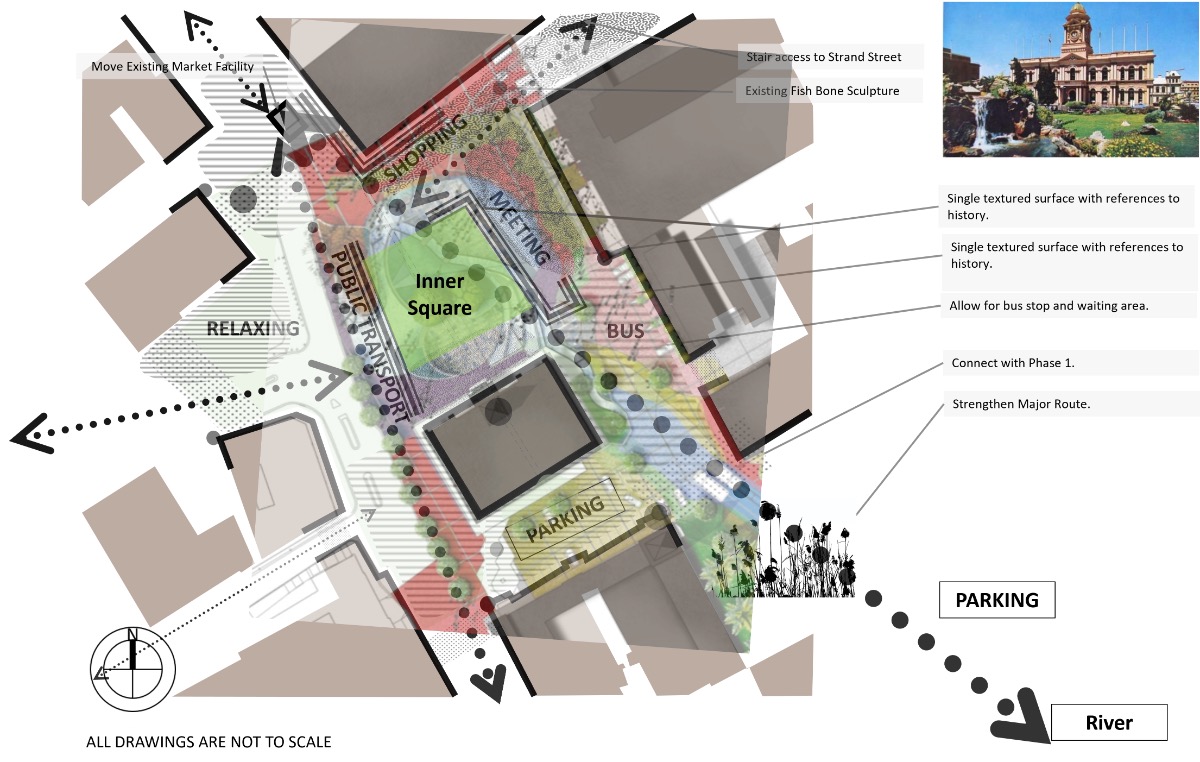
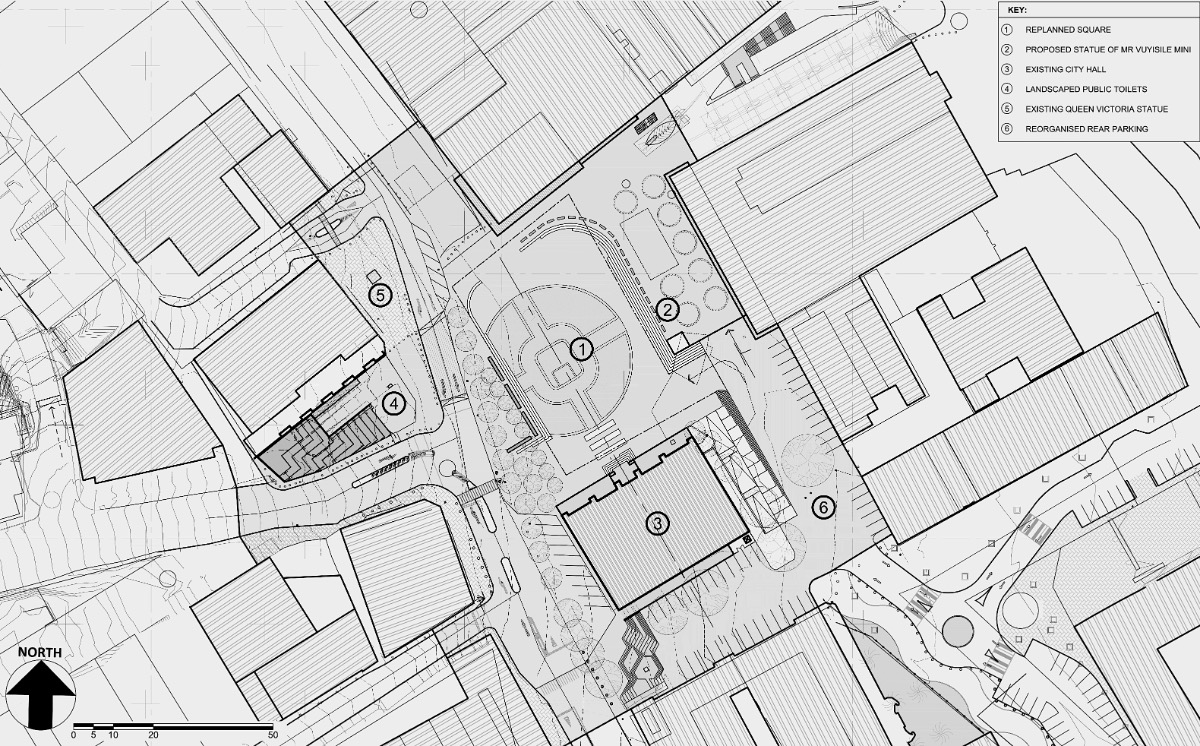
Vuyisile Mini Square is Gqeberha’s most prominent civic space, historically defined by the Town Hall and surrounding public buildings at the end of Govan Mbeki Avenue. The square is currently an underused, large, paved surface, often occupied by cars. The case study seeks to redefine the square as a central hub for civic life, integrating heritage with contemporary needs for transport, accessibility, and inclusivity. Stakeholder engagement included input from municipal agencies, residents, and cultural organisations. The design aims to reconnect movement routes, reduce barriers, and reactivate the square by increasing opportunities for use. Public art and heritage interpretation are central, with the repositioning of statues and the inclusion of a new statue of Mr Vuyisile Mini, fostering dialogue between historical and contemporary narratives.
The square’s upgrade reflects the complexities of designing civic spaces in African cities, where history, politics, ambition and functionality intersect. As an ongoing project, it tests how focusing on the specific local aspects of places can embody both civic dignity and everyday use.
Gedult’s Farm (2024–): A created Landscape of imagination and healing that allows for places of celebration and healing
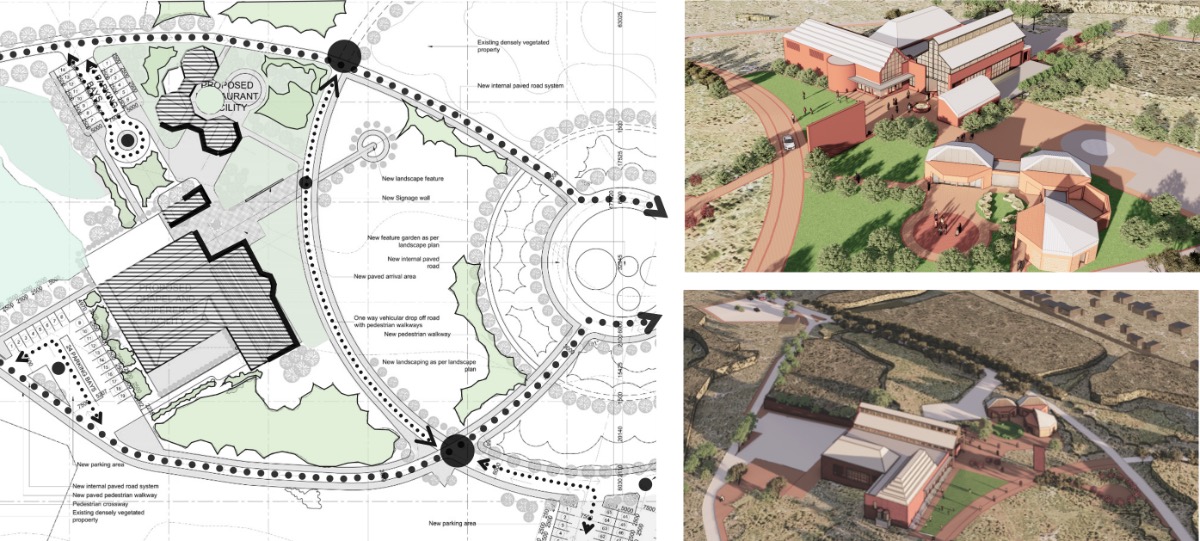
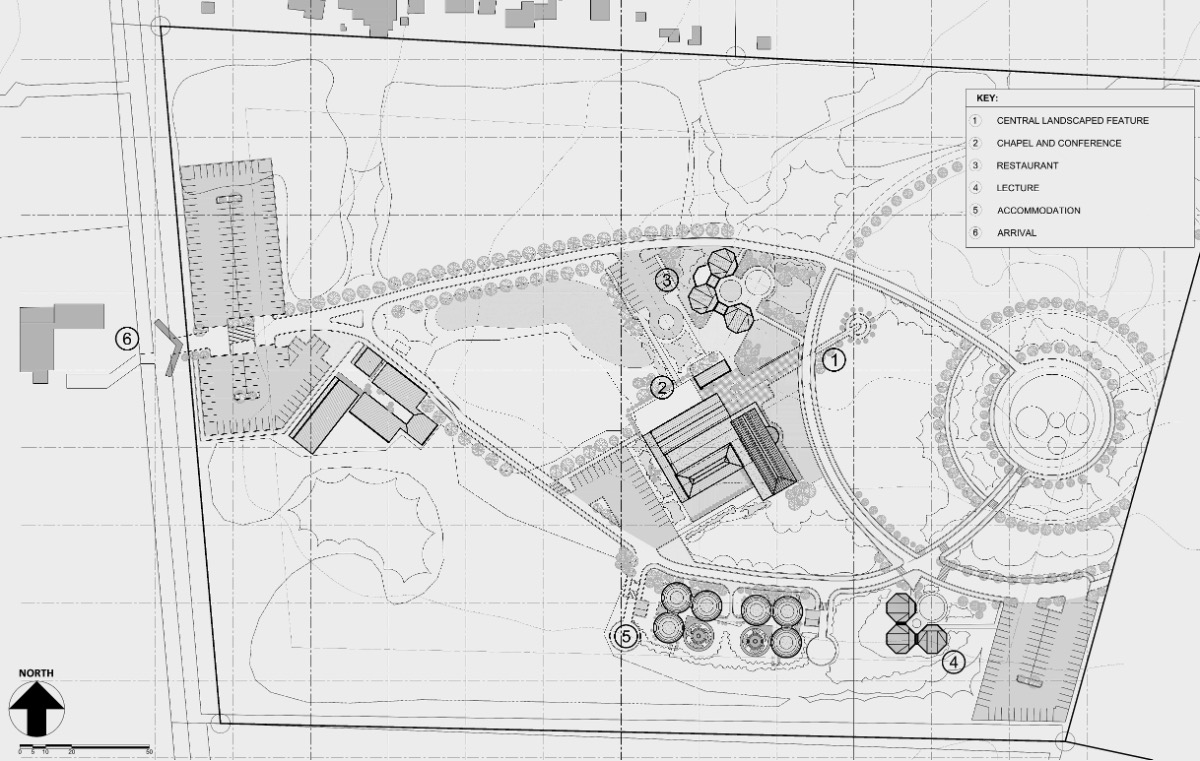
Gedult’s Farm, on the western edge of Gqeberha, is a private development inspired by Afrocentric themes and the imagery of the fictional African city of Wakanda. The project combines accommodation, training, conferencing and leisure, thereby positioning the development as an economic and cultural venture. The site is currently a large, degraded landscape of invasive exotic vegetation, several points of heritage value, and some limited indigenous landscape and potential watercourses.
Spatial strategies responded to the existing landscape by firstly mapping the vegetation and making decisions on maintaining and clearing various parts of the site. From this, facilities are placed in clearings while maintaining strong connections to natural systems. These facilities are organised along a central active looped street. A 'Great Lawn' (with associated gardens) serves as the focal point of Phase 1 (notably the conference centre), with various activities organised around it. New indigenous planting (including new medicinal planting by the client) ensures ecological integration as a key design element.
Although still in its early stages, Gedult's Farm demonstrates how micro-places along a looped connector can create new economic development, while also embedding cultural narratives. It highlights the role of private clients in shaping new African landscapes and the opportunities that this presents.
Reflection: The Opportunities for Micro-places
Across these case studies, a common theme emerges: micro-places function as lenses through which heritage, activity, community, and development intersect. The Donkin Reserve revealed the negotiation of contested heritage; Singapi Street highlighted the everyday sociality of streets; LIV Lukhanyiso Village demonstrated the opportunity of compact mini-villages and interlocking primary spaces allowing for phased development; Vuyisile Mini Square engaged with civic identity and inclusivity, and Gedult’s Farm illustrated the opportunities of private-sector contributions to creating new places of celebration and healing that are underpinned by traditional cultural values and a focus towards the landscape.
Micro-places allow for the more general notions of place and placemaking to become specific and localised. It is suggested that micro-places have the following attributes:
1. They are modest in size with a clear definition of their perimeter.
2. They have a well-defined edge, such as a line of buildings or vegetation, for example.
3. The focus is on the specific daily life activities of people.
4. There is a recognition and engagement with the macro context.
Micro-places present opportunities due to their manageable scale, immediate impact, and integration into daily life. They enable community engagement, provide scaled tangible outcomes for clients, and allow practitioners to test and refine design approaches. However, they also reveal challenges such as governance limitations, extended timelines, security, vandalism, and maintenance vulnerabilities. In professional practice, micro-places require patience and negotiation. They emphasise the importance of listening and facilitation alongside technical expertise.
Conclusion
This paper examines the professional practice of urban designers in South Africa through a review of five case studies over the past two decades. The case studies highlight a specific approach to practice, focusing on smaller scales of place. It is argued that this focus on micro-places enables practitioners to reveal urban landscapes in contextually grounded, socially responsive ways. Approaching the practice of urban design by focusing on micro-places offers opportunities by connecting to the macro-systems of our cities and towns with specific localised daily life aspects, allowing for inclusivity and belonging.






.jpg)
