
The 15th China International Garden Expo, Wenzhou, China
ABout the Author/s

I remember arriving in Shenzhen for the Global Summit on Sustainable Greening and Landscape Architecture—a gathering that already felt significant but would soon become much more memorable. Hosted by the Chinese Society of Landscape Architecture (CHSLA), the event brought together practitioners and leaders from across the world. What we didn’t quite expect was the opportunity that would unfold during a meeting with the Society’s president.
Our Executive Committee from the International Federation of Landscape Architects had been invited for what we assumed would be a routine engagement. Instead, we found ourselves being introduced to the team behind the 15th China International Garden Expo, planned for Wenzhou. On 8 November 2024, we sat through a detailed presentation outlining the vision for the Expo. And just as it wrapped up, the organisers made an offer that caught us slightly off guard: would IFLA like to have its own pavilion?
They showed us the proposed site—right near one of the main entrances to the park. It was prominent, impossible to miss. We exchanged a few quick thoughts among ourselves, and it didn’t take long to agree. This was something special. Our President, Bruno Marques, accepted on the spot. We felt both honoured and a little daunted.
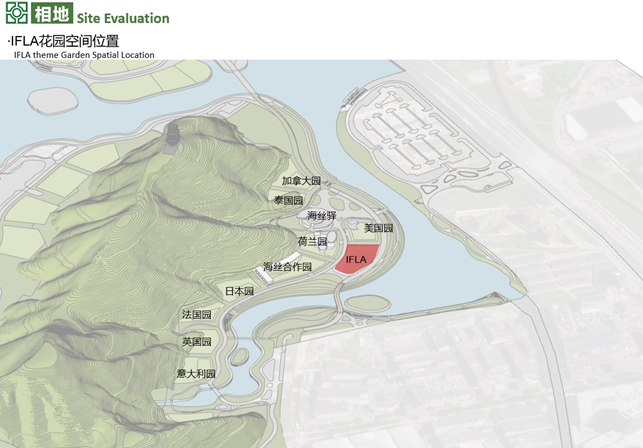
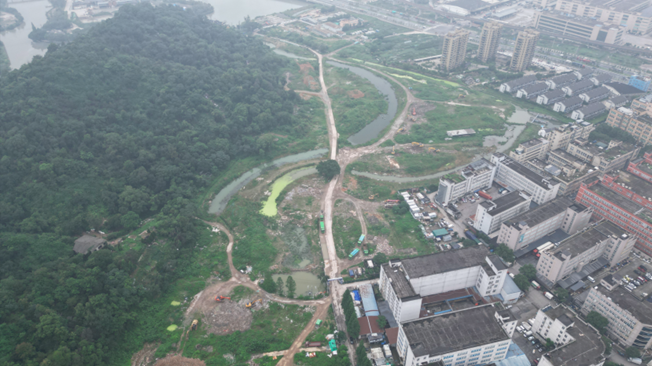
As we learned more, the scale of the Expo became clear. Set to open in April 2026, the site spans some 230 hectares in central Wenzhou, transforming underused land into a vast public landscape.
The ambition is to showcase advances in garden design, urban greening, and sustainable living, all while seamlessly blending natural and built environments. Notably, the IFLA pavilion will stand apart as the only exhibit not tied to a specific city or country.
Excitement quickly gave way to practical questions. We had just 17 months. Who would design this pavilion? How would we deliver it in time? Those conversations began almost immediately. Dr Jala Makhzoumi (acting President, IFLA Middle East) and Graham Young (President, IFLA Africa) were tasked with preparing a design brief, and, given the tight timeframe, the decision was made to limit the competition to Chinese firms and institutions.
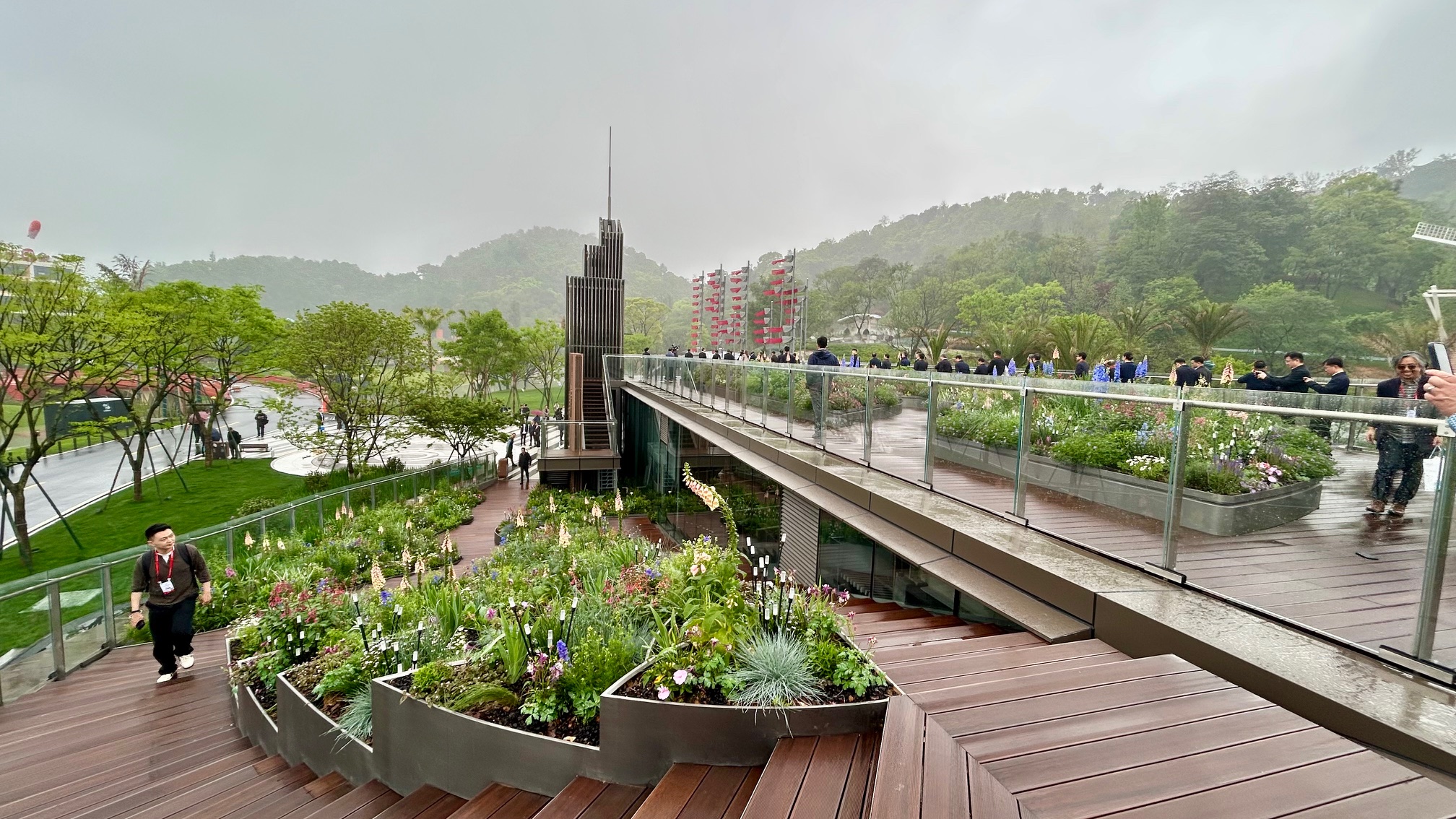
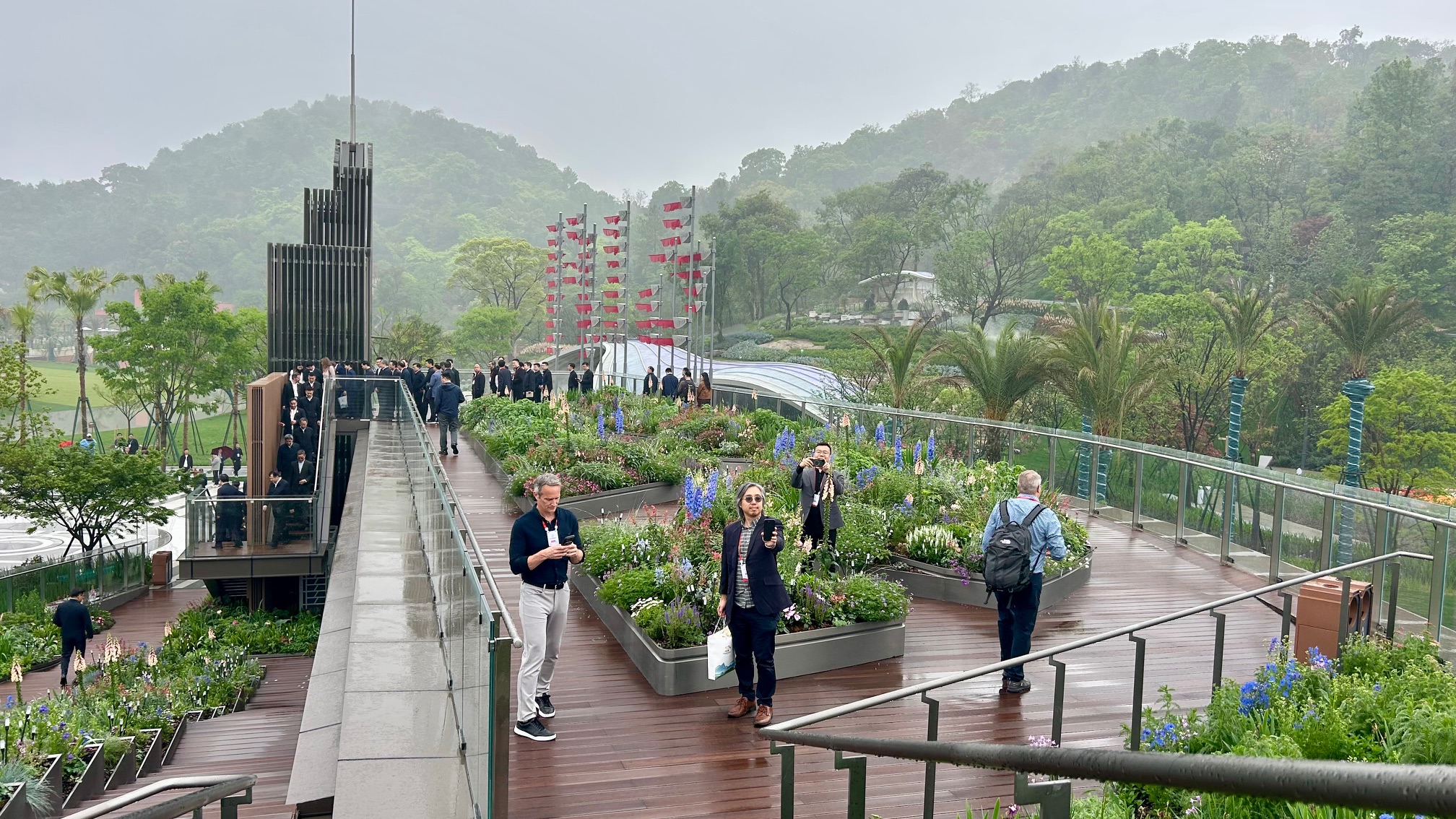
When the submissions came in, one stood out. Zhu Yufan of Atelier Shu Yufan presented a concept that felt both grounded and imaginative. It wasn’t just a building—it told a story. What struck us was how naturally it connected IFLA’s global identity with local cultural references, while also responding thoughtfully to the site itself. The pavilion wasn’t placed on the landscape—it seemed to belong to it, sitting comfortably between the hills and water, acting almost like a threshold into the Expo.
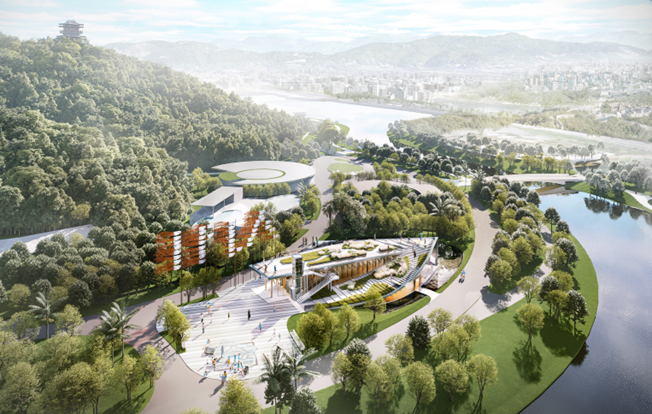
There was also a clever alignment in the design—what was described as “spatial choreography.” The main axis of the pavilion points toward IFLA’s headquarters in Versailles, France. Along this line sits the central structure, inspired by a traditional Chinese Tang ship. It’s a subtle gesture, but a powerful one.
The concept is called “Fāng Zhōu,” and the more I understood, the more it resonated. It loosely echoes the idea of Noah’s Ark, but with a distinctly Chinese interpretation. “Fāng” refers to fragrant plants and herbal life, evoking botanical vitality, while “Zhōu” means vessel. Together, it speaks to navigating environmental challenges while holding onto the healing and restorative power of landscapes. It felt very much in line with what IFLA stands for.
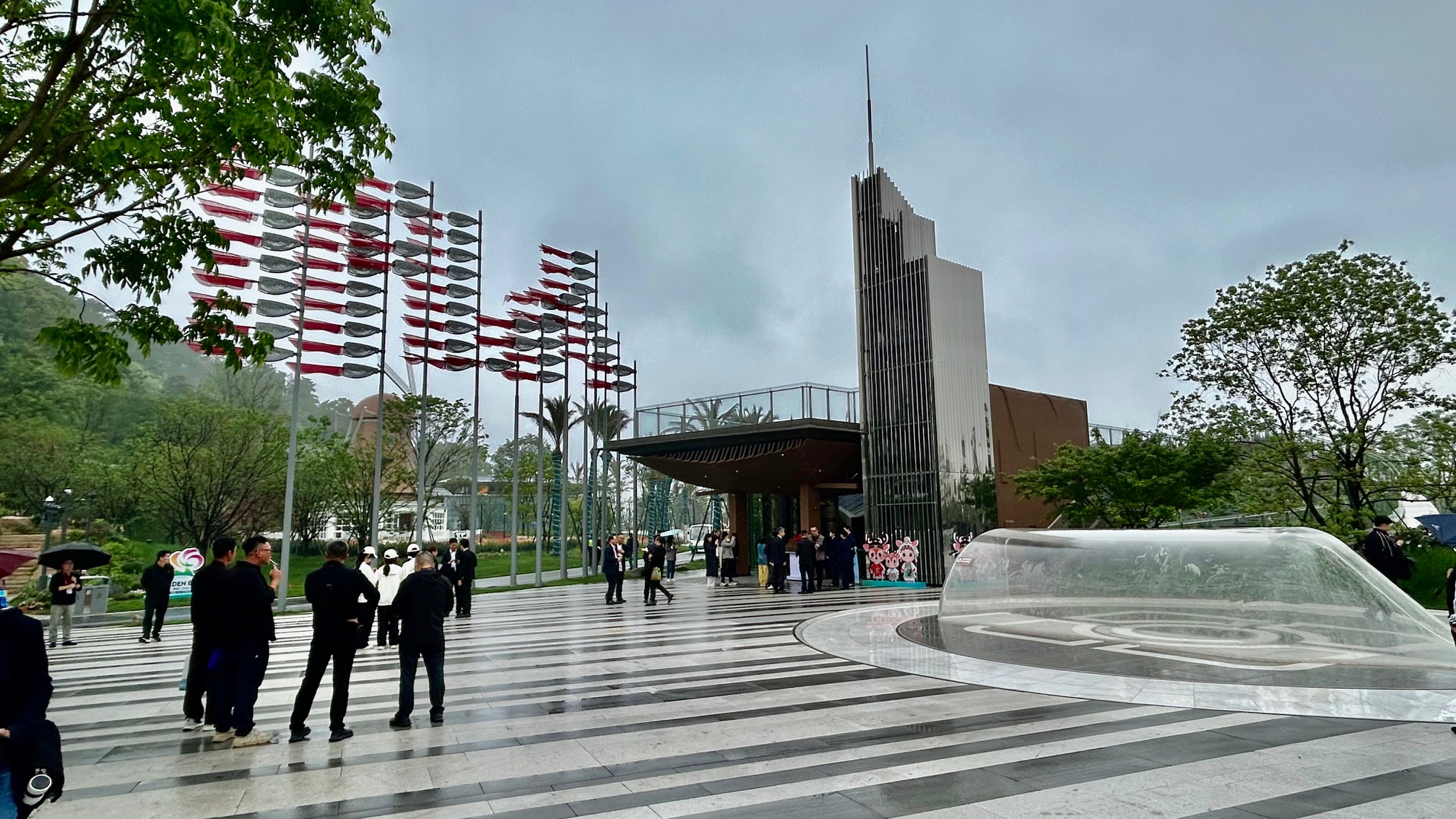
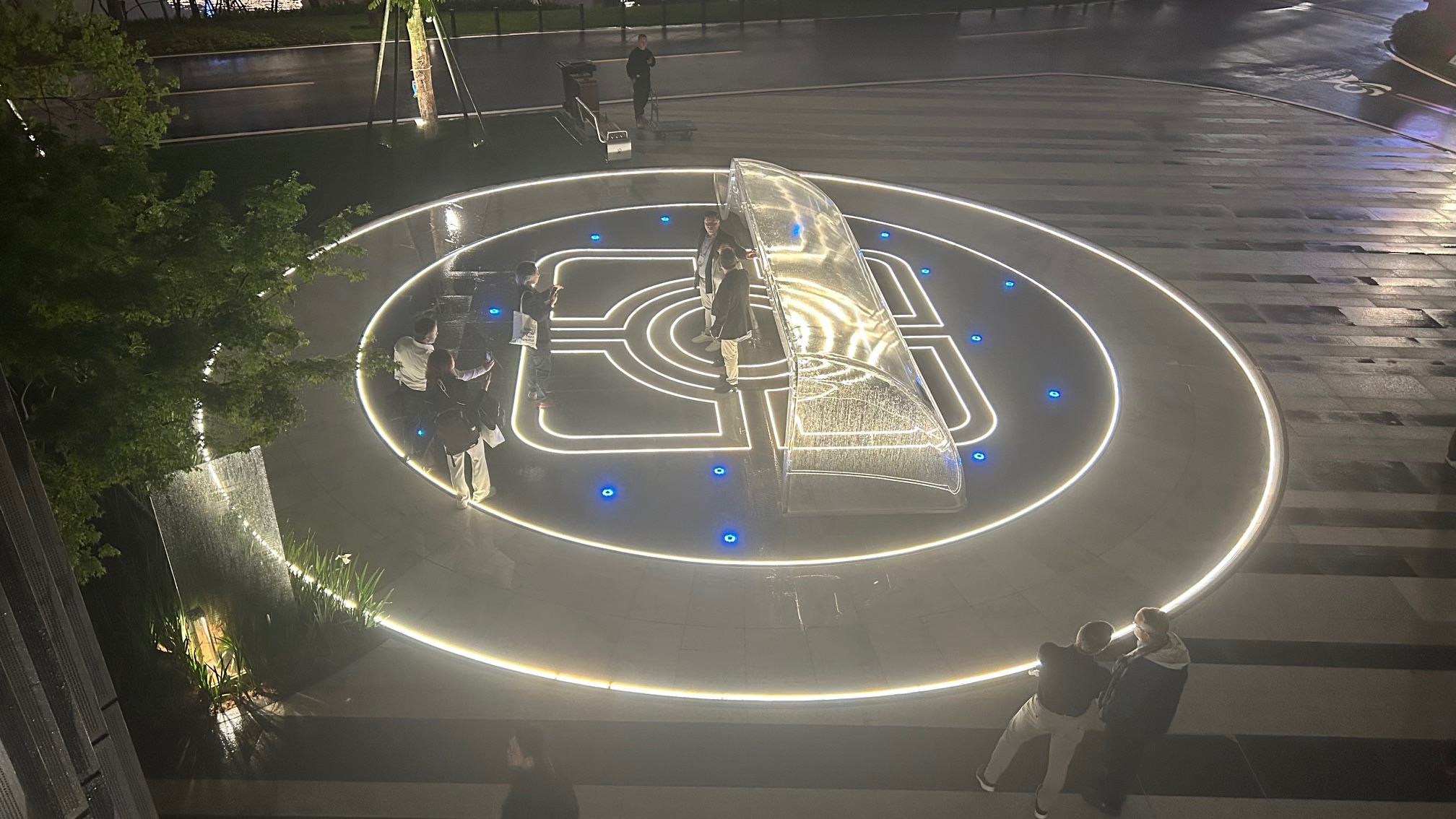
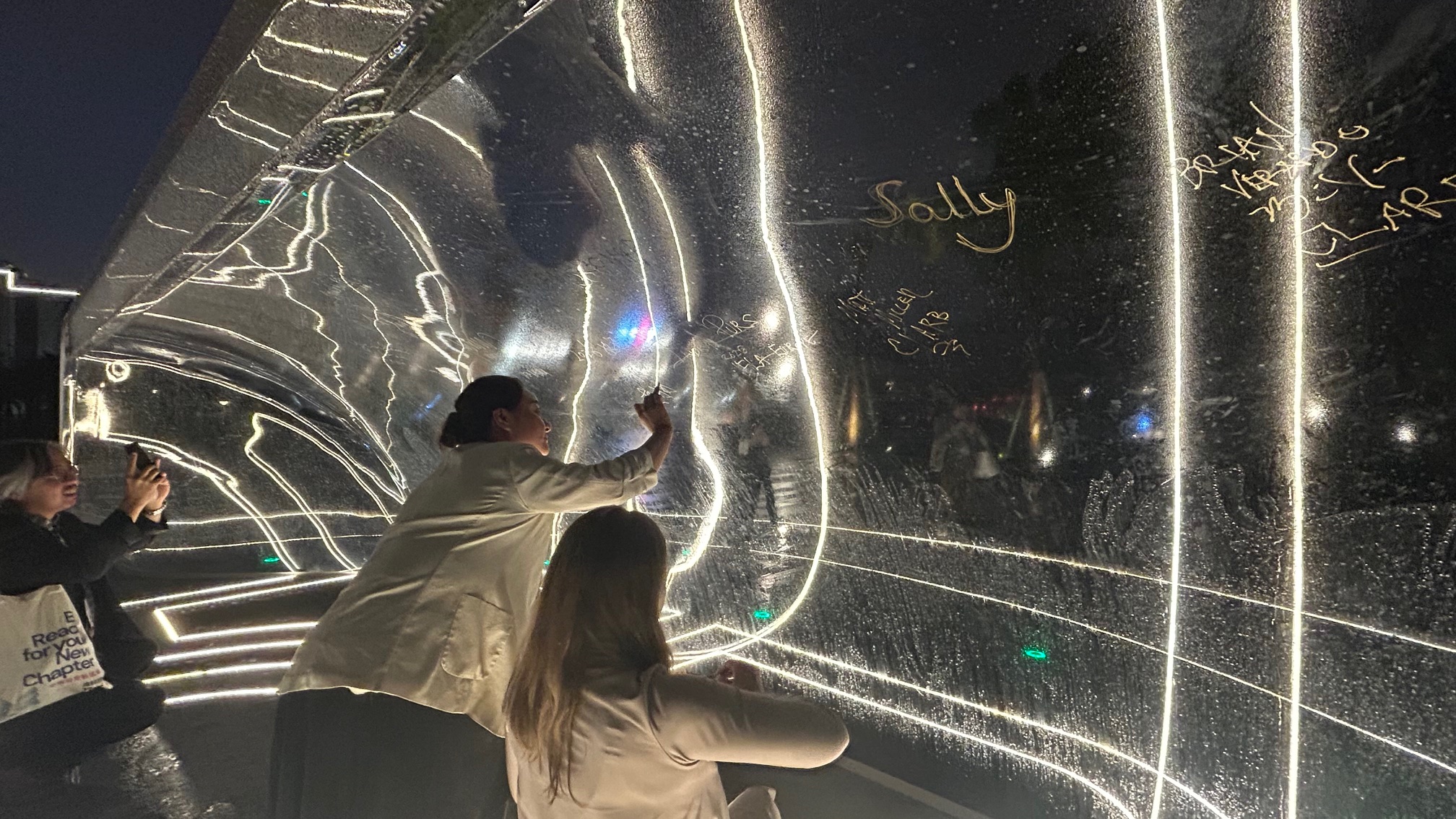
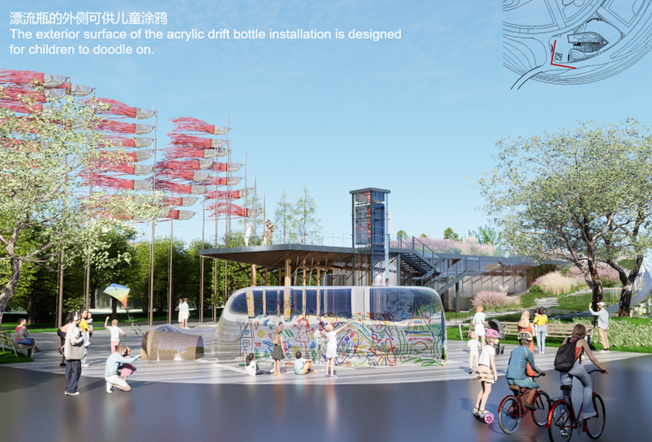
One of my favourite elements is at the entrance plaza—a sculptural “drift bottle” inspired by the IFLA logo. It’s not just there to be looked at; it’s interactive, inviting children to draw on its surface. There’s something refreshing about that—an openness, a willingness to let people engage with the space in their own way.
Looking back, what started as a meeting in Shenzhen turned into a defining moment. The pavilion is more than just a structure at an Expo—it’s a statement about who we are, and what landscape architecture can offer in a changing world.
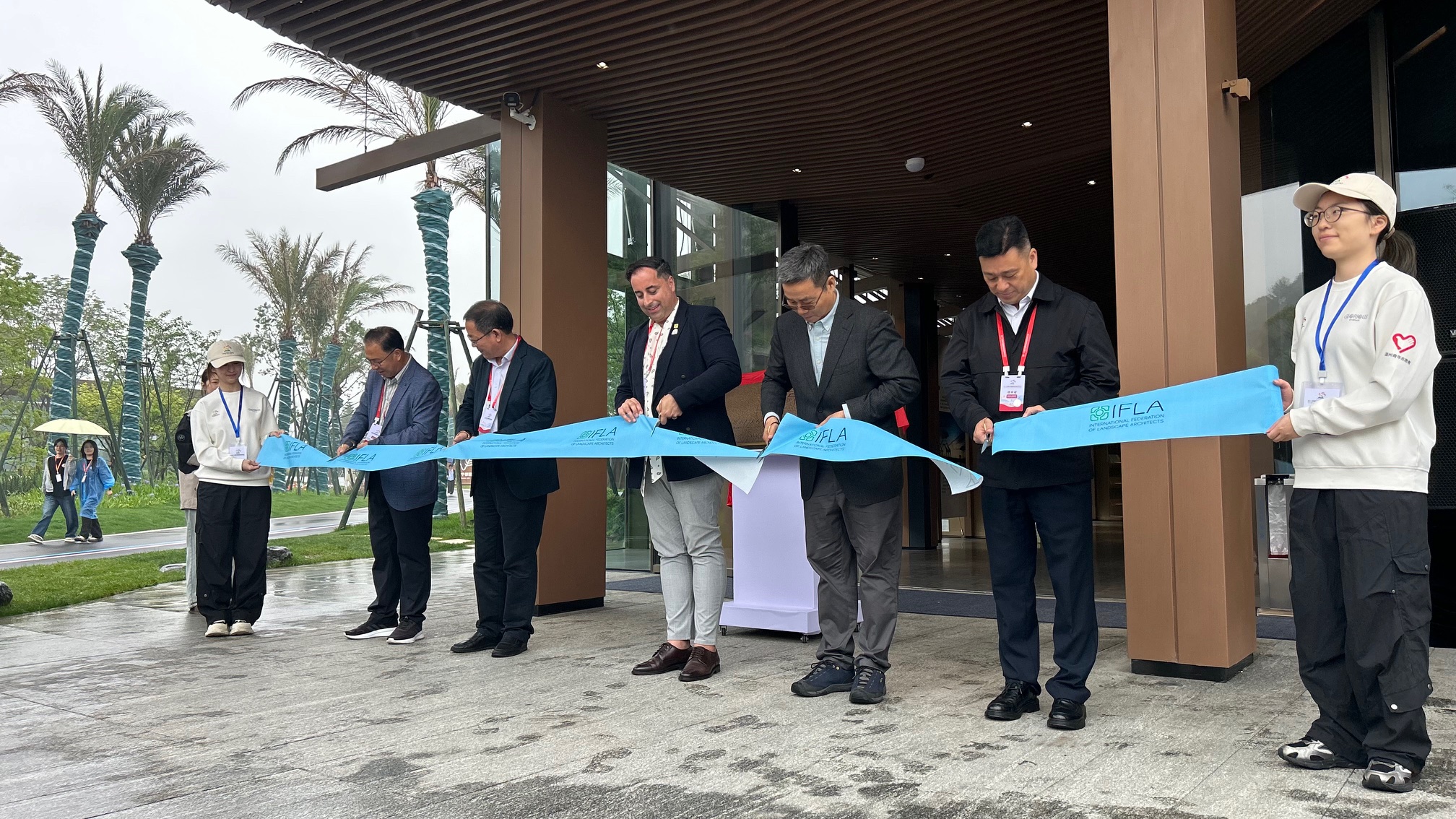
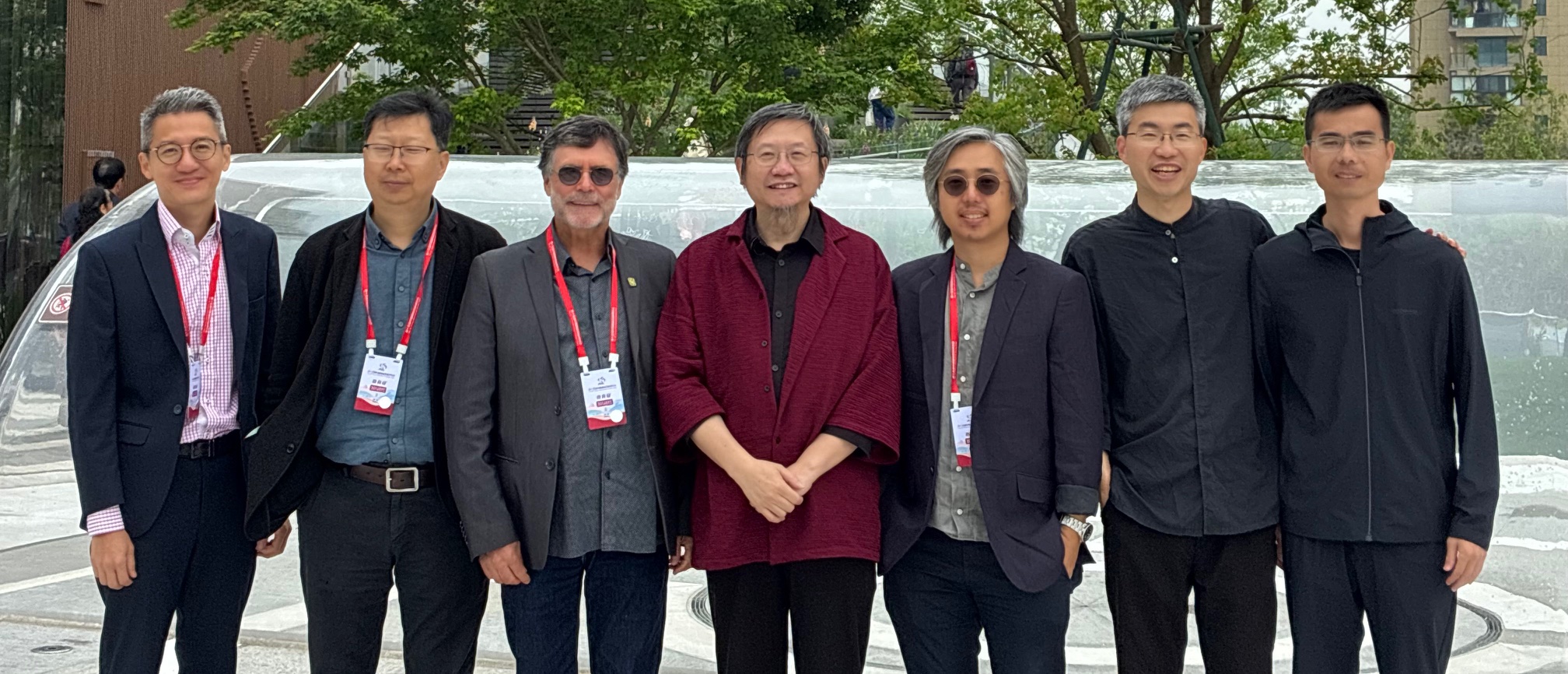
I enjoyed representing IFLA Africa at the opening ceremony on April 15, 2026, which took place exactly 17 months after our meeting in Shenzhen. The images below were captured on that day.