
Reimagining Nazlet El-Semman Through Landscape Architecture and Public Participation
ABout the Author/s
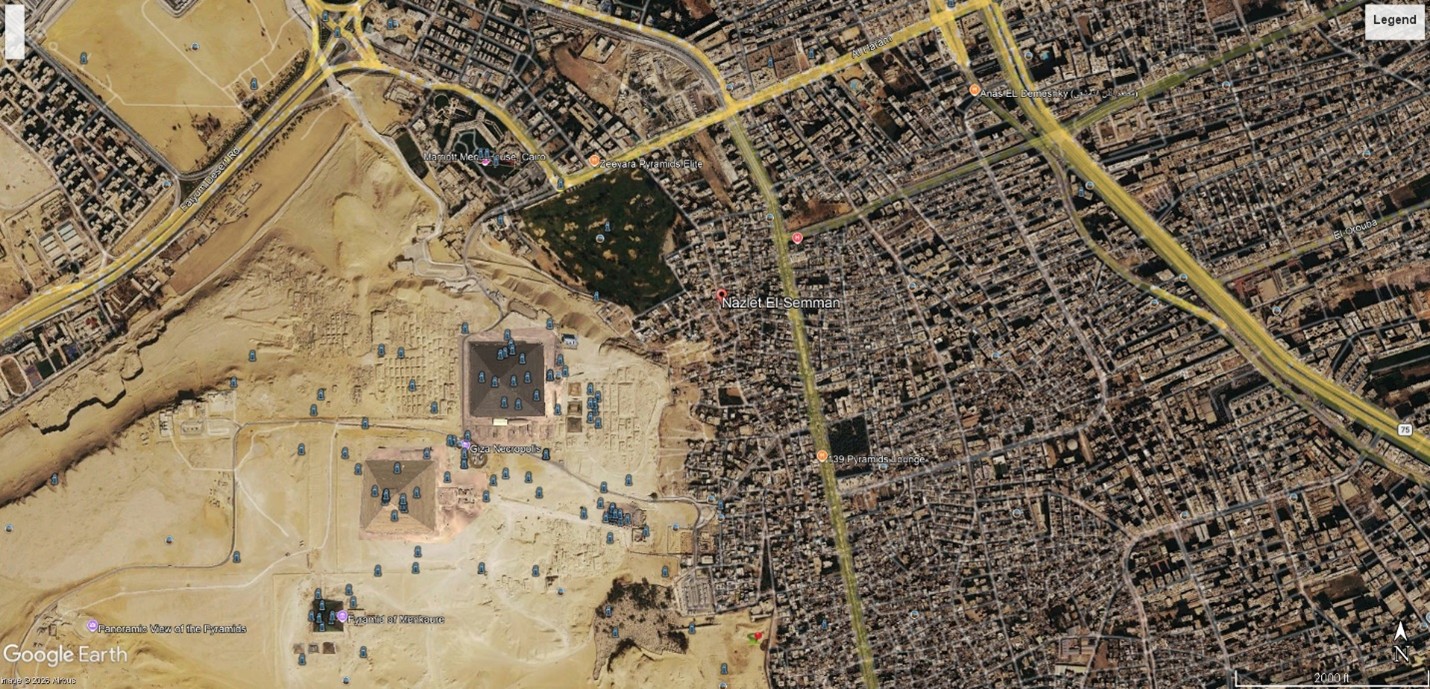
The redevelopment of Nazlet El-Semman in 2026 represents far more than a tourism or infrastructure project. Situated directly at the edge of the Giza Pyramids Plateau, the district occupies one of the most sensitive cultural landscapes in the world, where living urban fabric intersects with an archaeological site of global significance. In recent years, discussions surrounding the area have increasingly shifted from simple urban upgrading toward a broader landscape architectural vision capable of redefining the relationship between heritage, public space, tourism, and community life.
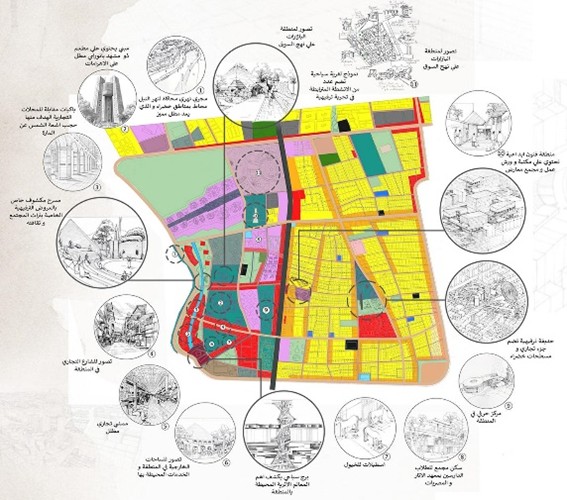
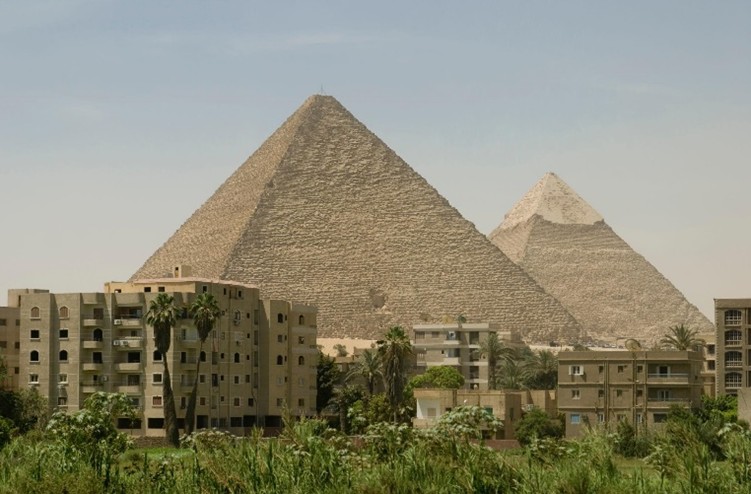
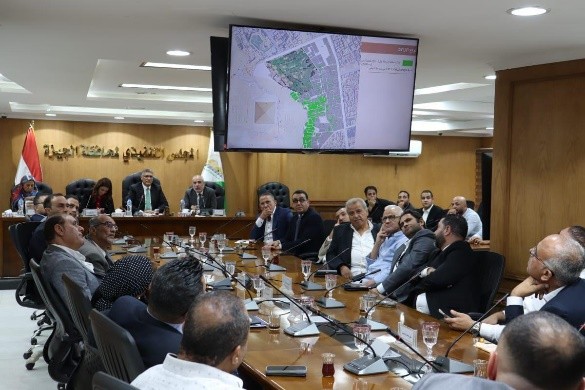
During his visit this week, Egyptian Prime Minister Mostafa Madbouly met with residents of Nazlet El-Semman to discuss the government’s proposed redevelopment strategy for the area surrounding the pyramids. Youm7 report on the meeting While official discussions focused on tourism development and infrastructure improvement, the project also reveals a deeper transformation in how Egypt is beginning to approach heritage landscapes — not as isolated monuments, but as integrated urban ecosystems shaped through public realm design and environmental planning.
From a landscape architectural perspective, Nazlet El-Semman functions as the transitional threshold between the contemporary city and the ancient desert plateau. This edge condition is critical because the visitor experience of the pyramids begins long before entering the archaeological site itself. Streets, sidewalks, visual corridors, mobility systems, planting strategies, shading devices, and the organization of public space collectively shape how heritage is perceived and experienced.
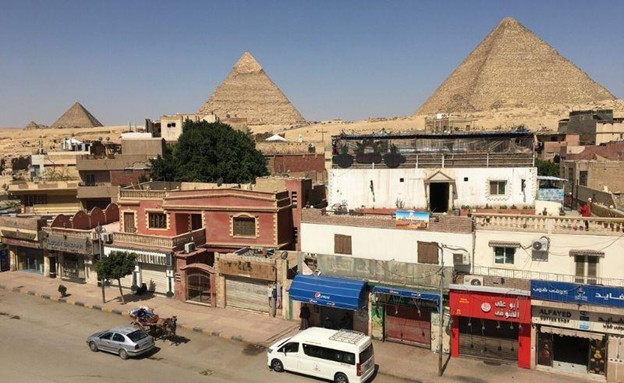
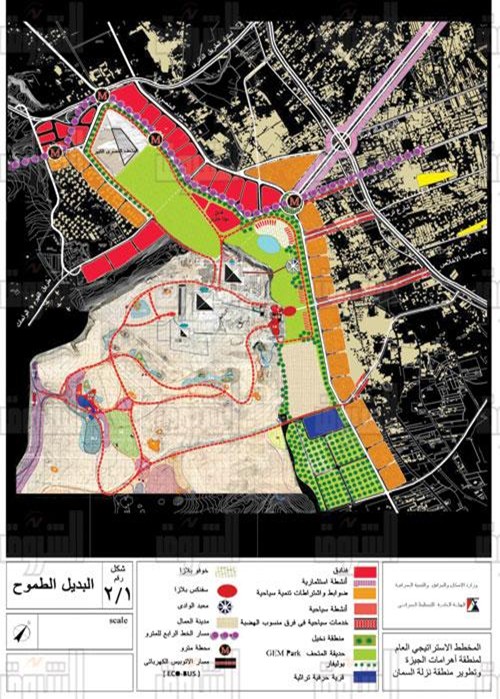
For decades, the urban edge surrounding the pyramids suffered from fragmented streetscapes, visual clutter, uncontrolled circulation, informal commercial activities, and environmental degradation. These conditions weakened the spatial dignity of one of the world’s most iconic cultural landscapes. The current redevelopment initiative therefore offers an opportunity to reconsider the area through the lens of landscape urbanism, where infrastructure, ecology, movement, and heritage are integrated into a coherent spatial system.
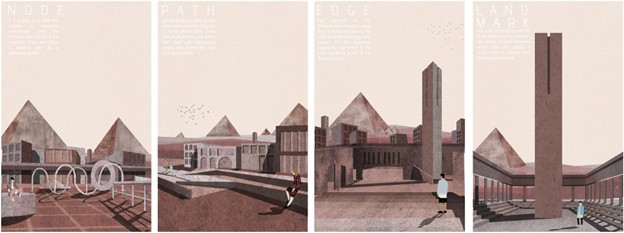
The role of landscape architecture in such a context extends beyond beautification. Instead, it becomes a tool for mediation between multiple layers of complexity: tourism flows, local livelihoods, archaeological preservation, environmental comfort, and urban identity. Future interventions are likely to focus heavily on pedestrian-oriented public spaces, shaded circulation corridors, environmentally responsive paving systems, integrated seating areas, desert-sensitive planting palettes, and carefully framed visual relationships toward the pyramids themselves.
One of the most important landscape architectural challenges in Nazlet El-Semman lies in balancing intervention with restraint. Unlike conventional urban regeneration projects, the presence of the pyramids demands an approach that respects visual hierarchy and cultural atmosphere. Materials, vegetation, lighting, and urban furniture must operate quietly within the landscape without competing with the monumental presence of the archaeological site. This sensitivity is central to heritage-based landscape architecture, where the objective is not to dominate the site through design, but to strengthen the relationship between people and place.
Equally significant is the environmental dimension of the project. Cairo’s climate conditions, combined with rising temperatures and tourism pressures, make thermal comfort and environmental resilience increasingly important within public spaces. Landscape interventions therefore have the potential to improve microclimatic conditions through shading systems, permeable surfaces, drought-resistant vegetation, and passive cooling strategies. In this sense, landscape architecture becomes part of a broader sustainability agenda linked to urban resilience and visitor wellbeing.
Beyond the physical transformation of the district, the recent meeting between the Prime Minister and local residents also highlights the growing importance of public participation within Egyptian urban redevelopment projects. Al Dostor coverage of the redevelopment discussions Although participatory planning remains relatively limited within many large-scale projects in the region, the government’s direct engagement with residents reflects an acknowledgment that redevelopment in historically inhabited areas cannot succeed without social dialogue.
Nazlet El-Semman is not an empty tourism zone; it is a living urban community with deeply rooted cultural and economic connections to the pyramids. Many residents depend directly on tourism-related activities such as guiding, transportation services, camel and horse operations, handicrafts, and local commerce. As a result, any landscape or public realm intervention inevitably affects patterns of daily life, social interaction, and economic survival.
This makes public participation especially important from a landscape architectural perspective. Successful public spaces are rarely produced through top-down design alone. They require an understanding of local movement patterns, social behaviors, informal economies, and community identity. In heritage districts, participation also contributes to preserving intangible cultural heritage — the everyday practices and social relationships that give meaning to the physical environment.
The redevelopment of Nazlet El-Semman therefore presents an opportunity to move toward a more inclusive model of heritage urbanism in Egypt, where residents are not treated as obstacles to tourism development, but as active participants within the cultural landscape itself. If properly integrated, public participation could help shape public spaces that are not only visually improved for international visitors, but also socially functional and culturally authentic for the local community.
Ultimately, the redevelopment of Nazlet El-Semman may become one of the most important contemporary examples of heritage-sensitive landscape urbanism in the Middle East and Africa. The project reflects a growing recognition that cultural heritage cannot be protected through archaeology alone, but must also be supported by high-quality public spaces, environmental design, social inclusion, and carefully managed urban interfaces.
As Egypt continues redefining its global cultural image through projects surrounding the Grand Egyptian Museum and the Giza Plateau, the future of Nazlet El-Semman will likely depend on how successfully landscape architecture can bridge the gap between monumentality and everyday urban life. The district has the potential to evolve from a fragmented urban edge into a culturally responsive landscape gateway where heritage, ecology, tourism, and community coexist within one integrated public realm.
Despite the ambitious vision behind the redevelopment of Nazlet El-Semman, the project also raises important critical questions regarding the balance between tourism-led urban regeneration and socially sustainable landscape planning. From a landscape architectural perspective, successful heritage redevelopment should not only prioritize visual enhancement and visitor experience, but also protect the social, cultural, and environmental continuity of the existing community. International frameworks such as the United Nations Sustainable Development Goals — particularly SDG 11 concerning sustainable cities and communities — emphasize the importance of inclusive, participatory, and culturally sensitive urban development. Similarly, UNESCO’s Historic Urban Landscape (HUL) Recommendation advocates for integrating local communities, cultural identity, and living heritage into planning processes rather than treating historic areas as purely touristic assets.
In this context, some urbanists and landscape architects may argue that the redevelopment process still appears heavily driven by image-making and tourism branding, with limited transparency regarding long-term community participation mechanisms and public-space governance. While meetings with residents represent an important step toward engagement, meaningful participation within landscape planning requires continuous involvement in decision-making, implementation, and management — not only consultation during early announcements. There are also concerns regarding the risk of creating highly controlled or over-designed public environments that prioritize tourist circulation over everyday social life and informal cultural practices that have historically shaped Nazlet El-Semman’s identity.
From a landscape urbanism perspective, heritage environments should function as living cultural landscapes rather than visually sanitized destinations. The challenge therefore lies not only in improving aesthetics or infrastructure, but in preserving the layered human experience of the place itself. Excessive formalization of streetscapes, removal of informal activities, or over-commercialization of public spaces could weaken the authenticity and social resilience that make the district culturally unique. Consequently, the long-term success of the redevelopment may ultimately depend on whether the project can evolve beyond physical beautification toward a more inclusive model of environmental justice, cultural continuity, and human-centered public realm design aligned with international urban sustainability principles.
