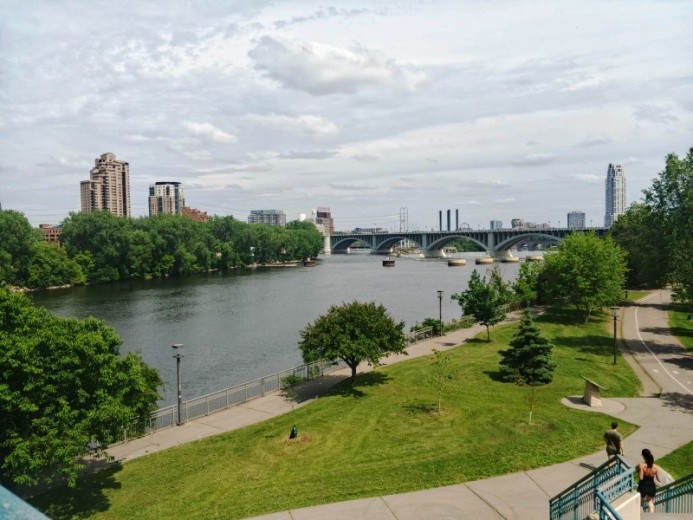

Reflections from Minneapolis
ABout the Author/s

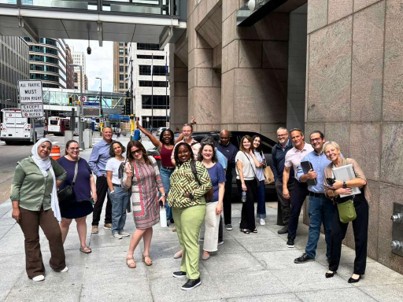
In June, I had the opportunity to participate in a Council of Landscape Architectural Registration Board (CLARB) board meeting in Minneapolis that brought together leaders committed to advancing the landscape architecture profession. CLARB plays a vital role in supporting professional licensure, mobility, standards, and public protection across North America. The visit reaffirmed an important truth, while our contexts may differ, the challenges facing landscape architects are increasingly global, and collaboration between professional institutions is essential if we are to build resilient, equitable, and sustainable landscapes. Joining me for this important meeting was Rasha Sayed, IFLA Africa-PPP Chair.
For IFLA Africa, strengthening partnerships with organisations such as CLARB represents opportunities to share knowledge, strengthen professional capacity, and collectively shape the future of landscape architecture. With Africa rapidly urbanising while simultaneously responding to climate change impact, biodiversity loss, population growth, and growing demands for quality public spaces, the landscape architecture profession, stands to play an important role in addressing these challenges. These challenges require a profession that is well supported through strong education systems, effective professional regulation, and continuous learning.
CLARB has been supporting one of the key initiatives currently being advanced by IFLA Africa; the development of an African Recognition Framework, which will be designed to strengthen professional mobility, raise standards of practice, and enhance the recognition of landscape architects across the continent. The system will provide a credible framework for recognising qualified professionals while respecting the diversity an independence of national regulatory systems. This process is being undertaken collaboratively, with extensive consultation among IFLA Africa's national member associations. Rather than replacing national registration systems, the framework aims to complement them by creating a continent-wide benchmark for professional competence, encouraging mutual recognition, facilitating cross-border practice, and supporting the continued growth and credibility of the profession across Africa. CLARB's experience in professional licensure, competency assessment, continuing professional development, and mobility of practitioners offers valuable lessons.
Collaboration is not about adopting another region's systems wholesale, it is about creating meaningful dialogue that allows each region to learn from the other's successes and challenges. Through stronger engagement between CLARB and IFLA Africa, opportunities emerge for joint professional development programmes, knowledge exchange, research collaboration, mentorship, and support for professionals. We exchanged ideas on knowledge transfer both at the education and practice level including possibility of practice collaboration.
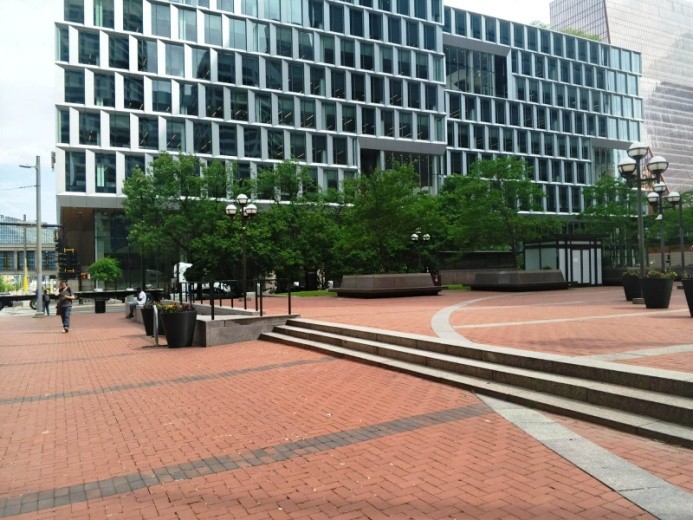
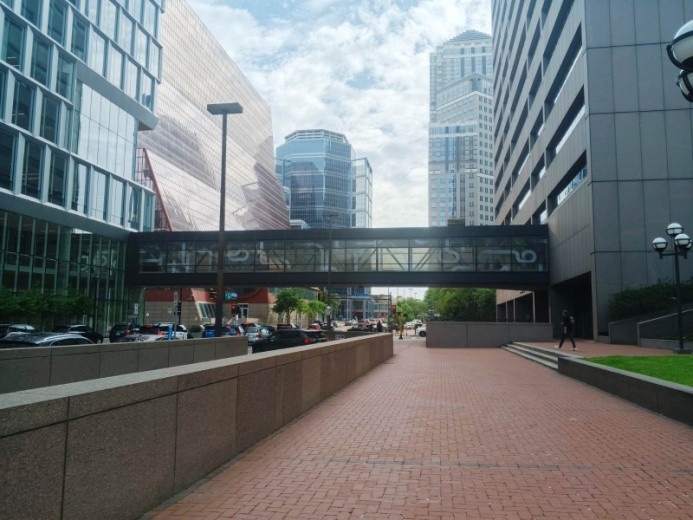
All cities have a story to tell; offering lessons for those willing to observe and learn. A walk through Minneapolis downtown prompted reflection on how cities shape the everyday experience with one interesting observation. Minneapolis streets generally present clean, well-defined facades that engage the street visually but rarely extend over the public sidewalk. This was a distinct difference from many streets in my home city Nairobi; where in the Central business district, buildings have recessed ground floors, and projecting canopies that provide continuous pedestrian protection from both the sun and rainfall.
In Minneapolis, most building lines often terminate at the property edge, leaving pedestrians fully exposed to rain or intense summer sun once they leave the building. One of Minneapolis' most remarkable urban design features is its extensive network of enclosed skyways, an approximately 29Km network of climate-controlled, second-story walkways that began with a single bridge in 1962. The streetscape is a result of both climate responsiveness and the era in which many of the buildings were built. Awnings must be engineered to handle heavy snow loads, adding significant cost and maintenance that the skyways conveniently bypass. Additionally, many downtown buildings were constructed during the mid-20th century when architectural trends favored clean, unadorned facades, often resulting in designs that lacked awnings or recessed entries. The skyway system allows people to move comfortably between buildings while sheltered from the city's harsh winter weather, demonstrating how thoughtful infrastructure can make cities more accessible, walkable, and resilient year-round. Comfort at street level is achieved primarily through street trees, pocket public spaces rather than through architectural shelter. However, the city's new Minneapolis 2040 Plan is now actively encouraging features like awnings to revitalize street life, meaning newer developments are beginning to reintegrate them.
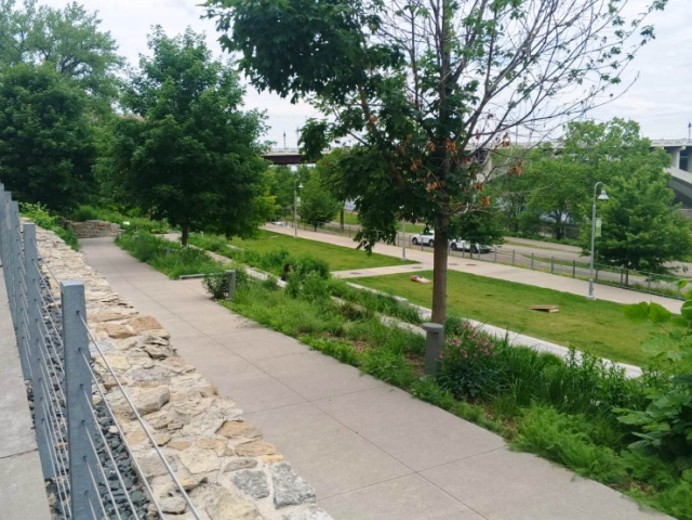
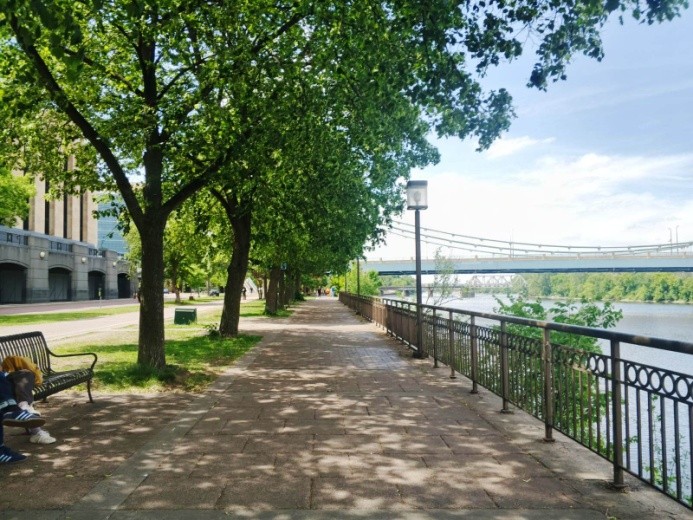
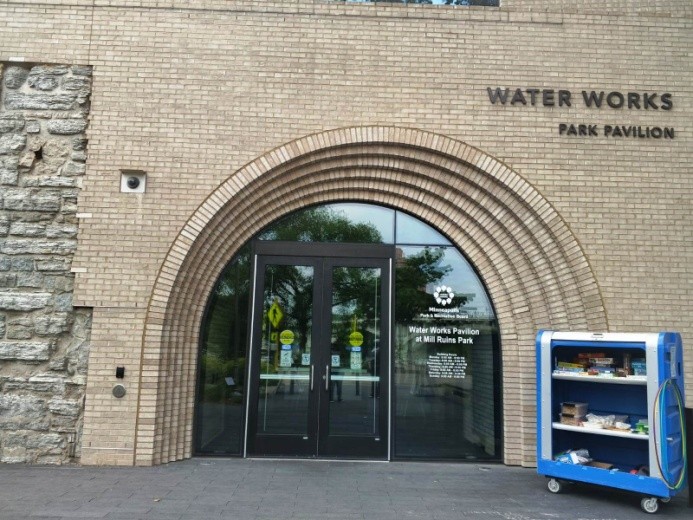
Walking along the Mississippi River made me reflect on the ongoing Nairobi River Basin restoration. The Mississippi riverfront is a vital public space and ecological asset for the city. The riverfront demonstrates how design can successfully integrate environmental conservation with recreation and urban life. Its continuous walking and cycling trails encourage people of all ages to experience the river with carefully positioned seating, viewing platforms, and an information centre for visitors. Riverfront planning and design should incorporate floodable parks for flood management, water wetlands for purification, active recreational routes such as jogging tracks, passive recreation areas such as viewing decks and many other aspects that landscape architects can ensure are integrated into these sensitive ecosystems. Such approaches are increasingly relevant as African cities face more frequent flooding, rapid urbanisation and limited quality urban spaces.
We are grateful for the continued partnership and collaboration with CLARB.
Following its adoption by the IFLA World Council in March 2025, the IFLA’s new governance structure will be rolled out after the IFLA World Council in Hong Kong this October. One of the most significant changes is the creation of the Board of Directors and Nominating Committee. The Nominating Committee has already been constituted while the call for Board of Directors closes on July 26th 2026. These reforms aim to position IFLA to respond more effectively to the evolving needs of the global landscape architecture profession while ensuring Regional specific initiatives are not shadowed by IFLA global initiatives. We congratulate Prof. Tunji Adejumo, who was confirmed as the Regional Representative - IFLA Africa, in IFLA Nominations Committee. He brings 44 years of experience in practice and academia and he served as the IFLA Africa president, 2013-2017.
Please take some time and read the articles in this month’s issue and we hope they will inspire you to share your perspectives and insight in our upcoming newsletters.
Happy reading!
