
Indigenous Urbanism
ABout the Author/s

Ule-Ona Residency is an Architect-in-Residence Hybrid Center that encourages the incorporation of indigenous arts in the definition of identity conscious and people centered architecture of where we live, work, play, and produce. The August 2026 edition explored the nexus of indigenous and contemporary knowledge in spatial planning. It emanates from the backdrop that philosophy and principles use for architecture and urbanism in Sub Sahara Africa are still based on poorly understood Global North approaches.
It is resonating United Nations suggestion for Global South nations to adopt localism in design thinking through Article 11 of United Nations Declaration on the Rights of Indigenous Peoples. Signatory to African Agenda 2063 demands alignment to local sustainability dictum beneficial to the region. Nigeria advocated for a new “philosophy of urban planning, design, planning laws, regulations and standards to reflect the peculiarities and priorities of Nigerians” (Federal Government of Nigeria, 2012). Indigenous connotes a group of people with a worldview that respect the union between man and nature. Indigenous worldview fit the people as integral part of the ecosystem. Urbanism interrogates how city people interact with the built environment. It covers the culture, social behavior, and physical form of cities. Anthropology’s urban symbolism window is a relevant escape valve towards indigenous urbanism.
Symbols may take the form of words, numbers, images, sounds, gestures, colour, objects and even ideas. Symbolism drives architecture and urbanism that unified both tangible and intangible realms. It is based on worldview window. This window accommodates mythology often defined as a symbolic narrative of cosmological process. Urbanism streamlines the symbolic narrative as Cosmogram. Every nation or group of people has a design and planning cosmogram that etches its civilization on its contextual landscapes. The cosmogram of Great Zimbabwe urbanism is with Shona nation. It is not lost because an urban landscape is a palimpsest. Indigenous urbanism ideology is made manifest via a three level framework. The first is a search for culturally binding communicable language in odes, folklore, art, and myths.
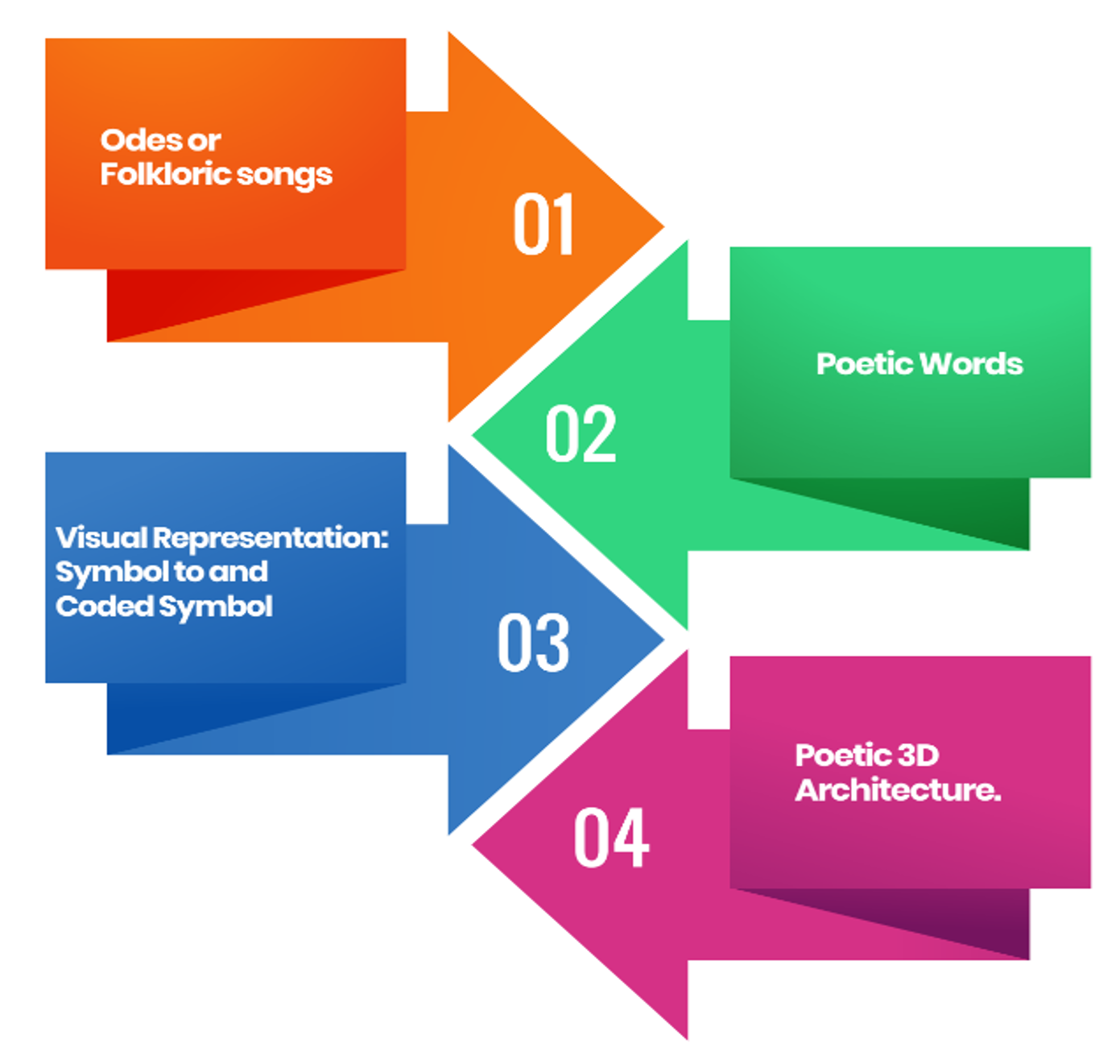
The second is translation of such poetic words into philosophically meaningful symbolism. This is followed by visual representation as a developmental cosmogram. Symbolization of verbal myth generates contemporary design cosmogram that assists in etching societal values on the landscape. This gives credence to the submission that urban morphology should be nested on the philosophy of the people for economic, ecological and social sustainability. It is a call for spatial decoloniality in Africa.
Building on these discussions, I am happy to introduce a 12-week short course, Indigenous Urbanism: Spatial Algorithms.
Beginning in mid-September 2026 and running through December, the course will provide participants with an opportunity to explore how indigenous spatial logic and decolonial frameworks can be integrated into contemporary design practice. Over twelve weekly sessions, participants will engage with Yoruba cosmological worldviews, Èérìndínlógún design numerology, geomancy and their potential applications in contemporary architecture and urban planning.
The course offers an invitation to architects, landscape architects, planners, designers, researchers and other interested practitioners to rethink the foundations of spatial practice and explore what it means to design from systems of knowledge rooted in place.
Registration of interest is now open, and interested participants are encouraged to secure their place for the 12-week course here.
