
Happy New Year
ABout the Author/s

Happy New Year!!
As we begin 2026, I would like to wish all IFLA Africa members, partners, educators, students, and friends a hopeful New Year. The start of a new year is always an invitation to pause and reflect, and intentionally consider where we are going. For landscape architects, this reflection is particularly important, because the future of our landscapes is inseparable from the future urban and infrastructure growth patterns.
The last several years have portrayed that landscape architecture is no longer a peripheral discipline. Across Africa, we have witnessed climate extremes: flooding in cities, increasing urban heat, prolonged droughts in rural regions and biodiversity loss. The pressure on land from rapid urbanisation has in many countries resulted in urban areas that negatively affect out well being.
As we look ahead, lets us look at some trends will shape our work in 2026 and beyond.
i. Regenerative landscapes
The worlds is now awake to the need for regenerative landscapes. Regenerative landscapes restore ecological function, enhance biodiversity, sequester carbon, and strengthen social systems. In Africa, this approach resonates deeply. From restoring degraded wetlands and river corridors to rethinking mining, infrastructure, and agricultural landscapes, regenerative design offers a pathway to heal land while supporting livelihoods. Let us aim to embed regenerative thinking into everyday practice, policy, and education.
ii. Ecological Restoration
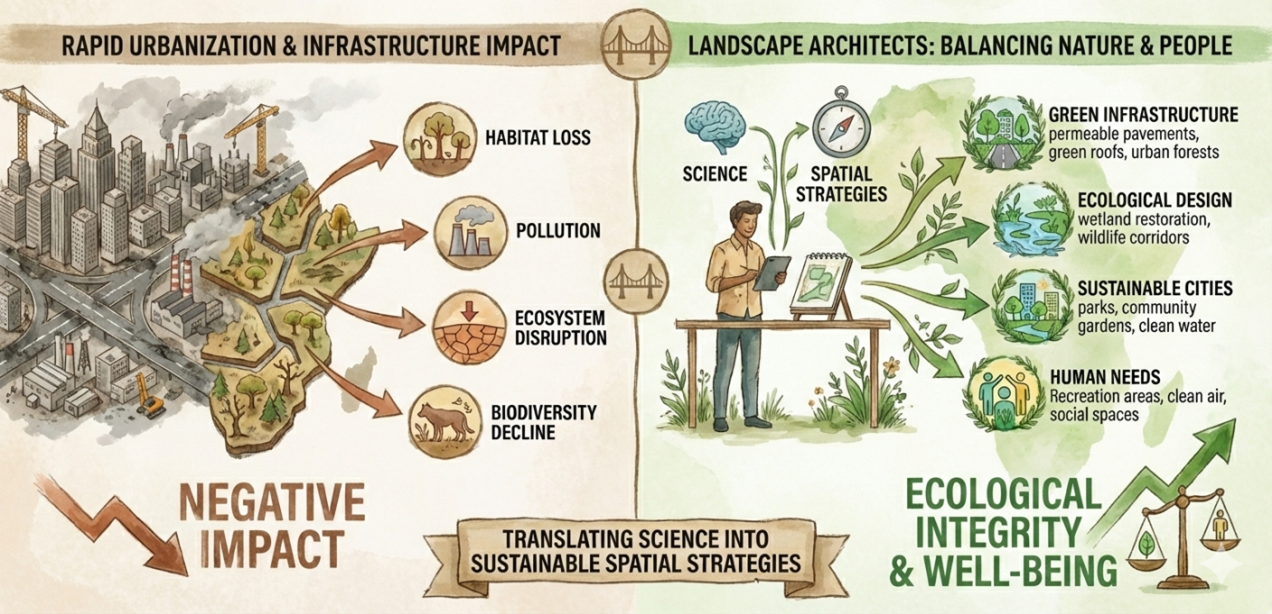
Africa holds some of the world’s most important ecosystems, yet many are under threat. Rapid urbanisation and infrastructure development have continued to negatively impact our ecosystems. Landscape architects have a critical role to play in translating science into spatial strategies that balance ecological integrity with human needs. Restoration must be inclusive, community-led, and economically viable if it is to endure.
iii. Nature as an Asset
Climate uncertainty will continue to define our work. Landscape-based solutions such as urban forests, sponge landscapes, and restored ecosystems are proving to be adaptable and cost-effective responses. Our responsibility is to continue demonstrating their value, particularly to decision-makers who may prioritise grey infrastructure over living systems.
iv. Public Welfare
Access to good quality public spaces is a challenge in many Africa cities. Urban nature is not luxury; it is essential to health, dignity, and social cohesion. Lets us continue advocating for well planned and maintained public green spaces, and when called upon excellently execute our mandate.
v. Technology as a Tool
Technology is transforming how we plan and manage landscapes with GIS, remote sensing, climate modelling, and AI-supported tools are becoming integral to practice. The opportunity for Africa lies in using these tools to strengthen decision-making without disconnecting from local knowledge and lived experience. Smart landscape planning must remain people-centred, ethical, and context-sensitive.
The future of landscape architecture in Africa will depend on how confidently we step into our leadership roles professionally, institutionally, and politically. The role of Landscape architects in contributing towards climate adaptation strategies and urban resilience frameworks is increasing becoming evident. However, we still have a long way to go in ensuring that the profession is adequately represented in interdisciplinary teams. Advocacy matters, hence, this is one of the core capacity building focus areas for our members. When our voices are present in policy discussions on green infrastructure, nature-based solutions, and sustainable urban development, landscapes are no longer seen as aesthetic afterthoughts, but as critical infrastructure.
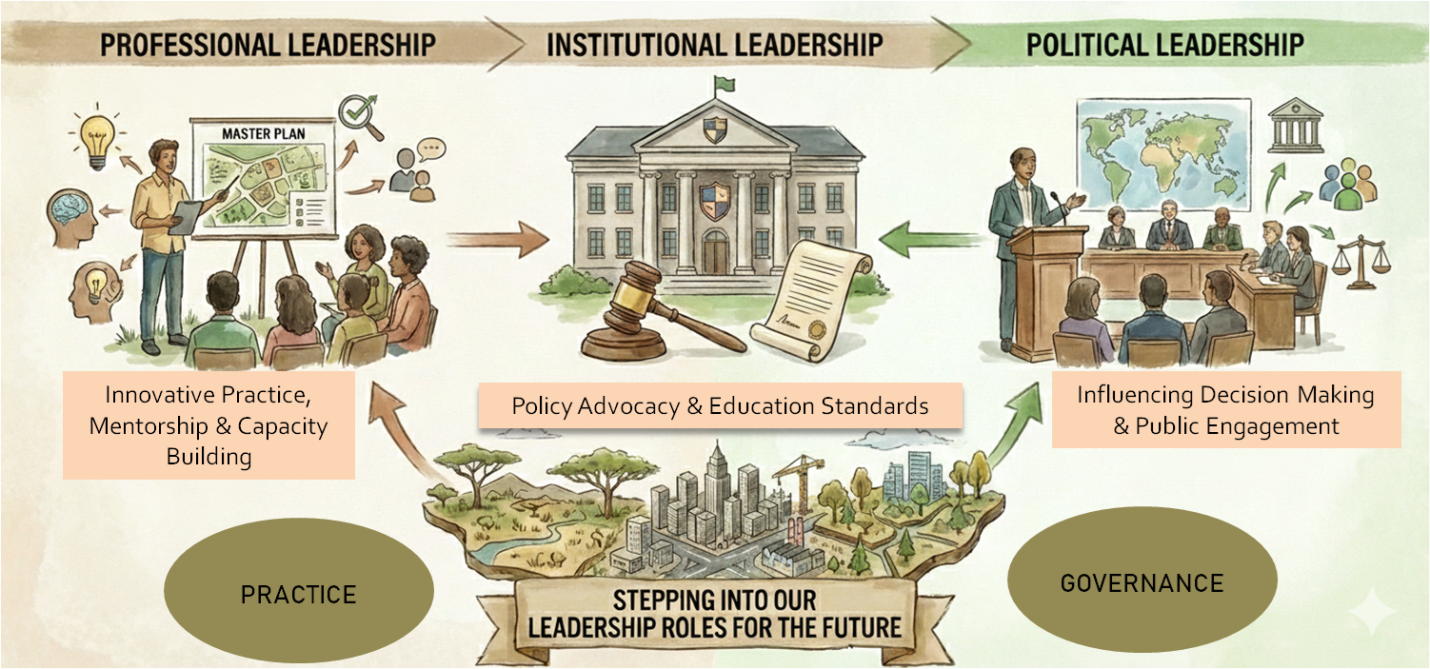
As IFLA Africa, we remain committed to strengthening networks, supporting practitioners, advancing education and research, and amplifying African perspectives in global discourse.
Our journey to recognition and regulation will be fueled by the measurable influence we have on how our urban and rural landscapes interact with growth. Let us use projects to create systemic change and showcase our vital role as stewards of the landscape.
I wish you a purposeful and impactful year ahead.
IFLA Africa President
